
Every morning, hundreds of millions of people wake up to a familiar and often dreaded sensation: the dull, pressing weight of a headache settling in before the day has even begun. Some reach for the nearest bottle of ibuprofen. Others draw the curtains against the light, lie still, and wait. Most do not see a doctor. And that, physicians say, is precisely the problem.
Headache disorders now affect approximately 3.1 billion people worldwide, representing roughly 40 percent of the global population, according to the World Health Organization’s updated estimates. Despite their staggering reach, these conditions remain among the most undertreated and misunderstood in all of medicine.
“People often minimize headaches, but they can be profoundly disabling,” said Dr. Katrina Pasao, a headache specialist at Cedars-Sinai Medical Center. “The good news is that we have more effective ways to diagnose and treat them than ever before.”
A Global Burden Hidden in Plain Sight
The World Health Organization classifies headache disorders among the top three most common neurological conditions across virtually all age groups, beginning as early as age five and persisting with high prevalence through age 80. Among all neurological diseases, migraine alone ranked third in its contribution to disability-adjusted life years a measure that captures the compounded toll of illness, disability, and premature death, surpassed only by stroke and neonatal encephalopathy.
The financial and societal cost is equally severe. Research published in American Family Physician estimated the annual direct and indirect healthcare burden of migraine in the United States alone at $36 billion in 2016. That figure, driven largely by lost productivity during peak working years, has almost certainly grown since. One study found that migraine significantly reduced quality of life to a degree comparable to congestive heart failure, hypertension, or diabetes mellitus.
Not All Head Pain Is the Same
One of the most consequential misunderstandings about headaches is the assumption that pain in the head is pain in the head interchangeable, unremarkable, and best ignored. In fact, physicians divide headache into two broad and clinically distinct categories, and the difference carries real diagnostic weight.
A primary headache is one in which the pain itself is the condition. No separate underlying disease is producing it. A secondary headache, by contrast, arises from another medical problem an infection, a vascular abnormality, medication overuse, or, in rare cases, a life-threatening intracranial event. Understanding which kind of headache a patient is experiencing is the foundation of proper diagnosis and treatment.
According to guidance published by researchers at Duke University School of Medicine, the overwhelming majority of headaches diagnosed in primary care settings are primary in nature and benign. But the exceptions are critical, and missing them can be fatal.
Tension-Type Headache: The Most Common, Least Discussed
Tension-type headache is the most prevalent headache disorder in the world, with a lifetime prevalence estimated as high as 78 percent in some populations. In any given year, roughly 38 percent of American adults experience a tension-type headache disorder. Yet because these headaches are typically not disabling in their episodic form, they are often ignored in both clinical and public health conversations.
The hallmark of a tension headache is a bilateral, nonpulsatile pain of mild to moderate intensity often described as a tight band wrapping around the head, or a dull ache pressing behind the eyes. Neck muscle tension, poor posture, and psychological stress are common contributors. The condition frequently begins in the teenage years and affects women at rates roughly 50 percent higher than men.
When tension-type headaches become chronic, defined as occurring on 15 or more days per month for more than three months, the burden rises sharply. One study found that patients with chronic tension-type headache missed nearly three times as many workdays per year as those with the episodic form.
Treatment for occasional tension headaches is often straightforward: over-the-counter analgesics, adequate hydration, and rest. But Dr. Pasao cautions that relying on medication several times per week is itself a warning sign. Physical therapy targeting the neck and shoulders, along with mindfulness and stress management, can produce significant improvements for many patients.
Migraine: A Neurological Disease Hiding in Plain Sight
Migraine is not simply a bad headache. It is a complex, recurring neurological disorder that currently affects an estimated one billion people globally, with a lifetime prevalence of 16 percent and a one-year prevalence of 12 percent. Women are disproportionately affected, experiencing migraine at roughly three times the rate of men.
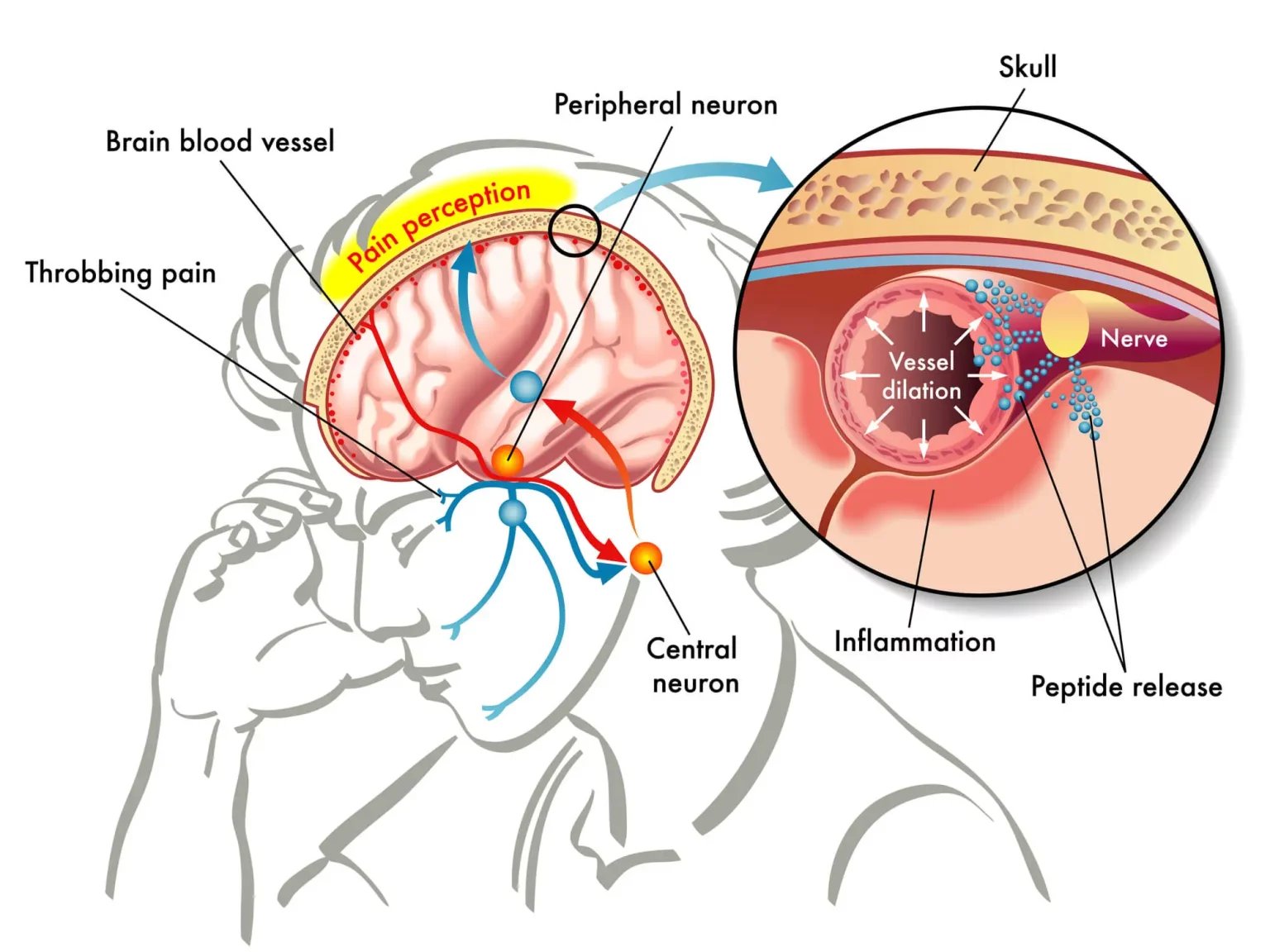
The pain of a migraine attack is typically unilateral, pulsating, and of moderate to severe intensity. It is accompanied by nausea, sensitivity to light, sensitivity to sound, and is worsened by routine physical activity. Attacks generally last between four and 72 hours when left untreated. Some patients experience an aura in the period before pain begins, a reversible neurological disturbance that may produce flickering lights, blind spots, tingling on one side of the face, or difficulty speaking.
Migraine triggers are well documented and vary between individuals. The most common include irregular or insufficient sleep, dehydration, skipped meals, alcohol consumption, hormonal fluctuations, and certain foods such as aged cheeses and processed meats. The condition also has a strong genetic component, and physicians now use standardized clinical decision tools like the POUND mnemonic, which evaluates pulsating quality, duration, unilateral location, nausea, and degree of disability to improve diagnostic accuracy in primary care settings.
“The earlier you treat a migraine, the less intense the headache,” said Dr. Pasao. Subtle warning signals called prodrome symptoms fatigue, yawning, irritability, or brain fog can appear hours or even days before head pain begins, offering a critical window for early intervention.
Despite its prevalence and the availability of effective treatments, migraine remains chronically underdiagnosed. Physicians should consider a migraine diagnosis in patients presenting with recurring sinus headaches or recurrent severe head pain accompanied by normal neurological examination patterns that are frequently mislabeled as sinus conditions or stress-related ailments.
Cluster Headache: Among the Most Severe Pain Known to Medicine
Far less common but dramatically more severe, cluster headache affects fewer than one in 1,000 adults and is described by clinicians as among the most excruciating pain conditions in all of medicine. Historically more prevalent in men, the disorder causes piercing, unilateral pain typically centered around or behind one eye, accompanied by eye redness, tearing, nasal congestion, drooping of the eyelid, and profound restlessness.
“People with cluster headaches often can’t sit still because the pain is so severe,” Dr. Pasao noted.
The attacks are brief, typically lasting between 15 minutes and three hours but can recur up to eight times per day. They arrive in predictable clusters lasting weeks or months, followed by periods of complete remission. Treatment requires a specialized, individualized plan that may include high-flow oxygen therapy, injectable medications, and preventive pharmacological strategies. Unlike tension headaches or even most migraines, cluster headache rarely responds to standard over-the-counter pain relief and demands specialist care.
Medication-Overuse Headache: When the Cure Becomes the Cause

The condition may affect up to five percent of some populations and is more common in women than men. Its signature is a persistent, oppressive daily or near-daily headache, often worst in the morning. The WHO identifies it as the most common secondary headache disorder globally. Breaking the cycle typically requires gradual withdrawal from the overused medication a difficult process that often requires physician supervision and preventive therapy.
A New Class of Treatments – and the Role of Lifestyle
Headache medicine has undergone a genuine transformation in recent years. Beyond traditional analgesics, triptans, and preventive agents such as beta-blockers, anti-seizure medications, and tricyclic antidepressants, physicians now have access to a newer generation of targeted therapies. Among these, calcitonin gene-related peptide inhibitors – commonly known as CGRP inhibitors represent a significant advance. These drugs, which include both injectable monoclonal antibodies and oral gepants, work by blocking a specific neuropeptide pathway implicated in migraine development and have demonstrated robust efficacy in clinical trials.
Botulinum toxin injections, approved for chronic migraine prevention, have also shown meaningful reductions in headache frequency and intensity for eligible patients.
But physicians are equally emphatic that no medication substitutes for foundational lifestyle habits. Dr. Pasao identifies four essential pillars. Sleep quality matters enormously; poor or irregular sleep is among the most powerful headache triggers known, and addressing conditions such as insomnia or sleep apnea can dramatically reduce headache burden. Hydration is critical, with even mild dehydration capable of worsening symptoms. Posture correction and targeted neck physical therapy address a common anatomical driver of tension-type pain. And stress management through regular exercise, mindfulness, yoga, or breathing practices interrupts the physiological cycle through which chronic stress tightens muscles, disrupts sleep, and lowers the threshold for headache attacks.
Keeping a headache diary, or using a dedicated tracking application, remains one of the most practical tools available to patients. Systematic logging of when headaches occur, how long they last, their severity, what was consumed beforehand, and what treatments were used can reveal triggering patterns that allow patients to intervene before pain fully develops.
When Head Pain Is a Medical Emergency
Not all headaches are benign, and the ability to recognize a dangerous one can be life-saving. Physicians rely on a systematic framework known as the SNNOOP10 mnemonic to screen for secondary causes of headache that warrant urgent or emergent evaluation. Several presentations should prompt immediate medical attention.
The so-called thunderclap headache a sudden, explosive onset of severe pain that reaches peak intensity within seconds to minutes carries a greater than 40 percent probability of serious intracranial pathology, including subarachnoid hemorrhage. It represents a neurological emergency and requires a computed tomography scan within 12 hours of onset, followed by lumbar puncture if the scan is negative. Additional red flag symptoms include fever accompanied by neck stiffness, papilledema with focal neurological signs, impaired consciousness, sudden loss of vision, new neurological weakness or slurred speech, and persistent vomiting. A headache lasting more than 72 hours without relief also warrants urgent evaluation.
Physicians also advise particular vigilance in patients over the age of 50, in whom new-onset headache may signal giant cell arteritis, an inflammatory vascular condition capable of causing blindness or stroke if untreated. The presence of scalp tenderness, jaw pain with chewing, or shoulder stiffness in an older patient with a new headache pattern should prompt urgent laboratory investigation.
For the vast majority of patients with no such warning signs and a stable pattern of primary headache, neuroimaging is generally not necessary. Guidelines from the American Headache Society and the American College of Radiology explicitly recommend against routine brain imaging for uncomplicated headache, on the grounds that it adds cost, radiation exposure, and anxiety without clinical benefit.
When Surgery May Offer Relief
A subset of patients whose headaches arise not from vascular or chemical mechanisms but from physical compression of peripheral nerves may be candidates for a surgical intervention that remains underutilized. At Mayo Clinic, microvascular plastic and reconstructive surgeon Dr. Antonio Forte has described a category of headaches known as trigger site-induced headache conditions in which surrounding muscle or fascia compresses nerves in the head and neck, producing pain that is resistant to conventional medication.
“Headaches that originate from compression of the occipital nerve will usually have pain that starts on the back of the neck and radiates to the side of the head,” Dr. Forte explained. Compression of the supraorbital and supratrochlear nerves, located above the eye, produces pain that radiates toward the forehead. Surgical nerve decompression performed through small incisions near the hairline or along the eyelid involves removing the adjacent muscle and connective tissue that is physically compressing the nerve. Many patients, Dr. Forte noted, experience meaningful relief within weeks of the procedure.
Evaluation at Mayo Clinic for this type of headache involves a multidisciplinary team that gathers imaging and clinical data before recommending a personalized care plan. Surgery is not appropriate for all headache types, and patients are carefully screened before proceeding.
A System Failing Those Who Suffer Most
Despite the availability of effective diagnostics and treatments, access to proper headache care remains profoundly unequal. The WHO has documented a global pattern of underdiagnosis and undertreatment that crosses income levels, with even developed nations showing significant gaps. In many low- and middle-income countries, key medications such as sumatriptan are simply not available. Globally, only a minority of people with headache disorders receive appropriate care from a trained provider. An estimated half of all sufferers self-treat, often ineffectively and sometimes in ways that worsen their condition over time.
The lack of awareness extends to governments and health systems. Policymakers have historically failed to account for the enormous indirect economic cost of headache disorders: the lost working days, the reduced productivity, the ripple effects on family and community. A more accurate accounting, physicians argue, would justify significantly greater investment in headache prevention, education, and treatment infrastructure.
The WHO’s Intersectoral Global Action Plan on Epilepsy and Other Neurological Disorders 2022–2031, endorsed by the World Health Assembly in May 2022, provides a framework for member states to prioritize neurological conditions including headache disorders, expand access to essential medicines, and strengthen health workforce capacity.
“There’s so much we can do for headaches; it doesn’t have to be debilitating,” said Dr. Pasao. “With sensible lifestyle strategies, careful tracking and the right treatment plan, most people find meaningful relief that lasts.”
For the 3.1 billion people whose lives are shaped in some measure by recurring head pain, that promise and the infrastructure needed to fulfill it cannot come soon enough.
Related Posts