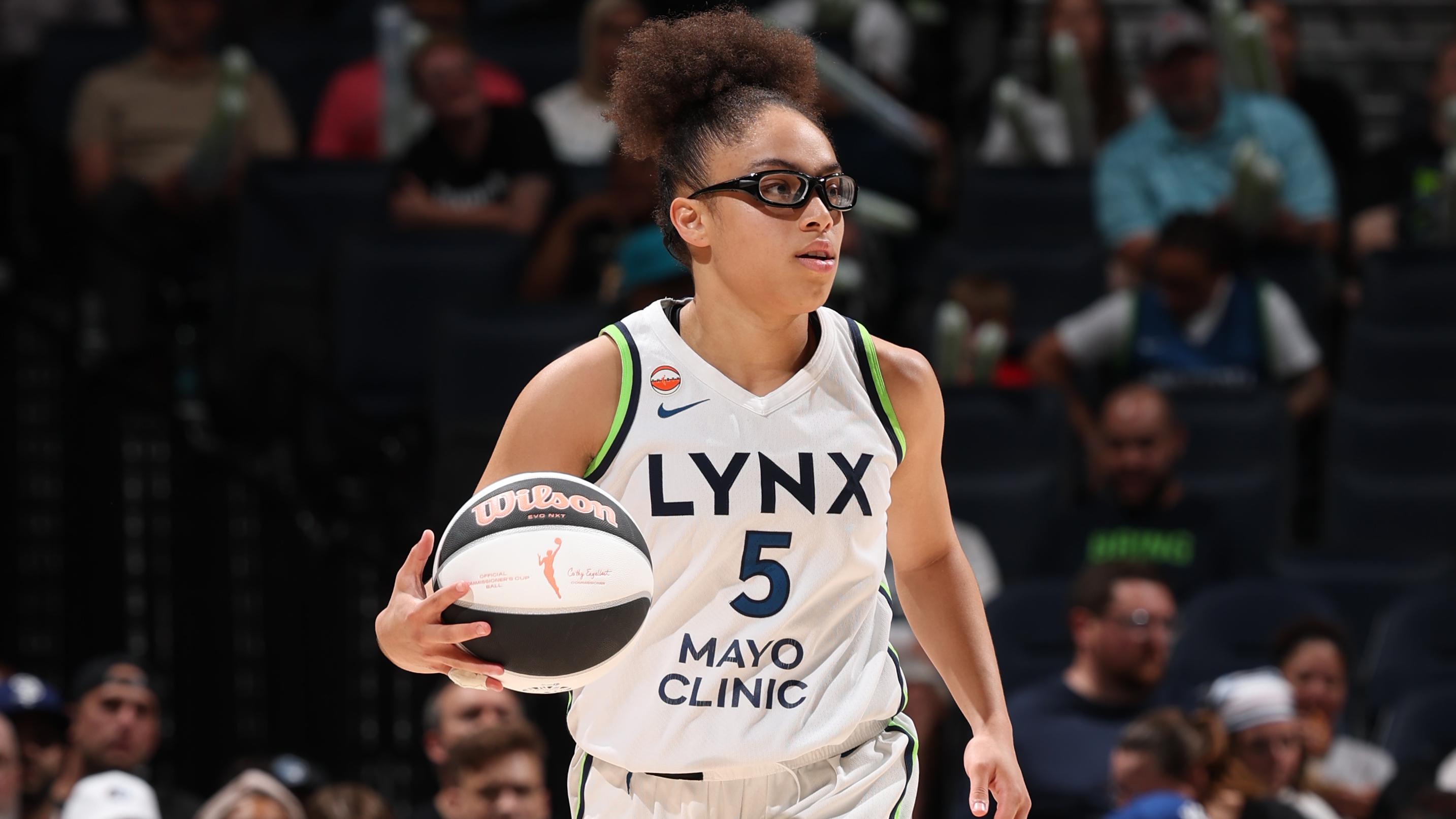
MINNEAPOLIS — With 6:24 remaining in the first half, Olivia Miles had just knocked down her fifth consecutive three-pointer. The Target Center crowd registered it the way crowds register something improbable — a beat of silence before the noise caught up. Miles had 17 points at that moment. Her four teammates on the floor had 14 combined.
By the time it was over, the 23-year-old Minnesota Lynx guard had converted eight of 11 attempts from beyond the arc, set a new WNBA rookie record for three-pointers made in a single game, and carried the Lynx to an 87-84 victory over the Golden State Valkyries on Thursday night. She finished with 28 points, seven assists, four rebounds and three blocks in just 28 minutes of action — a career-high across the board.
The record Miles broke had been shared by Indiana Fever star Caitlin Clark and Crystal Robinson of the New York Liberty, who each made seven three-pointers in a game as rookies. Robinson set the mark in 1999. Clark matched it last season. Miles surpassed both of them before halftime.
What made the performance particularly striking was its context. Miles had entered Thursday’s game having converted just two of her first 18 three-point attempts this season — an 11 percent clip that suggested a rookie still finding her range in the professional game. The shooting explosion was not, in other words, the continuation of a trend. It was its sudden reversal, in the highest-stakes context the Lynx had faced this month.
Miles offered an explanation that had less to do with a technical adjustment than a tactical one. The Valkyries, she said afterward in a Prime Video interview, were consistently sagging under screens to take away her drives. “I wasn’t going to force it downhill,” she told reporters. “I was going to take what they were giving me, and luckily it was going in tonight.” Whether Golden State’s scheme was a miscalculation or simply outmatched by an unprecedented shooting performance is a question their coaches will face this weekend.
Lynx coach Cheryl Reeve has spent much of this season finding new ways to describe what Miles does to a defense. On Monday, before the Valkyries game, Reeve told reporters that her bench staff had been audibly gasping at some of the rookie’s passing decisions — the kind of vision, she said, that makes everyone else’s job easier. Thursday’s performance added a different dimension to that portrait. The passing was still there, evidenced by seven assists. But it was the shooting that rewrote the record books.
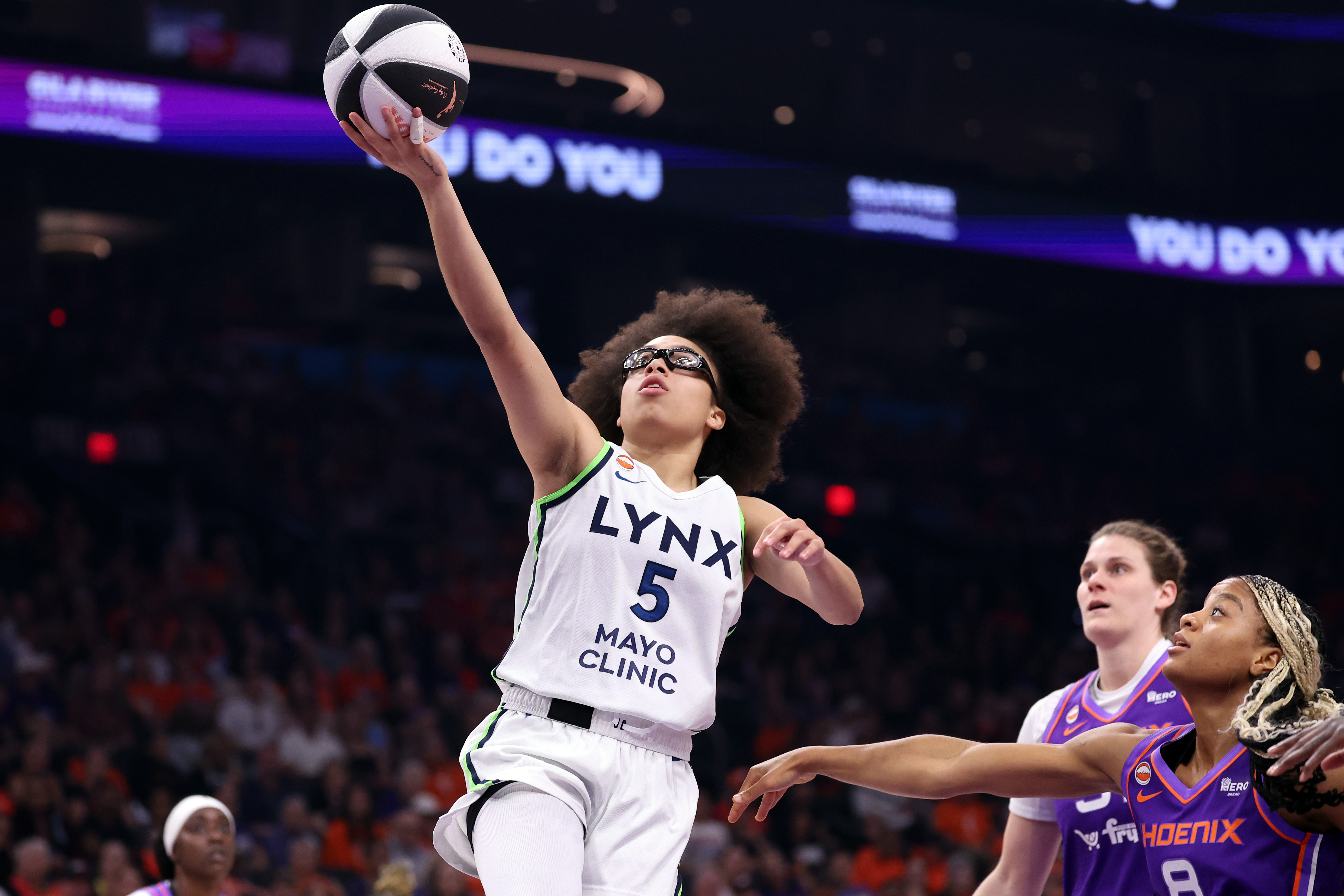
Reeve acknowledged afterward that the barrage had caught even her off guard. Miles’ three-point explosion was “not on our bingo card,” the coach said, “but we’ll take it.”
Minnesota improved to 8-2, the best record in the WNBA. The Lynx entered this season with significant uncertainty hanging over them: star forward Napheesa Collier, who led the league in scoring and was named Defensive Player of the Year last season, remains sidelined with the ankle injury she sustained late in 2025. The conventional forecast had Minnesota competitive but not quite at full throttle until Collier returned. Miles has effectively invalidated that forecast. The Lynx have won six straight and are 2-0 in the WNBA Commissioner’s Cup.
The balance around Miles held up Thursday even as the basketball world’s attention was fixed on the NBA Finals playing out simultaneously in San Antonio. Courtney Williams added 17 points and seven rebounds. Kayla McBride contributed 14, and Natasha Howard posted a double-double with 12 points and 10 rebounds. The Lynx made 13 of 26 attempts from three as a team — a number that would have looked improbable without Miles’ 8-for-11 carrying the majority of it.
Golden State was not without its own offensive firepower. Cecilia Zandalasini led the Valkyries with 18 points, while Janelle Salaun knocked down five three-pointers for 17 and Tiffany Hayes added 15. The Valkyries pulled within 86-84 with 33.8 seconds left, forcing Williams to dribble down the clock before finding Miles for a driving layup attempt that rimmed out. An inadvertent whistle triggered a jump ball, Zandalasini secured it with 3.8 seconds remaining, and her last-chance three-pointer at the buzzer did not draw iron.
The Lynx had trailed by five — 75-70 — with seven minutes left before stringing together 11 consecutive points to take control. That stretch, not Miles’ historic shooting display, will be what Minnesota coaches spend time on this week. The Lynx’s ability to close in a tight game, without their best player and relying heavily on a rookie, was the structural question this stretch of the season was always meant to answer.
For Miles, the record adds to a May that already produced the WNBA’s Rookie of the Month award, earned across eight games in which Yahoo Sports reported she averaged 15.4 points, 5.1 rebounds and 5.9 assists. Through 10 games she is averaging 17 points, 6.4 assists, 4.9 rebounds and 1.5 steals. Her three-point percentage has risen sharply to 36 percent after Thursday. Her college numbers, at Notre Dame and later TCU, had suggested this range was always in her arsenal: 41 percent on 180 attempts as a junior at Notre Dame, 35 percent on 280 attempts in her senior season at TCU.
Whether Thursday represents a genuine unlocking of her three-point shot at the professional level, or a single extraordinary night shaped by one team’s specific defensive decisions, is a question the rest of the WNBA’s coaching staffs are presumably now working through. Teams will not keep stepping back under screens against Miles — not after this. The more revealing test of her range, by that logic, has not yet arrived. The WNBA’s history-making rookie performances have a way of raising the expectations attached to every appearance that follows.
Minnesota continues its three-game homestand Saturday against the Seattle Storm. Golden State travels to Las Vegas.