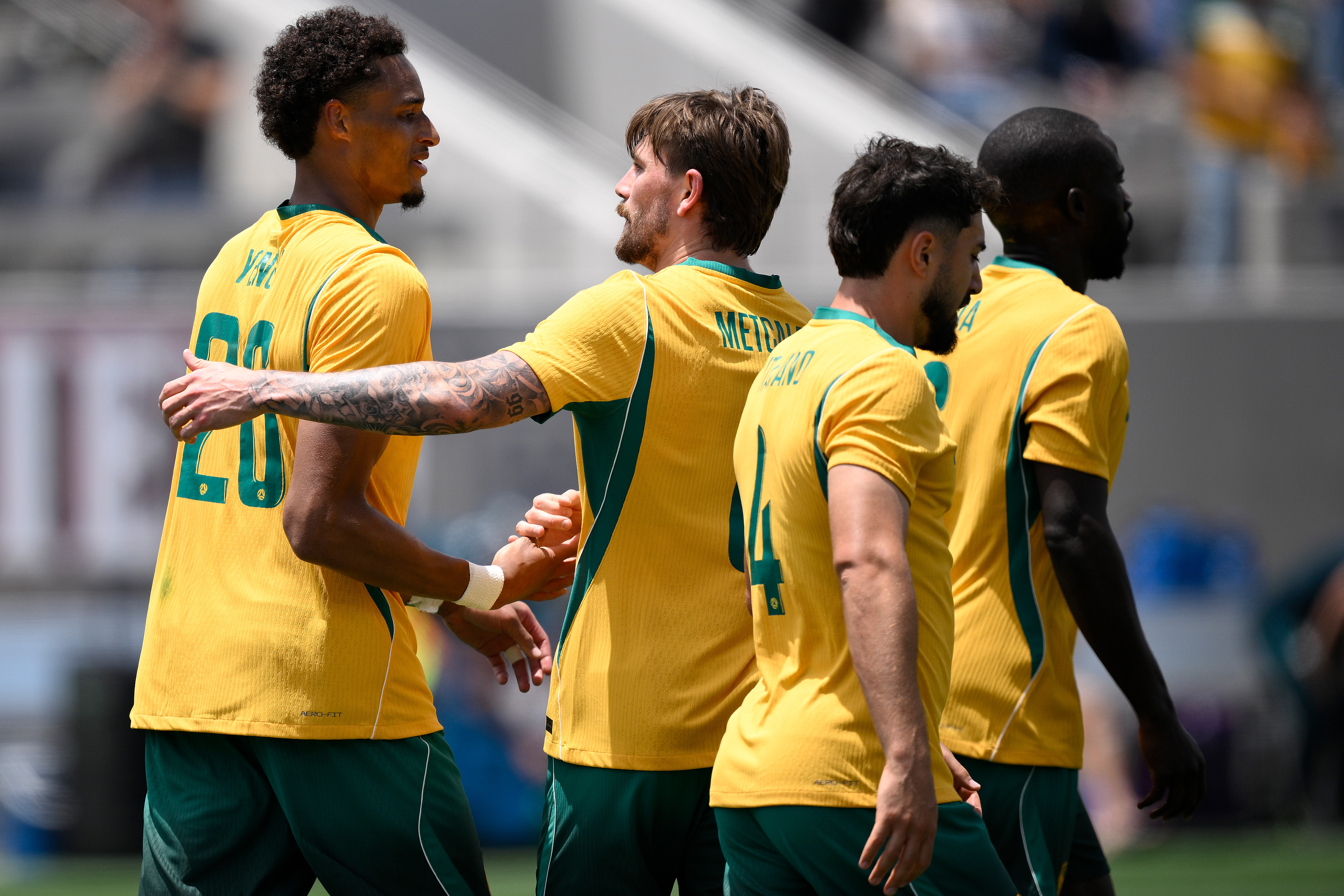
SAN DIEGO — The goal that mattered arrived in a hurry. Cameron Burgess played a long ball from deep, Connor Metcalfe sprung the Swiss defence in the channel, and Tete Yengi was sliding in before Gregor Kobel could recover — 1-1, 56th minute, the dream realised. One week before the FIFA World Cup begins in North America, Australia found something it has been searching for all through preparation: a way back.
Whether that is reassurance or camouflage is the question Tony Popovic cannot yet answer.
The Socceroos drew 1-1 with world No. 19 Switzerland in their final pre-tournament friendly at Snapdragon Stadium on Saturday before a crowd of 6,107 — a useful result on the scoreboard, a mixed verdict on the evidence. For 45 minutes Australia produced nothing, managed two shots with none on target, and were outplayed by a Swiss side that, had Dan Ndoye converted either of his two first-half saves, would have been out of reach by the break. The second half was a different team. The same slow start, however, cost them last week against Mexico.
Granit Xhaka opened the game like a door. In the 14th minute the Arsenal midfielder split Australia’s defensive lines with a pass struck from inside his own half, and Ndoye — the Nottingham Forest winger who had already been denied twice by goalkeeper Patrick Beach — this time trapped the ball on a slight angle and shot across Beach to make it 1-0.
That the Socceroos did not concede again before the interval owed something to the half-time that never came: a drinks break in the 22nd minute appeared to reset them, and from that point they stopped simply absorbing pressure and began occasionally threatening it. Cristian Volpato, making his senior Australia debut alongside Yengi, curled a free kick to the back post in first-half stoppage time and Harry Souttar’s header was, somehow, over the bar.
Popovic made four substitutions at the interval and the structure of the game changed immediately. Nestory Irankunda, the 20-year-old Watford winger who has been the most electric Australian player in these warm-ups, won possession four minutes into the second half with a powerful tackle, drove forward and struck a shot from outside the area that Kobel tipped onto the crossbar. It was the decisive shift in the match’s texture.
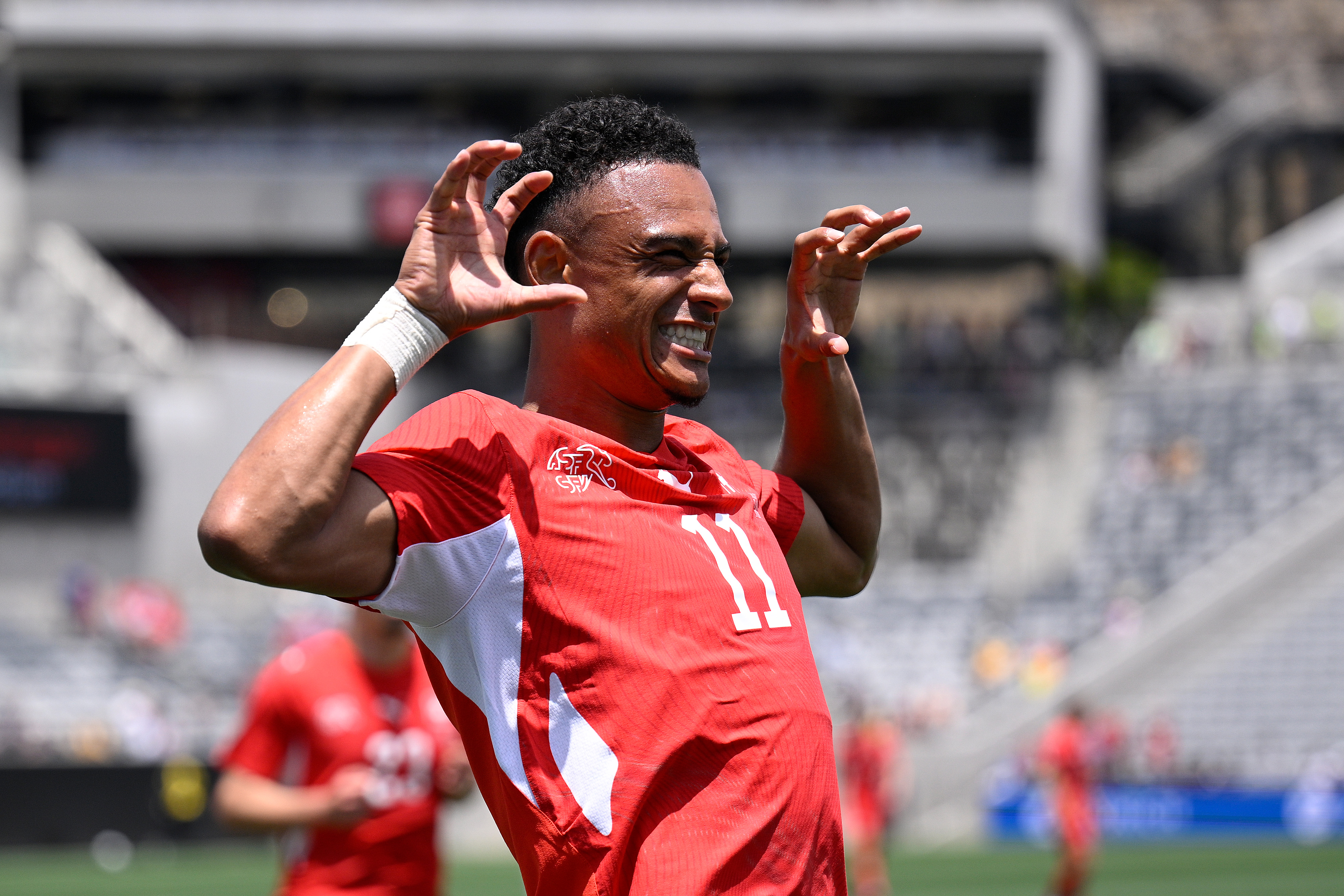
Ten minutes later, Yengi scored. Metcalfe’s perfectly weighted square ball left the Switzerland goalkeeper stranded and the 25-year-old former Newcastle Jets striker, playing in his first senior international, needed only to slide in. He did. It was the kind of goal that does not betray its own difficulty: the finish was composed, the movement intelligent, but the moment was also a product of Switzerland allowing a lapse they would not have permitted earlier.
Popovic emptied his bench afterward and the Swiss came close to a winner when substitute Cedric Itten turned a late header over the bar in the 79th minute. Switzerland finished with 63 percent possession, nine shots to five, and seven corners to two. Those numbers describe the match’s character without capturing its shift. They do not explain how Australia, for the second week running, discovered an entirely different level of purpose after the interval.
“I’m pleased about that, good response in the second half,” Popovic said on Paramount+. “A lot of different faces on the field and the young boys acquitted themselves well.” He acknowledged the front three had struggled to connect in the first half — Yengi, Irankunda and Volpato had never played together at senior level — but said they settled. “Nestory got better, Tete got better, Connor did really well when he came on and that helped us build the play a bit better and make better decisions.”
For Yengi, the goal was a culmination of what had been a difficult twelve months. “You work hard for moments like this and I’m happy to help the team today,” he told reporters afterward. “To be out here on the pitch, one week away from the World Cup, you can only dream of moments like this.” What he did not say — what Popovic has not said — is whether that contribution in the second half earns him a starting place in Vancouver. The lineup Popovic fielded against Switzerland, with an average age of 24.6 the youngest of his tenure, was explicitly experimental. Mathew Leckie was on the bench. Maty Ryan was unused. The starting eleven against Türkiye next Saturday will look considerably different.
What will not change, unless Popovic can find an answer before next Saturday, is the Socceroos’ habit of conceding the game’s opening phase. Against Mexico they fell behind and could not recover. Against Switzerland they fell behind and did. Group D opens with co-hosts the United States facing Paraguay in Los Angeles on June 12, giving Australia one final day to watch and calibrate before they take the field at BC Place. Türkiye, who secured their World Cup qualification just ten weeks ago, are an unknown quantity with momentum; the United States, in Seattle on June 19, will represent an entirely different order of pressure. There are complications around the tournament’s American stadiums that are beyond Australia’s control.
The squad is young and it is dynamic. Irankunda, at 20, is the most dangerous player Australia has produced in years in the wide areas. Volpato’s debut, even in a half where he was peripheral, showed the composure of someone who learned his football at Roma rather than apologised for it. The average age of the lineup that started against Switzerland — and the depth of the changes available by the 46th minute — suggests Popovic has options he did not carry into Qatar four years ago.
Whether any of those options can solve the problem of the first half is what the Socceroos need to settle before a word is said about the second.