
MELBOURNE – The question Tony Abbott posed to his party on Friday was not really about membership numbers, or polling, or even Pauline Hanson. It was about whether the Liberal Party still had the right to exist as the dominant force on the Australian right.
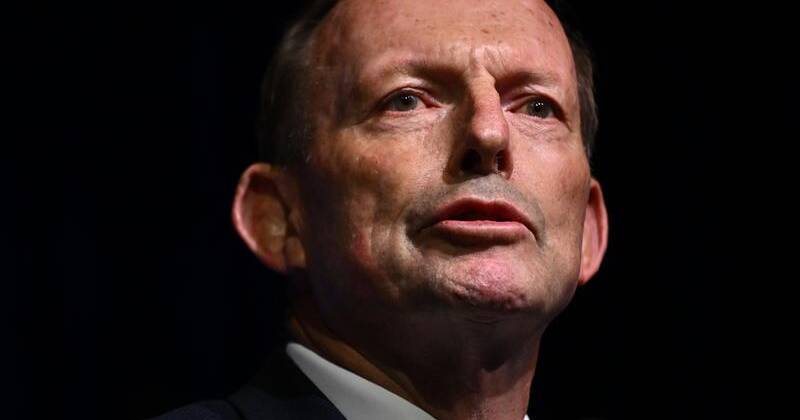
Abbott was elected federal president of the Liberal Party unopposed at the 65th Federal Council meeting in Melbourne on May 29, returning to an official party role for the first time since he was ousted as prime minister by Malcolm Turnbull in 2015. He replaces John Olsen, the former South Australian premier, in a position that is largely administrative but carries the power of sustained public presence – an asset Abbott has never struggled to deploy.
The circumstances of his return made the symbolism impossible to ignore. The party faces a dramatic rise in One Nation support and a plunge in Coalition numbers, with recent polling suggesting it would be nearly wiped from parliament in an election held today. That is the context in which a former prime minister described his own party as being in a time of “existential crisis” – and called that description a reason to stay, not to leave.
Political consultant Ian Hanke, a former Howard government adviser, said the key question at the Melbourne gathering was whether Angus Taylor had turned a corner for the party and how far there was still to go. Hanke’s answer was qualified: Taylor had passed his first test with his budget reply, but the distance remaining was substantial. What he did not say – what nobody in the room could say with confidence – is whether the party can travel that distance before One Nation makes the question irrelevant.
The threat is not hypothetical. A post-budget Redbridge Group poll estimated seats at Labor 76, One Nation 53, and the Coalition 12 – numbers that, while contested by other analysts, reflect a sustained collapse in conservative primary vote support. The Coalition’s hold on suburban and regional seats that were once considered safe is now contingent on preference flows that may not materialise if One Nation retains its momentum into the next electoral cycle.
Abbott’s appointment was, in that context, a deliberate strategic signal. His supporters argue he will put life into a demoralised party organisation, pointing to his energy and his record as an opposition leader with a laser focus on messaging. His critics, including moderate Liberals who backed Ley, worry about something else entirely: that a figure with Abbott’s profile and firmly held views will consistently generate his own news cycle, pulling attention away from Taylor at precisely the moment the opposition needs to consolidate around a single voice.
That tension has not been resolved by the council meeting. It has been deferred.
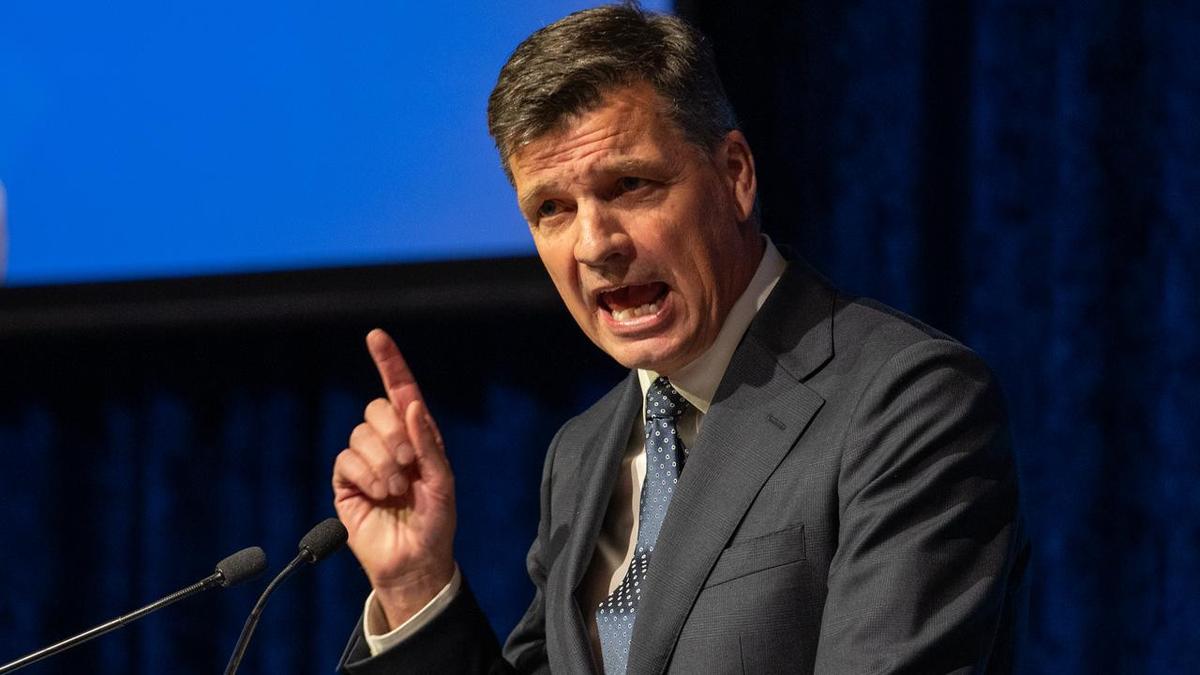
Taylor, for his part, used his address to the council to draw the sharpest ideological line the opposition has attempted since the 2025 election loss. Speaking from a prepared text released ahead of delivery by the Liberal Party, he described Prime Minister Anthony Albanese’s pre-election commitment to leave negative gearing and capital gains tax untouched as the “mother of all lies,” and said no Australian could trust another word the prime minister said.
The framing was deliberate. Albanese built his political identity around the phrase “my word is my bond.” Taylor’s entire council speech was constructed around inverting it, cataloguing a list of pre-election commitments – on power bills, mortgages, living standards – that the government has not delivered. Hanke said Taylor’s budget reply had done something the Coalition had not managed in over a year: forced Labor to respond, rather than merely to govern. Whether that dynamic holds is the question the party will be watching through the winter parliamentary sitting.
What the council meeting could not answer is whether the right flank Abbott represents will help Taylor recapture the voters the Coalition lost in 2025, or whether it will accelerate their drift to One Nation. Abbott had played a key role in the ouster of Sussan Ley and the installation of Taylor in February, brokering an agreement between conservative factions to unite behind a single challenger. That gave him claim to the current leadership arrangement. It does not resolve the underlying question of whether a party moving rightward on immigration, welfare, and fiscal policy is competing with One Nation on its own ground, or drawing a distinction that voters can act on.
The evidence from South Australia suggests the former is at least as likely as the latter. In Queensland, One Nation reached 30 percent of the primary vote in recent polling – leading both Labor at 27 percent and the Coalition at 23 percent – a position that analysts described as potentially unprecedented in modern Australian polling for a third party. South Australia’s March state election produced One Nation’s strongest performance in that state in decades, with three Legislative Council seats and four House of Assembly seats. The Liberal primary vote collapsed.
Abbott’s answer to this, delivered from the council floor, was that the Liberal Party is “the patriot party” and must rebuild its membership aggressively. He pointed to Canada’s Conservative Party, which he said had 400,000 members, arguing the Liberals should, on a per capita basis, have at least 250,000. It is a comparison that carries its own subtext: the Canadian Tories rebuilt from near-destruction and eventually won government. Abbott was not just setting a target. He was offering a template.
What that template cannot account for is the structural difference between Canada’s first-past-the-post system and Australia’s preferential voting. In Canada, vote consolidation is the game. In Australia, preference flows determine outcomes – and a One Nation at 30 percent that negotiates preferences carefully is a more complicated political actor than a third party that simply bleeds the right.
The party also moved on its organisational structure at the council meeting. A new federal director, Lincoln Folo, was appointed, replacing Andrew Hirst, who had announced his departure. The Conversation reported that former foreign minister Alexander Downer won one of the four vice-president positions, adding another senior party figure from a previous era back into the formal structure.
The pattern is deliberate: experience over reinvention. Whether it is what the moment requires remains the open question nobody at the Melbourne council had a clean answer to. Abbott knows how to fight an opposition campaign. He has done it before, successfully. The question is whether the opposition he built those skills against – and the country he built them in – still resembles what he will face when the next election comes.
Labor’s response was immediate. Albanese has rebranded the conservative bloc as “Liberal One Nationals,” seeking to tie Taylor’s policy platform to Hanson’s movement in the minds of centrist voters – precisely the voters the Coalition must recover to be viable again. Whether Abbott’s presence on the ticket helps or hinders that counter-narrative is the question both sides will be watching most carefully through the months ahead.