

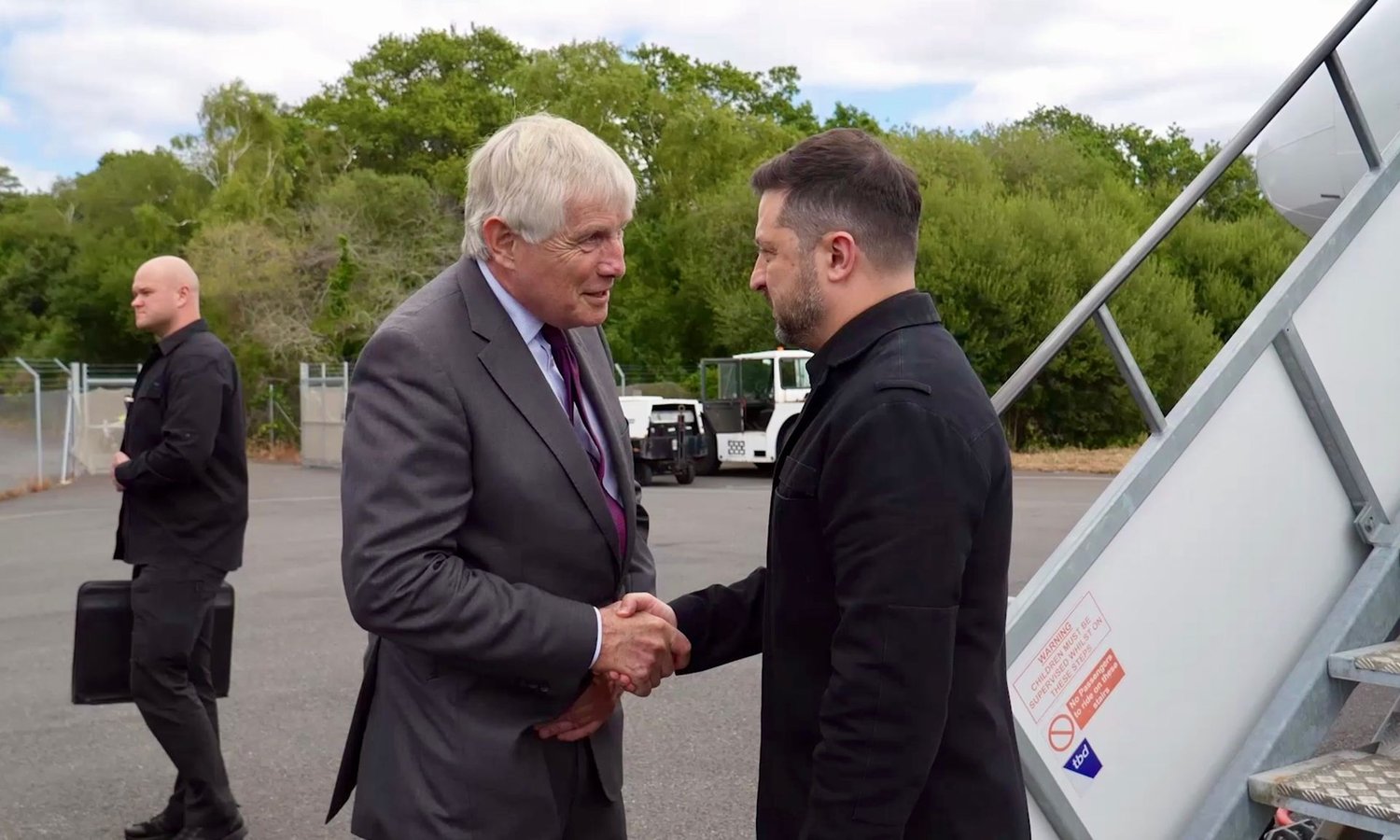

LONDON – Andy Burnham was standing in a British naval base on Monday when the question of who exactly he was on the world stage began to crystallize. Nine months ago he was the mayor of Greater Manchester. Now he was hosting Volodymyr Zelensky, the president of a country that has been under sustained military pressure from Russia since early 2022, in his first face-to-face encounter as prime minister with a foreign leader.
The talks centered on three areas: air defense systems, maritime security cooperation, and joint defense production. Zelensky, in remarks following the meeting, identified these as the essential pillars of what he called a partnership that “strengthens both countries.” Burnham pledged that Britain’s support “will not waver,” language that mirrors what his predecessors have said at similar moments, and that his government will now need to translate into specific programs and delivery timelines.
Burnham is the fifth British prime minister to manage Britain’s relationship with Ukraine since Russia’s military operation expanded in February 2022. His path to the role was unconventional. After stints as health secretary, culture secretary, and chief secretary to the Treasury under Gordon Brown, he spent nearly nine years as mayor of Greater Manchester, building a regional power base while party leadership changed hands repeatedly in London. When Keir Starmer announced his resignation on June 22, Burnham moved quickly and emerged as the Labour consensus candidate. He entered Downing Street without a significant foreign policy record and without having led a national government.
Starmer’s government had maintained consistent support for Kyiv and was willing to use military means to enforce the broader sanctions framework. In June, Britain’s first direct boarding of a vessel from Russia’s shadow oil fleet saw Royal Marine Commandos fast-rope from RAF Chinooks onto the sanctioned tanker Smyrtos in the English Channel, an operation Starmer personally ordered. Burnham inherits that precedent and the expectation of continued action.
According to Kyiv Independent’s reporting on Monday’s talks, the venue, a naval base whose specific location was not disclosed, was chosen deliberately. Maritime security has become an increasingly active dimension of the wider conflict, as Ukraine has struck Black Sea targets and as Western governments have moved to interdict Russian oil shipments. British naval training programs for Ukrainian personnel have been running since the early years of the operation, and expanding those to include drone boat operations and mine warfare is understood to be among the items under discussion.
Burnham arrives at the relationship at a more complicated moment than Starmer faced. The picture he inherits is more unsettled. Trump has simultaneously declared deep diplomatic talks with Iran while threatening military action if those talks collapse, a pattern of pressure and negotiate that Burnham will need to read carefully as Zelensky moves from London to Washington for his next meeting with the US president.
Joint defense production is the area where British industry can move most quickly. UK defense contractors have reorganized over the past two years around elevated production assumptions, and several have shifted manufacturing capacity for artillery components, drones, and missile subassemblies. If Monday’s discussions produced any agreement on shared production facilities or licensed manufacturing for Ukrainian systems, the details were not disclosed by either government.
For Burnham, Monday’s meeting carried a domestic dimension that the joint statements will not reflect. His core base spans the Midlands and the North, regions where foreign policy rarely moves voters but where the costs of dislocation from a prolonged conflict are real and visible. Sustaining public support for UK involvement in a war now running more than four years will be a political challenge as well as a strategic one. He will need to demonstrate that British commitments yield tangible results, not simply continuation of a stalemate his predecessors also managed.
After London, Zelensky will travel to Washington to meet Trump. The sequence matters. Monday’s meeting with Burnham gives Zelensky a demonstration of Western cohesion before he faces a US president who has been inconsistent about Ukraine and who is currently focused on a ceasefire effort in the Middle East. Whether London’s show of support strengthens Zelensky’s hand with Trump, or whether Trump reads British commitment as giving Kyiv reason to hold out against a negotiated settlement, depends on dynamics that were not resolved at the British naval base.
Burnham declared the “unbreakable bond” between Britain and Ukraine would continue under his government. That declaration has been made before, by each of the four prime ministers who preceded him since 2022, and the conflict has not ended. What his government actually delivers in the months ahead will matter more than what was said Monday. He walked into that naval base as a kind of test case, one that will take considerably longer than a single afternoon to grade.












