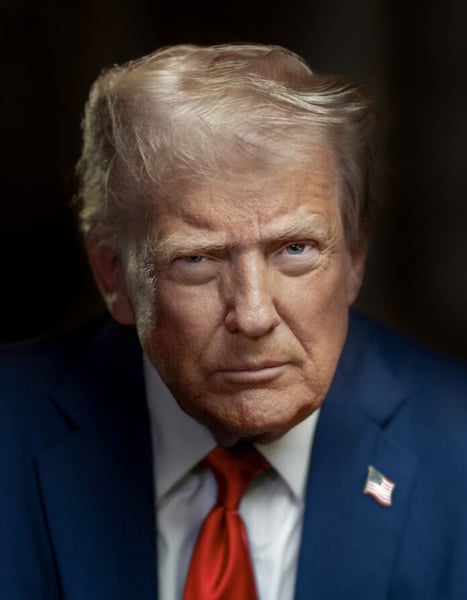

WASHINGTON – Donald Trump declared Monday that the United States was engaged in “very deep talks with Iran right now,” while Tehran’s foreign ministry dismissed the claim as having no basis in fact. The gap between the two accounts sent Brent crude falling roughly 7% and left three mediating governments – Oman, Qatar, and Switzerland – scrambling to determine what, if anything, was actually under way.
Trump spoke to reporters before departing the White House, adding that there was “not much time” for diplomacy to produce results and that military strikes would resume if the current pause proved fruitless. “Nothing gained, nothing lost,” he said, a formulation that alarmed allied capitals more than it reassured them. Fox News live situation coverage confirmed that U.S. Central Command maintained strike readiness throughout Monday even as Trump described an active diplomatic track.
Foreign Ministry spokesman Esmail Baghaei told journalists in Tehran that no negotiations with the United States were under way through any channel recognised by the Iranian government, and that Trump’s characterisation did not match what Iranian officials had been told through intermediaries. Five commercial vessels halted near the Strait of Hormuz earlier in the day were permitted to proceed by Monday evening, a move Iranian authorities described as a routine security decision unconnected to any diplomatic concession.
Brent crude closed below $84 a barrel for the first time since May, a drop analysts attributed entirely to the prospect of a diplomatic opening that neither side had confirmed. U.S. equity markets rose modestly on the same premise. Several trading desks issued notes cautioning clients that the divergence between Trump’s description and Tehran’s denial meant the market move rested on one man’s assertion rather than any verifiable policy shift.
Oman’s role as a back-channel facilitator remained the subject of intense speculation among diplomatic officials in the Gulf, who noted that Muscat had transmitted messages between Washington and Tehran during earlier rounds of nuclear talks. Whether the Omani channel constituted the “very deep talks” Trump referenced, or whether he was describing third-party proximity communications that Iran would not recognise as direct negotiations, was left entirely unexplained by the White House.
U.S. Central Command reported that 17 additional Iranian vessels had been redirected away from Hormuz approach lanes on Monday, with two boarded under maritime security provisions. Saudi Arabia scrambled intercept drones after detecting ballistic trajectories over the Gulf. Jordan confirmed shooting down two drones over eastern Jordanian airspace. A Ukrainian drone strike on Caspian Sea infrastructure, acknowledged by Kyiv, complicated the military picture for Iranian commanders managing pressure from multiple directions simultaneously.
Israeli Prime Minister Benjamin Netanyahu, whose government has pushed Washington to intensify rather than pause operations against Iran, was scheduled to arrive at the White House on Tuesday. The meeting had been arranged before the strike pause was announced and its agenda was confirmed unchanged by both governments, a signal that Israel had no intention of endorsing a diplomatic path it had not shaped.
Iranian Foreign Minister Abbas Araghchi offered no public comment Monday on whether any ministry communications he had been conducting matched Trump’s depiction of active talks. Araghchi’s earlier negotiations over frozen Iranian assets held in third countries had been described by one Iranian official as exploratory at best, and it remained unclear whether those contacts had any connection to the diplomatic track Trump claimed was under way.
The diplomatic gap between Washington and Tehran was already visible in Manila last week. Russia, China, and the United States sent foreign ministers to the ASEAN summit alongside Southeast Asian counterparts for sessions that addressed Gulf stability without producing any agreed framework for de-escalation. Beijing and Moscow both urged restraint but stopped short of offering guarantees either side was prepared to accept.
The three-day military pause underpinning Monday’s diplomacy remained conditional and explicitly not a ceasefire. Washington’s halt to strike operations had come with an explicit condition that Iranian forces not advance during the interval, a condition CENTCOM said it was monitoring in real time. Whether that window would extend past its initial 72 hours depended on developments neither side had yet publicly disclosed.
What neither government had yet provided was a shared account of the actual state of contact between them. If Trump’s description and Tehran’s categorical denial reflected a genuine failure of communication rather than a deliberate information operation by either side, the window for a negotiated exit from the current standoff was closing faster than any diplomat in Muscat, Geneva, or Doha was willing to say out loud.