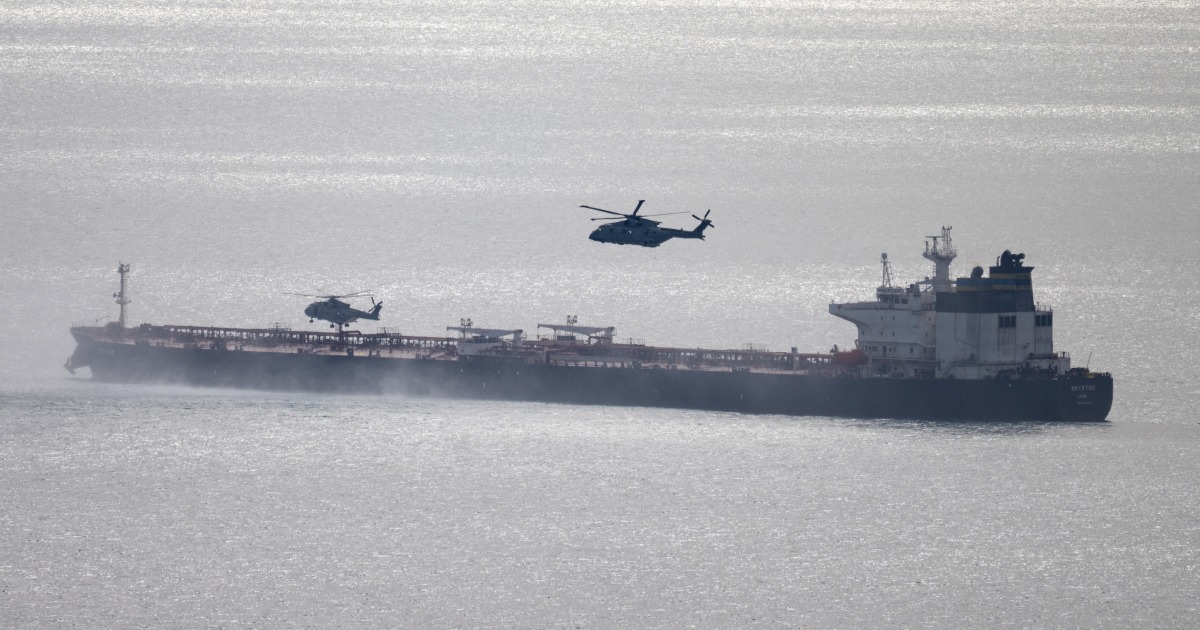

LONDON – In the grey pre-dawn hours off the English coast on Sunday, Chinook helicopters from the RAF descended on a tanker making its way through the world’s busiest shipping lane, and Royal Marine Commandos fast-roped onto its deck with weapons drawn. The ship, the Smyrtos, had sailed from the Russian Baltic oil terminal at Ust-Luga on June 1. It never reached wherever it was headed.
Britain’s Ministry of Defence confirmed Sunday that its armed forces had boarded and seized the Smyrtos in what officials described as the first UK-led operation of its kind targeting Russia’s so-called shadow fleet – the network of more than 700 tankers through which Moscow moves an estimated 75 percent of its sanctioned crude exports. The six-hour operation unfolded inside UK territorial waters and was executed in close coordination with French authorities, the ministry said, with support from the Type 23 frigate HMS Sutherland, the mine countermeasures vessel HMS Ledbury, Merlin helicopters, Wildcats, and an RAF P-8 maritime patrol aircraft maintaining watch from above.
Prime Minister Keir Starmer said he personally directed the interception and framed it in unambiguous terms. The operation, he said, delivered “yet another blow to Russia” and signaled that those financing Moscow’s campaign in Ukraine could not hide. His office shared video of commandos rappelling onto the tanker’s deck – guns raised, moving fast in the dark – a scene that looked rather different from the sanctions press releases that have defined much of the West’s economic pressure campaign against the Kremlin.
The Smyrtos had been sailing under a Cameroonian flag, but that cover had already been stripped away. Cameroon removed the Smyrtos and 35 other shadow-fleet vessels from its shipping registry earlier this month following sustained diplomatic pressure from the European Union, according to reporting by Lloyd’s List. The tanker had flown the Cameroonian flag since December and was previously registered in Gambia. Both the EU and the UK had sanctioned it in October 2025 for its role in carrying Russian crude. When Royal Marine Commandos boarded it Sunday, it was, in maritime law terms, effectively flagless – a vessel without nationality, which provides the legal basis under Article 110 of UNCLOS for a warship to exercise a right of visit.
Defence Secretary Dan Jarvis was direct about what the mission was designed to do. “Russia relies on its shadow fleet to fund its conflict in Ukraine,” Jarvis said, “and our interdiction delivers a blow to Putin’s illegal war.” The Smyrtos was provisionally moved to an anchorage off the south coast of England near Weymouth, where it will be monitored for any environmental or safety concerns while investigations continue.
The boarding came at a delicate moment for Starmer. The prime minister, who lost his defence secretary to a spending dispute just last week and faces persistent questions about his leadership, has been under pressure to show that Britain’s March decision – authorizing armed forces and law enforcement to interdict sanctioned vessels transiting UK waters – amounted to something more than policy paper. A Reuters analysis published after that announcement found a similar number of Russian-linked tankers continued to transit UK waters before and after Starmer’s pledge, and until Sunday, Britain’s role in shadow fleet operations had been limited to supporting French and American actions. The Smyrtos boarding ends that ambiguity.
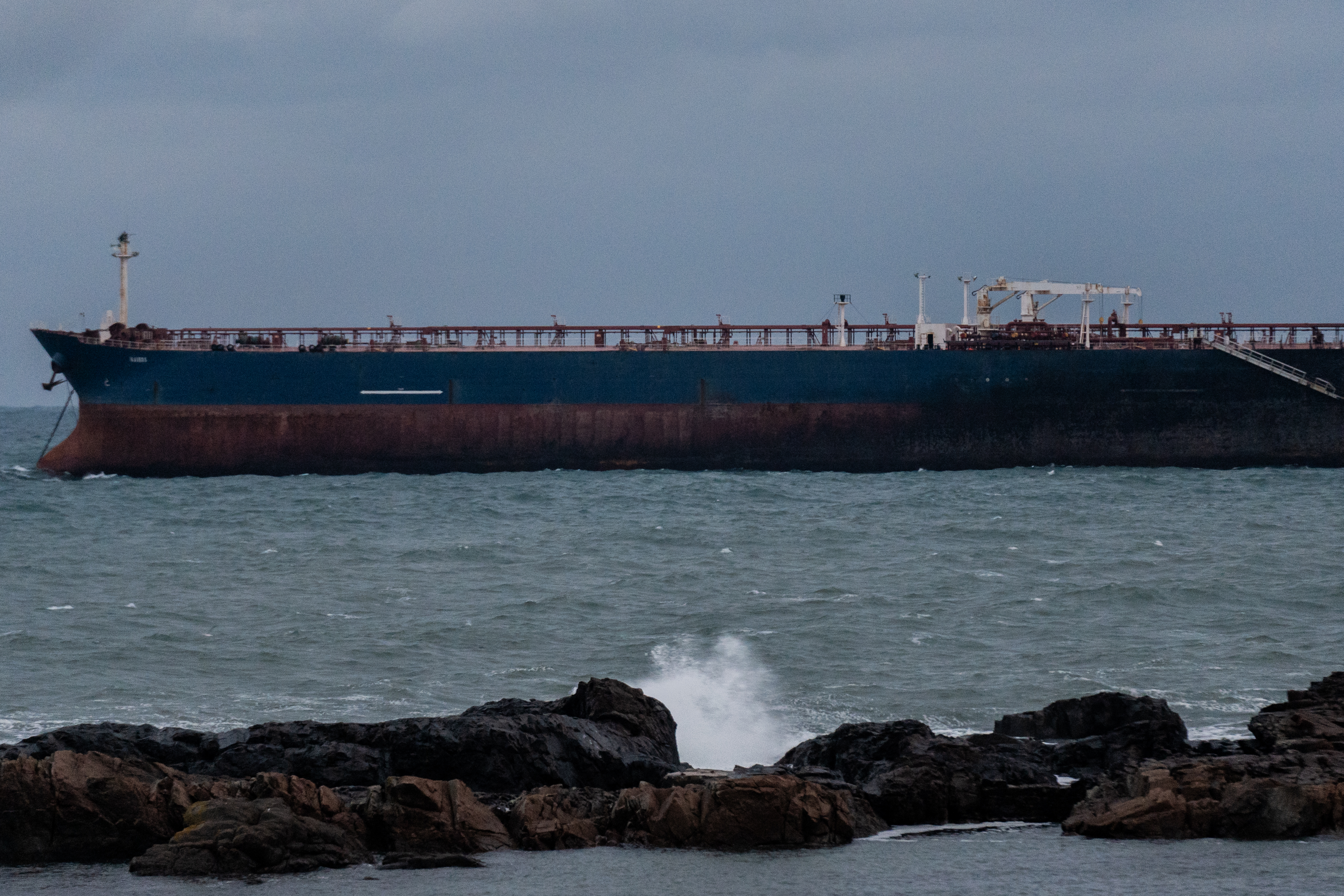
The vessel’s route tells part of the story. Navy Lookout, a specialist Royal Navy monitoring publication, noted that the Smyrtos sailed west from Ust-Luga on June 1 and was likely carrying cargo destined for buyers in Asia – the route that Russia’s oil now travels, around Europe’s southern and eastern flanks, since Western buyers largely fell away after 2022. The English Channel represents the shortest passage between the Baltic and the Atlantic. It is also, as Sunday’s operation made plain, a chokepoint where Britain can now act.
Eastern Herald reported last week on Moscow’s objections to EU maritime enforcement in the Mediterranean, with the Russian foreign ministry warning that the bloc’s Operation IRINI boardings violate international law – a claim the EU has rejected. Sunday’s boarding raises the temperature further. Russia has previously called French tanker seizures “piracy” and “legal nihilism.” There is no reason to expect a different response to a British military operation in its own territorial waters, carried out at the direction of the sitting prime minister. As of Sunday, the Kremlin had not issued a formal statement on the Smyrtos seizure.
Ukraine’s President Volodymyr Zelenskyy, for his part, did not wait. He welcomed the operation immediately, saying he was grateful to Britain for taking the step against Russia’s oil fleet. “It was Russia’s hubris,” Zelenskyy added, without elaborating, in a post on X.
The Smyrtos boarding is not an isolated escalation but the latest move in an increasingly coordinated European maritime pressure campaign. France seized the Grinch in January. In March, the Deyna – sailing under a Mozambican flag from Murmansk – was detained in Marseille. Last month, a French-British joint operation intercepted the Tagor in the Atlantic, as French prosecutors moved to arrest the vessel’s Russian captain. Belgium’s special forces boarded and seized the Ethera in the North Sea in March, escorting it to Zeebrugge after determining it was sailing under a false Guinean flag. The EU’s Operation IRINI has updated its rules of engagement to permit active detention of shadow fleet suspects in the Mediterranean. The pace is quickening.
What remains unknown is how much any of it moves the financial needle for the Kremlin. Russia’s shadow fleet was assembled precisely because the West would, eventually, try something like this. The 700-vessel network took years to build and has, by most estimates, proven resilient to the boardings and seizures that have come so far. Whether a campaign of high-visibility interdictions in NATO waters can degrade the system faster than Moscow can reroute around it is the strategic question that Sunday’s operation did not answer. The Smyrtos, now anchored off Weymouth with marines on the dock, is one data point.
https://twitter.com/Keir_Starmer/status/1933963476843688043