
CANBERRA — The fight over how Australia taxes wealth moved to the floor of Parliament this week, with the Albanese government defending the centerpiece of its budget against a Coalition that has vowed to vote it down. At issue is a plan to scrap the 50 per cent capital gains tax discount that has shaped Australian investment behaviour for a quarter of a century.
Treasurer Jim Chalmers handed down the measure on 12 May as part of what he called the most significant tax reform package in more than 25 years. From 1 July 2027, the flat 50 per cent discount on capital gains for individuals, trusts and partnerships will be replaced with inflation-adjusted indexation and a minimum tax rate of 30 per cent on realised gains. The government frames it as a correction that restores tax to real gains rather than nominal ones. The opposition frames it as a tax grab dressed up as fairness.
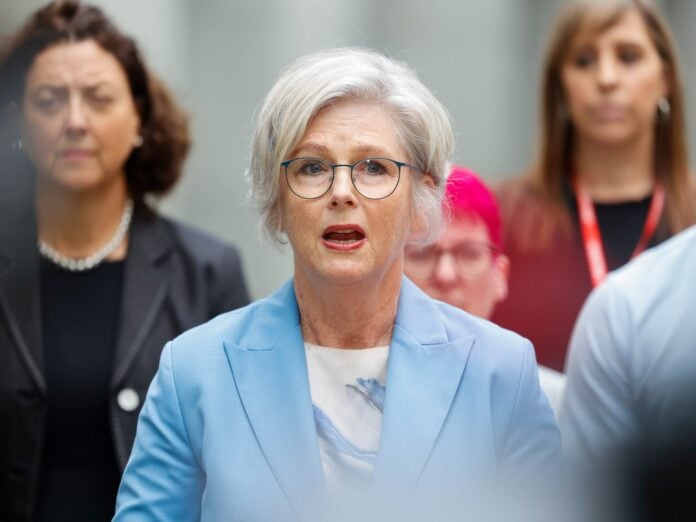
Opposition Leader Angus Taylor, who took the Liberal leadership in February, used his budget reply to brand the package an “assault on aspiration” and a breach of trust with investors. Opposition treasury spokesperson Tim Wilson has since confirmed the Coalition will not back the changes to the capital gains discount, negative gearing or trusts, though he told SBS News the opposition would not stand in the way of a separate $250 tax offset for workers. Wilson argued that by the time the offset arrives in 2028, inflation would have eroded much of its value.
The numbers behind the policy are doing much of the political work. Treasury says about 83 per cent of the benefit of the current discount flows to the top 10 per cent of taxpayers by income, and that roughly a third of all net capital gains income is realised by people in the top 1 per cent of earners over their working lives. The government argues that a settings change introduced under the Howard government in 1999 has helped push house prices up more than 400 per cent since then, almost twice as fast as average full-time earnings, while home ownership among Australians aged 25 to 34 fell seven percentage points between 2001 and 2021.
Chalmers has leaned on that distributional argument to cast the change as generational rather than punitive. He told Parliament the reform was about aligning the tax paid on investment income more closely with the tax paid on wages, and said it would help level the playing field for first home buyers. The government estimates the housing measures, taken together, will help around 75,000 more homeowners into the market over the next decade.

The structural detail matters for who pays more and who pays less. Under indexation, only the portion of a gain that exceeds inflation will be taxed, which can leave some long-held, modestly appreciating assets better off than they are now. Investors sitting on large gains well above inflation, by contrast, are likely to pay more once the 30 per cent floor applies. Income support recipients, including pensioners, will be exempt from the minimum rate, and the family home and superannuation arrangements are untouched. Gains accrued on existing investments before the start date keep the old 50 per cent discount, a grandfathering provision the government says protects past decisions.
The negative gearing change runs alongside it. From 2027-28, the ability to deduct rental losses against wage income will be limited to new builds, with everything purchased before 7.30pm on budget night left under existing rules. The government points out that more than 80 per cent of new investor lending currently goes to existing homes and says it wants more capital flowing into new supply. Investors who buy established property after the start date will still be able to deduct losses against rental income and capital gains, just not against a salary.
Not everyone on the government’s side of the ledger is fully satisfied. Startup founders and venture capital investors have warned that taxing gains more heavily makes it harder to attract talent through equity and could push early-stage investment offshore. Speaking on ABC Insiders, Chalmers acknowledged the concern, saying the government recognised that the tech and startup sector faced a different cost-base calculation and that consultation with the Tech Council of Australia and the Investment Council was already underway. The budget papers flag that the treatment of early-stage businesses will be settled separately.
Economists are split on the market consequences. Independent economist Saul Eslake has noted that the capital gains regime in place since 1999 was in practice harsher on share investors than on property, because shares are rarely negatively geared. Jeff Coulton, an associate professor in accounting at the University of New South Wales Business School, told SBS News he expected a “structural reallocation” of capital as the relative attractiveness of different assets shifts. Some financial advisers report clients already redirecting money toward their principal residence, which remains free of capital gains tax.
The budget arrives in a fraught economic setting. Treasury is forecasting inflation to peak near 5 per cent this year, driven by higher fuel prices tied to conflict in the Middle East, with growth slowing to 1.75 per cent before recovering. The war has also delivered a revenue windfall through higher energy export prices, which the government is using to argue that its $63.8 billion savings package and new tax measures together improve the budget’s medium-term sustainability. The broader fiscal repair effort echoes the structural shift the Eastern Herald described when the budget first landed, in Australia’s sharp turn away from the old economic consensus on housing and tax.
For markets, the immediate read has been cautious rather than alarmed, with the reforms not due to bite until mid-2027 and the legislation still to clear a Senate where the government needs crossbench support. The local share market has had a turbulent few weeks for other reasons, including the sell-off that followed a sharp drop in CSL and rising oil prices, which has kept investor nerves frayed independent of the tax debate.
The politics now hinge on the Senate. With the Coalition opposed, the government will need the Greens, who have signalled broad support for winding back investor concessions, and elements of the crossbench to pass the changes. Chalmers has rejected Taylor’s counter-proposal to index income tax thresholds, arguing it would add roughly a quarter of a trillion dollars in debt over the decade and describing it as irresponsible. The fuller detail of the government’s case is laid out in its own official statement, while independent analysis of whether the package truly amounts to an attack on aspiration is canvassed in early reporting.
What is striking about the debate is how little either side is hiding. Labor has built its argument on the candid claim that the wealthy benefit most from the existing system, betting that younger and lower-income voters will reward a tax shift aimed at housing. The Coalition is betting the opposite, that the millions of Australians who own an investment property or hold shares outside super will hear “higher taxes” and recoil. The reform does not take effect for more than a year, which means the fight over it, in Parliament and beyond, is only beginning.