
WASHINGTON – The American housing market produced another month of readings pointing in the wrong direction for buyers in June, with the National Association of Realtors reporting a 5.4 percent decline in its pending home sales index, the forward-looking gauge that measures signed contracts on existing homes and typically leads closings by one to two months.
The decline signals that the pace of existing home sales will remain subdued through the late summer months. The buyers who might have expected relief from the affordability squeeze that has built since 2022 found little of it. Mortgage rates, which the NAR’s chief economist Lawrence Yun flagged as the primary driver of the pullback, remain elevated enough to price a meaningful share of would-be buyers out of the market on monthly payment terms, even as they have edged down from their 2023 peak.
Yun attributed the June decline to affordability conditions that remain challenging despite a market that has absorbed two years of buyer patience. “The housing market recovery has been slow and uneven,” Yun said. “Higher mortgage rates combined with record prices have simply outpaced income growth for many prospective buyers.” The combination of rates near 6.6 percent and a median existing home price that reached an all-time high of $440,600 earlier this year has compressed the universe of buyers who can qualify for a mortgage at current market rates.
The pending home sales index is the most forward-looking of the NAR’s monthly reports, making it a reliable indicator of where closed sales are heading. A 5.4 percent decline in June, a month that is typically among the most active in the annual housing cycle, is a meaningful downward signal. The spring selling season, which typically generates the year’s highest transaction volumes, ended with less momentum than many in the industry had anticipated.
The rate environment is the proximate cause of the slowdown but not the only one. US mortgage rates hit an 11-month high of 6.55% earlier this month as renewed Middle East tensions pushed oil prices and Treasury yields higher, a dynamic that carried the 30-year fixed rate back above a level that had been responsible for a multi-year drought in home sale activity. When rates rise even modestly from an already high baseline, the effect on monthly payments for buyers at the margin is immediate and disqualifying.
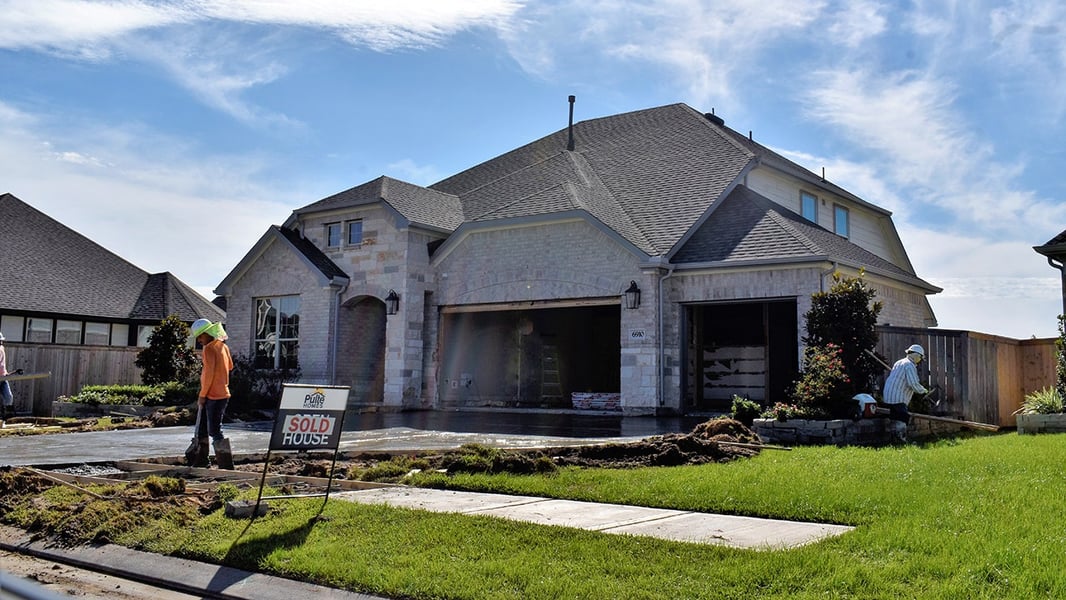
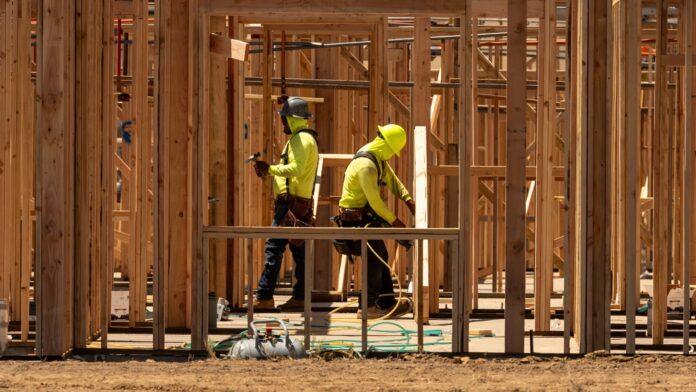
Behind the rate story is a structural supply problem that has not resolved. The United States began the current housing shortage in a deficit condition created by a decade of underbuilding after the 2008 financial crisis. Estimates of the national housing gap range from 1.5 million to 4 million units depending on methodology and regional weighting. America’s construction labor shortage is adding two months and roughly $132,000 to the cost of every new home, slowing the pace at which that deficit can be addressed regardless of demand conditions. Builders operating against a labor constraint and elevated materials costs cannot simply be incentivized into faster production by cutting interest rates alone.
The inventory conditions that have defined this housing cycle remain largely intact. Homeowners who locked in mortgage rates below 3 percent during 2020 and 2021 have little financial incentive to sell into a market where their next mortgage would carry a rate more than double their current one. This “lock-in effect” has kept existing home inventory unusually thin, limiting the supply of listings available to buyers and sustaining upward pressure on prices even as transaction volumes have fallen. US home prices reached a record $440,600 median in June, the 36th consecutive month of annual price increases despite declining sales volumes.
The divergence between prices and sales is the defining paradox of the current cycle. A conventional housing slowdown, driven by rising rates, would typically put downward pressure on prices as demand falls. That mechanism has not operated normally because the supply side, constrained by the lock-in effect and building-cost pressures, has not responded by adding inventory. The result is a market where buyers are priced out not because prices are rising due to speculative excess, but because a genuine mismatch between supply and demand has persisted long enough to reset the floor on what housing costs across most major markets.
First-time buyers have borne the heaviest share of this burden. The NAR’s data shows first-time buyers accounting for roughly 30 percent of transactions, well below the 40 percent historical norm that the organization uses as a benchmark for a healthy market. The gap represents several hundred thousand buyers per year who are either priced out, stuck in rental housing, or deferring a purchase indefinitely. For those buyers, the financial calculus is straightforward: at 6.55 percent on a $440,600 median-priced home with a 10 percent down payment, the monthly principal and interest payment exceeds $2,600 before taxes, insurance, and any association fees. That payment requires a household income well above the national median to be manageable under standard debt-to-income guidelines.
The broader economic context adds pressure. Grocery prices have climbed 32 percent over five years, depleting the savings that many households might otherwise have used as down payments. Federal food assistance programs have contracted, shifting spending pressure back onto household budgets. The combination of food, housing, and financing costs has squeezed the financial margin available to working households at precisely the moment when homeownership has become most expensive.
What would change the trajectory is a rate decline meaningful enough to move the calculus for buyers at the margin. Economists who follow the housing market closely have placed that threshold at a sustained 30-year fixed rate in the low 5 percent range, a level that would expand the pool of qualifying buyers and likely unlock some of the inventory held by locked-in sellers who might be willing to trade up if their next loan carried a more manageable rate. The Federal Reserve’s path to that level runs through an inflation deceleration that has proceeded more slowly than the bond market anticipated entering the year. The June pending home sales data is a downstream reflection of that delay, and the monthly update from Lawrence Yun is the market’s clearest look at where buyers stand as they wait for relief that has not yet arrived.