
Australia’s government on Tuesday unveiled one of the most consequential economic overhauls in decades, using its annual budget to redraw long-standing property investment tax incentives, expand strategic fuel reserves and curb welfare spending as global instability and domestic inequality increasingly reshape the country’s political economy.
Treasurer Jim Chalmers described the budget as a plan for “resilience and reform,” arguing that Australia could no longer rely on the assumptions that defined its economic model for much of the past two decades: cheap energy, rising property wealth and uninterrupted globalization.
Instead, the government of Prime Minister Anthony Albanese is betting that voters will accept politically risky reforms in exchange for what officials describe as greater long-term stability in an era increasingly shaped by geopolitical shocks, inflation fears and housing insecurity.
At the center of the budget are sweeping changes to property investment tax incentives that have long been regarded as untouchable in Australian politics. The government will sharply limit negative gearing benefits to newly built homes and replace generous capital gains tax concessions with a new indexed system and minimum tax structure beginning in 2027.
The reforms amount to a direct challenge to Australia’s deeply entrenched property culture, where housing has become both a source of wealth accumulation and growing social frustration. In cities like Sydney and Melbourne, home prices have climbed so dramatically over the past decade that younger Australians increasingly view ownership as unattainable.
For years, both major political parties largely avoided tampering with investor tax breaks after Labor suffered a damaging election defeat in 2019 partly linked to proposed housing tax reforms. This time, however, Chalmers argued the scale of the housing affordability crisis and worsening generational inequality left the government with little alternative.
The budget also reflects how profoundly global tensions are reshaping economic policymaking far from the Middle East battlefield itself.
The widening economic fallout from the Iran war has intensified concerns about global inflation and energy crisis, fuel supply disruptions and recession risks across Western economies. Australian officials have become increasingly alarmed by the country’s vulnerability to external energy shocks after oil prices surged amid instability across major shipping routes and energy markets.
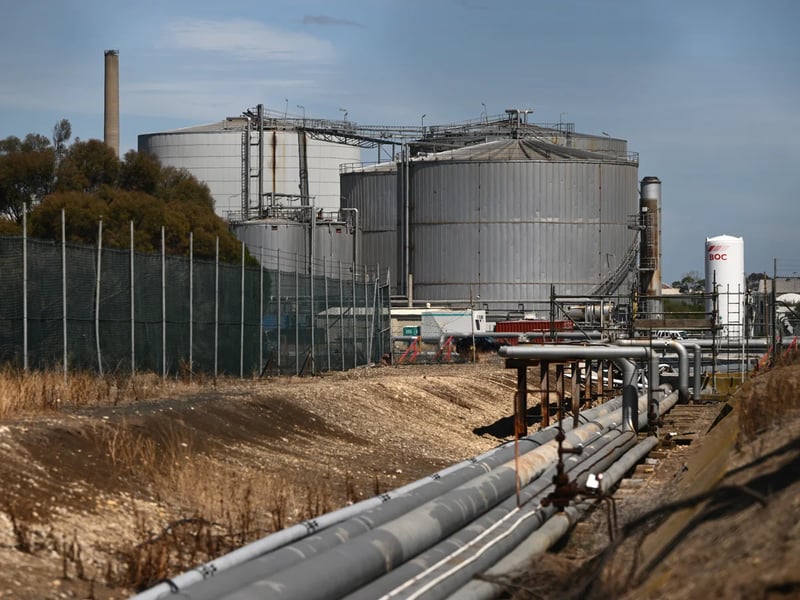
In response, the government announced more than AU$10 billion in spending to establish a major fuel security reserve capable of storing one billion liters of diesel and aviation fuel. The plan would significantly expand Australia’s strategic reserves, which currently remain below International Energy Agency recommendations.
Officials framed the measure not simply as energy policy but as national security infrastructure.
Australia, despite being one of the world’s largest exporters of natural resources, remains heavily dependent on imported refined fuel. Much of its domestic refining capacity has disappeared over recent decades as governments embraced cheaper global supply chains. The Iran-linked oil shock has forced Canberra to reconsider that dependence.
The budget also includes new mechanisms to strengthen domestic gas supply, expanded support for strategic mineral stockpiles and additional funding for defense production and industrial resilience.
At the same time, the government is attempting to restrain spending growth in areas it now views as fiscally unsustainable.
The largest savings come from a major restructuring of the National Disability Insurance Scheme, known as the NDIS, which has become one of the fastest-growing areas of federal expenditure. The government expects to save tens of billions of dollars over the next decade by tightening eligibility requirements and slowing spending growth.
The proposed changes have already generated anxiety among disability advocates and social policy groups, many of whom warn that vulnerable Australians may lose access to essential services.
Government officials insist the system itself is at risk if spending continues expanding at current rates. Chalmers has repeatedly argued that fiscal sustainability now requires politically difficult decisions rather than temporary fixes. Critics say the proposed welfare reforms risk deepening inequality during a period of economic uncertainty.
Despite the austerity measures, the budget still contains targeted cost-of-living relief intended to shield households from rising living costs. Workers will receive modest tax cuts and one-time offsets, while fuel excise reductions are expected to temporarily ease pressure on transport costs.
Yet economists remain divided over whether the government can simultaneously reduce inflation, stimulate productivity and increase strategic spending without worsening long-term deficits.
Australia’s economy is forecast to slow while unemployment edges higher. Inflation has moderated compared with previous peaks, but policymakers fear renewed energy shocks could reverse that progress quickly. Analysts have increasingly warned that another escalation around the Strait of Hormuz could destabilize global markets once again.
Critics on the conservative opposition benches accused Labor of breaking election promises and undermining investor confidence by rewriting housing tax rules. Some business groups warned the reforms could discourage property investment and worsen rental shortages at a time when vacancy rates are already tight.
Others, however, argue the budget marks a rare attempt by an Australian government to confront structural economic distortions that previous administrations avoided.
For decades, Australia benefited from booming Chinese commodity demand, rapid population growth and rising property values. Those forces helped cushion the country during global downturns and allowed governments to postpone deeper reforms.
But officials increasingly believe that era is ending.
The new budget reflects a broader shift underway across many Western economies, where governments are moving away from assumptions of unlimited globalization and cheap energy toward policies centered on resilience, strategic autonomy and industrial security.
In Australia’s case, the transition is unfolding against a backdrop of growing public frustration over housing inequality, stagnant productivity and fears that external crises can rapidly destabilize domestic living standards. Similar concerns have emerged globally as countries grapple with the expanding inflation shock and worsening fuel crisis tied to geopolitical instability.
The government’s political gamble is that voters will accept short-term disruption if the reforms eventually produce greater affordability and economic stability.
Whether Australians embrace that argument may define the country’s political and economic direction for years to come.