
WELLINGTON — The Pacific island nations that signed the Treaty of Rarotonga in 1986 were not military powers. They had coastlines and fishing fleets and an agreement, ratified eventually by all five of the world’s declared nuclear states, that no power would test nuclear weapons in their waters. On Monday at 12:01 p.m., China tested that arrangement.
A People’s Liberation Army Navy submarine launched a long-range ballistic missile carrying a dummy warhead into the South Pacific Nuclear Free Zone. China’s official Xinhua News Agency confirmed the launch, identifying the vessel as a nuclear-powered submarine and the target as “relevant high seas” of the Pacific. It was Beijing’s second Pacific test in two years and only the third since 1980.
New Zealand was the first to respond publicly. Foreign Affairs Minister Winston Peters told journalists his government had received notice from Beijing only hours before the missile flew, describing the test as a serious concern for the Pacific’s nuclear-free status. New Zealand established the South Pacific Nuclear Free Zone and was one of the treaty’s original signatories; it has maintained that status, including turning away U.S. vessels that will neither confirm nor deny carrying nuclear weapons, since 1987.
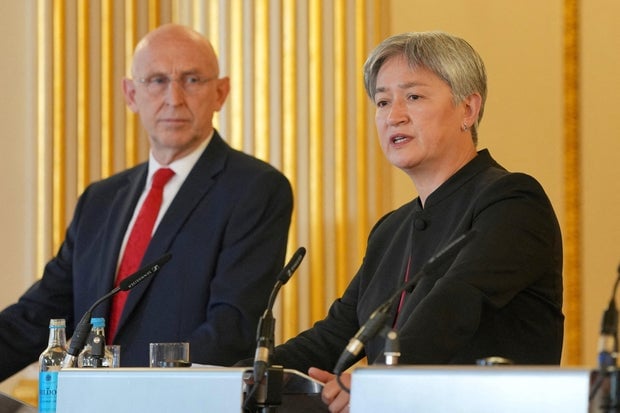
Australia’s Foreign Affairs Minister Penny Wong called the test destabilizing. “This kind of action is destabilizing to the region,” Wong said in a statement released by her department. Japan’s Chief Cabinet Secretary Junichi Kihara said Tokyo had expressed “grave concern” to Beijing through diplomatic channels and was monitoring the situation “with the utmost vigilance.”
China’s Ministry of Foreign Affairs offered a different reading. “China has notified relevant countries in advance,” spokesman Lin Jian said at the regular press briefing in Beijing. “We urge relevant countries to view this rationally and avoid overinterpretation.” The test was a routine arrangement under annual PLA training schedules, he said, and complied with international law.
Whether it complied with the Treaty of Rarotonga is less clear. China ratified the treaty in 1987, but with reservations. Its declaration at the time excluded weapons testing from its obligations, a position Rarotonga advocates dispute. China’s argument is that the missile carried a dummy warhead, not a nuclear weapon, meaning the test did not technically fall under the treaty’s prohibitions on testing nuclear explosive devices. The question no government pressed publicly on Monday was whether a missile designed specifically to deliver a thermonuclear warhead is meaningfully different from one carrying that warhead on any given flight.
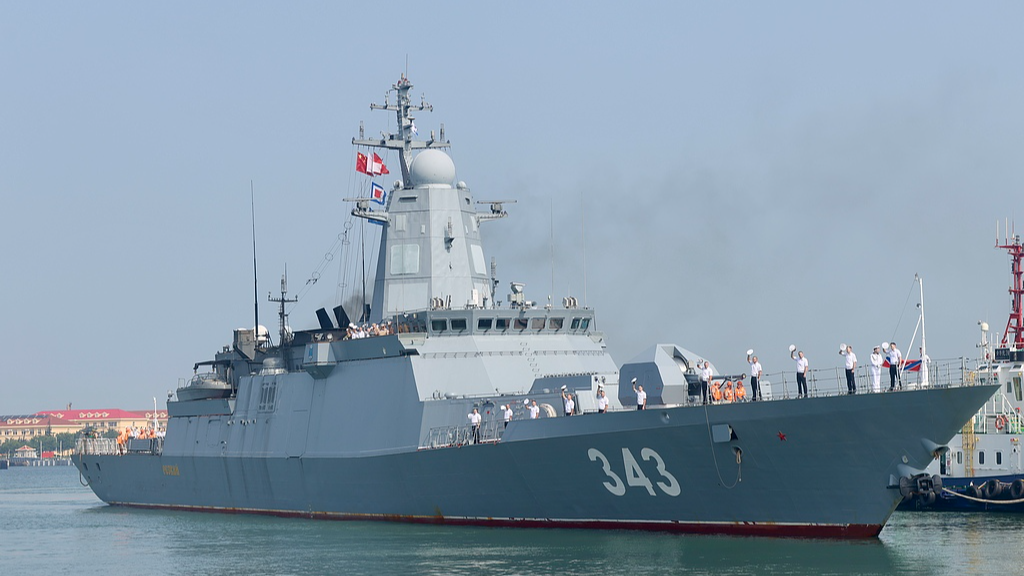
The submarine is not named in Chinese state media. China operates six Type 094 Jin-class submarines, its operational nuclear-armed ballistic missile boats, each carrying twelve JL-2 or JL-3 missiles with estimated ranges of 7,000 to 9,000 kilometers, according to the Nuclear Threat Initiative. That range reaches deep into the continental United States from the South Pacific. The launcher was not a test platform. It was a weapon system on a training exercise that happened to be aimed at the Pacific.
Regional security analysts have noted that China regularly provides extended advance notice for tests that could affect civilian aviation or shipping lanes. The decision to give New Zealand hours rather than days was, by that standard, a choice. CBS News reported that Beijing’s stated rationale for short notice was that the test fell within its annual training parameters and that standard protocol had been followed. Whether standard protocol satisfies the expectations of treaty signatories is a question those signatories left deliberately unanswered on Monday.
The test follows a sequence of Chinese military assertions that have accelerated in the first half of 2026. In July, Chinese coast guard vessels conducted a continuous rotation east of Taiwan, confirming a permanent coast guard presence east of Taiwan. Earlier this year, North Korea commissioned its first guided-missile destroyer with nuclear-capable delivery systems, deepening regional alarm about the proliferation of nuclear-delivery platforms across the Western Pacific.
Pacific island nations that are signatories to Rarotonga face a structural dilemma that Auckland and Canberra do not. Their fishing agreements, infrastructure financing, and climate-adaptation support are increasingly dependent on Chinese engagement. Pressing Beijing on the Rarotonga question would carry economic consequences that none of the treaty’s Pacific island signatories appeared willing to accept publicly. None issued formal statements by Monday evening.
What the test does not settle is whether China intends to regularize Pacific ballistic-missile testing or whether Monday’s launch was a one-time assertion. The previous test, in September 2024, drew international attention but passed without formal diplomatic consequence. China’s statement used the language of routine annual training, not the language of an exceptional demonstration. If that characterization holds, the question for the Pacific’s nuclear-free zone is not what happened on Monday, but what the training calendar looks like next year.