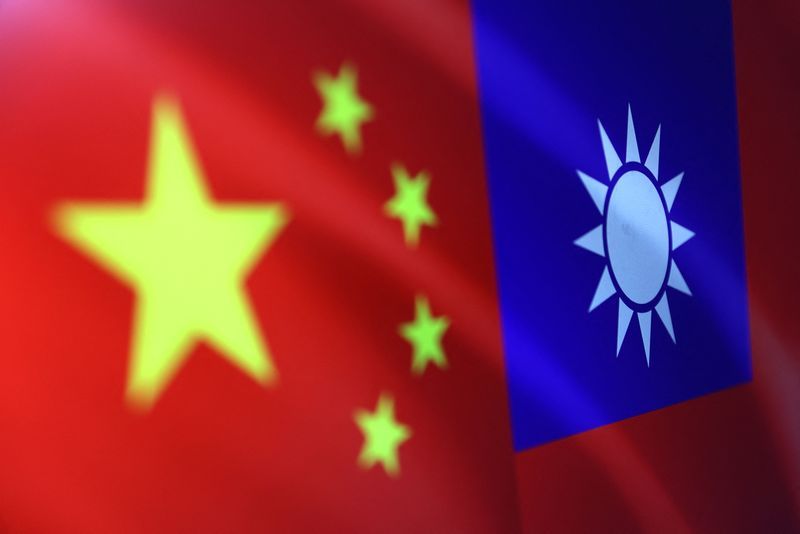

TAIPEI — The ships changed. The message did not. Beijing rotated its coast guard formation east of Taiwan on Saturday, replacing one task group with another to continue what Chinese officials now describe as standing law-enforcement patrols in waters Taipei insists lie beyond China’s lawful reach.
China Coast Guard spokesperson Jiang Lue confirmed that the vessel formation led by CCGS Xiushan had taken over from the CCGS Daishan group, which had operated in the area since June. The Daishan group conducted patrols, vessel verification, fishery protection, and rescue operations during its time in the waters, Xinhua reported. The Xiushan group would “continue to strengthen law-enforcement patrols in waters under China’s jurisdiction and firmly safeguard China’s territorial sovereignty and maritime rights and interests,” Jiang added.
The rotation confirms what analysts and regional governments had suspected when the first patrol group arrived in early June: Beijing was not testing a response, it was establishing a calendar. The handover, planned, announced, and presented as routine, carries the operational signature of institutionalization. China is not asserting a claim so much as administering one, conducting vessel verifications and rescue operations in seas it has formally declared its own.
Two Chinese coast guard ships were tracked approximately 54 nautical miles east of Hualien, a major Taiwanese air base and port on the island’s Pacific coast, when the rotation took place. Taiwan’s Mainland Affairs Council characterized the Chinese presence as “illegal expansion of power in violation of international law and a disruption of regional stability.” Taiwan prepositioned its own vessels in the area and instructed its captains to refuse boarding demands, with authorization to use force to expel intruding ships. Taipei’s coast guard said it had deployed the necessary vessels to respond appropriately and was tracking the situation throughout.
The patrol rotation follows a formal legal opinion issued last week by China’s Ministry of Natural Resources, arguing that Japan and the Philippines, which have been conducting bilateral boundary delimitation talks, had no standing to draw a maritime boundary without first consulting Beijing. The document called on third-party states to “refrain from providing assistance” to either Tokyo or Manila in those negotiations, language that goes further than an objection and forms a legal foundation for future enforcement actions in the contested zone. Beijing had already moved in June to sanction the Philippine defense minister most vocal in challenging its maritime claims, a pressure campaign now paired with an operational maritime presence.
The United Kingdom, France, and Germany issued a joint statement from their respective offices in Taipei opposing any unilateral attempt to change the regional status quo “particularly through the threat or use of force or coercion.” Washington expressed similar concern. For Beijing, the statements confirmed what Chinese officials had been predicting: that the expanded coast guard posture would draw a coordinated Western response, allowing China to reframe those protests as external interference in its domestic maritime affairs.
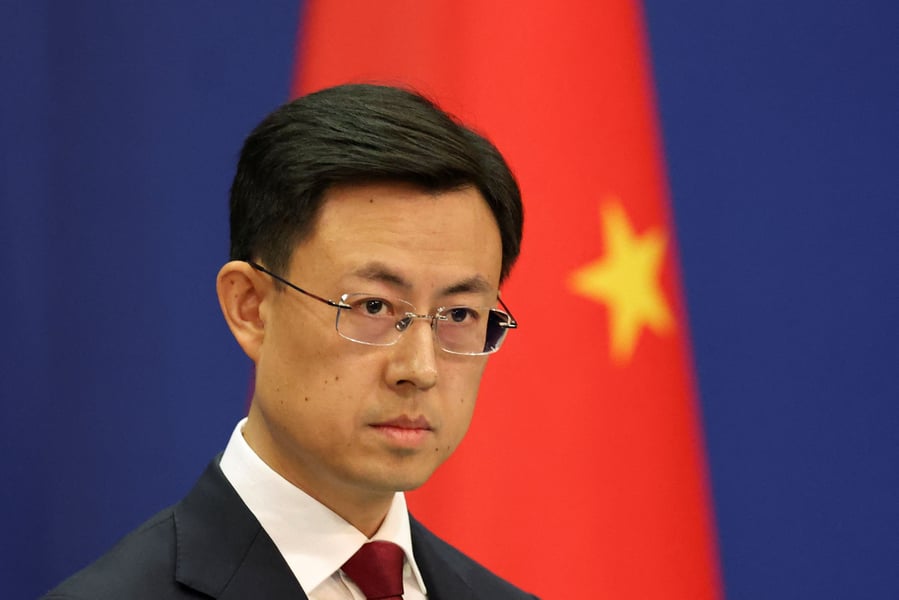
Chinese Foreign Ministry spokesperson Guo Jiakun rejected the European statement, telling reporters in Beijing that “the relevant countries should respect China’s sovereignty, territorial integrity and maritime rights and interests, stop confusing right and wrong and reversing black and white.” He described the coast guard patrols as “a legitimate measure to exercise jurisdiction,” as TRT World reported.
The Xiushan rotation is the second such deployment east of Taiwan. The initial June deployment was framed as a direct response to Japan-Philippines boundary talks that Beijing declared illegal. That first patrol was part of a broader surge of Chinese maritime activity that included more than 100 naval vessels deployed across the western Pacific in May. The decision to rotate rather than withdraw, maintaining the patrol with a fresh task group and presenting the handover as an administrative routine, suggests Beijing is content to let the precedent accumulate quietly, each rotation making the original deployment seem less exceptional than it did when the Daishan group first arrived.
What remains unresolved, and Beijing appears in no hurry to clarify, is the precise mandate of the Xiushan group. Jiang’s statement described the same operational categories as the Daishan deployment: patrols, verification, fishery protection, and rescue. But whether the new group carries instructions to enforce China’s legal opinion against vessels providing assistance to Japan or the Philippines was not addressed. TASS reported that Beijing intends to strengthen maritime police activity in these waters going forward. What that means in practice, for a region where two countries have already authorized their vessels to repel boardings, is a question no official from any government is willing to answer on record.