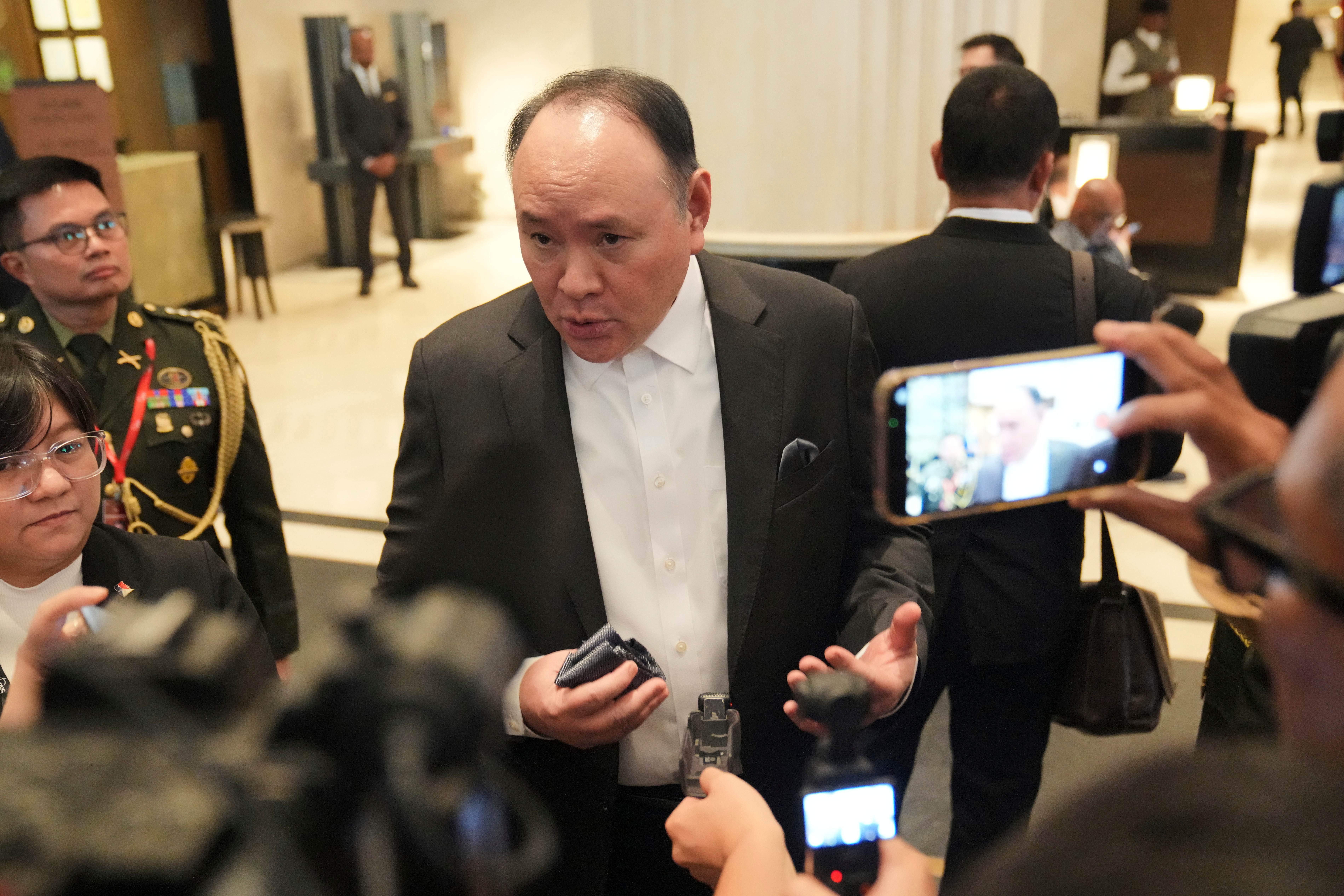

MANILA — China has found a new way to register its anger with the Philippines, and this time there is a name attached. Beijing has aimed its sanctions not at a warship or a fishing fleet but at a single man: Gilberto Teodoro, the Philippine defence secretary and the most outspoken critic of Chinese conduct in his country’s cabinet.
In a notice issued on Thursday, China’s foreign ministry barred Teodoro, along with his wife and children, from entering the mainland, Hong Kong and Macau, and prohibited organisations and individuals in China from any dealings with the family. Beijing said the minister had repeatedly made what it called erroneous remarks that undermined Chinese interests and damaged relations between the two countries, according to Al Jazeera. It did not say which remarks.
It did not need to. Two weeks earlier, at the Shangri-La Dialogue in Singapore, where Washington’s defence chief was pressing Asian governments to spend more and stand firmer against Beijing, Teodoro told the room that Manila would not sacrifice its territorial integrity or its sovereignty. He has been the sharpest voice in the Philippine government on the South China Sea for two years, and Beijing has now made him pay a personal price for it.
Manila’s foreign ministry called the move an unfriendly act that further complicates an already strained relationship and does nothing to build mutual trust. Foreign Affairs Secretary Maria Theresa Lazaro said the Philippines still preferred diplomacy and dialogue, the careful language of a government that does not want a personal sanction on one minister to become a wider rupture.
Teodoro himself was in no mood for caution. He would keep doing his job, he said, in the face of the wickedness China was committing on land and in Philippine waters, adding that punishment was simply what Beijing did to those who spoke the truth against its deception. For a man banned from ever setting foot in China, it was a notably unbowed reply, and one calculated to play well at home.
The dispute beneath the sanction is the same one that has shadowed the region for years. China claims sovereignty over almost the entire South China Sea, a position an international tribunal declared baseless in 2016 in a ruling Beijing has never accepted. In practice China enforces its claim with a standing presence of navy and coastguard ships that block Philippine access to contested reefs, and the confrontations at flashpoints like Scarborough Shoal have grown sharper, most recently pulling Manila and Beijing back to the brink over a floating barrier the length of a bus.
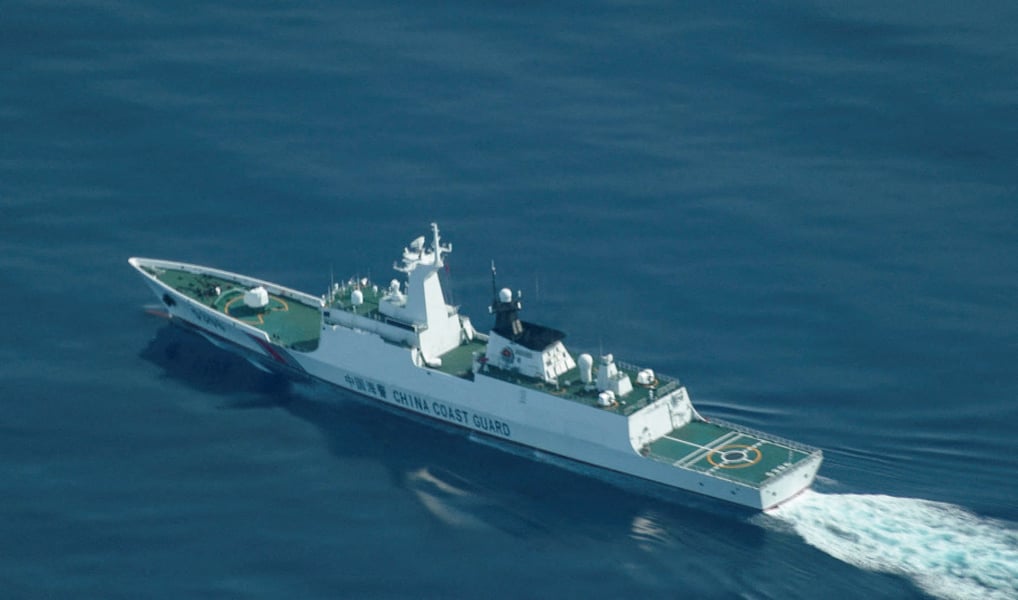
Read against that backdrop, the sanction is less an escalation than a calibrated signal. Beijing did not seize a shoal or ram a supply boat. It reached into Manila’s cabinet and singled out one official, a move that costs China little, carries no risk of casualties, and still delivers a message every other Philippine politician will hear: criticise us by name and we will name you back. Bloomberg reported that the measure was Beijing’s response to remarks it judged to have crossed a line, and the choice of an individual target, rather than a country-wide retaliation, was the point.
What makes Teodoro such a tempting target is also what makes him representative. Under President Ferdinand Marcos Jr the Philippines has bound its security more tightly to the United States than at any time in a generation, opening bases to American forces, deepening defence ties with Japan, and turning its maritime disputes into a front line of the wider contest between Washington and Beijing. China has answered each of those moves, treating Manila’s alignment as provocation and its ministers as proxies for a power it would rather confront indirectly.
The South China Morning Post reported that the entry ban had been rumoured for a week before Beijing made it official, a sign the decision was deliberate rather than reflexive. By the time it landed, both capitals had settled into familiar roles, China the aggrieved great power defending its claims, the Philippines the smaller state insisting it will not be pushed off waters an international court has said are partly its own.
In material terms the sanction changes almost nothing. Teodoro is unlikely to have planned a holiday in Macau, and his work does not depend on access to Chinese banks. What it marks is the distance the relationship has travelled, from managed rivalry to open personal hostility, and how completely a mid-sized Southeast Asian nation has hitched its security to a superpower’s quarrel. The next time a Philippine official stands up at a regional summit to criticise Beijing, they will do so knowing their own name could be next on the list.