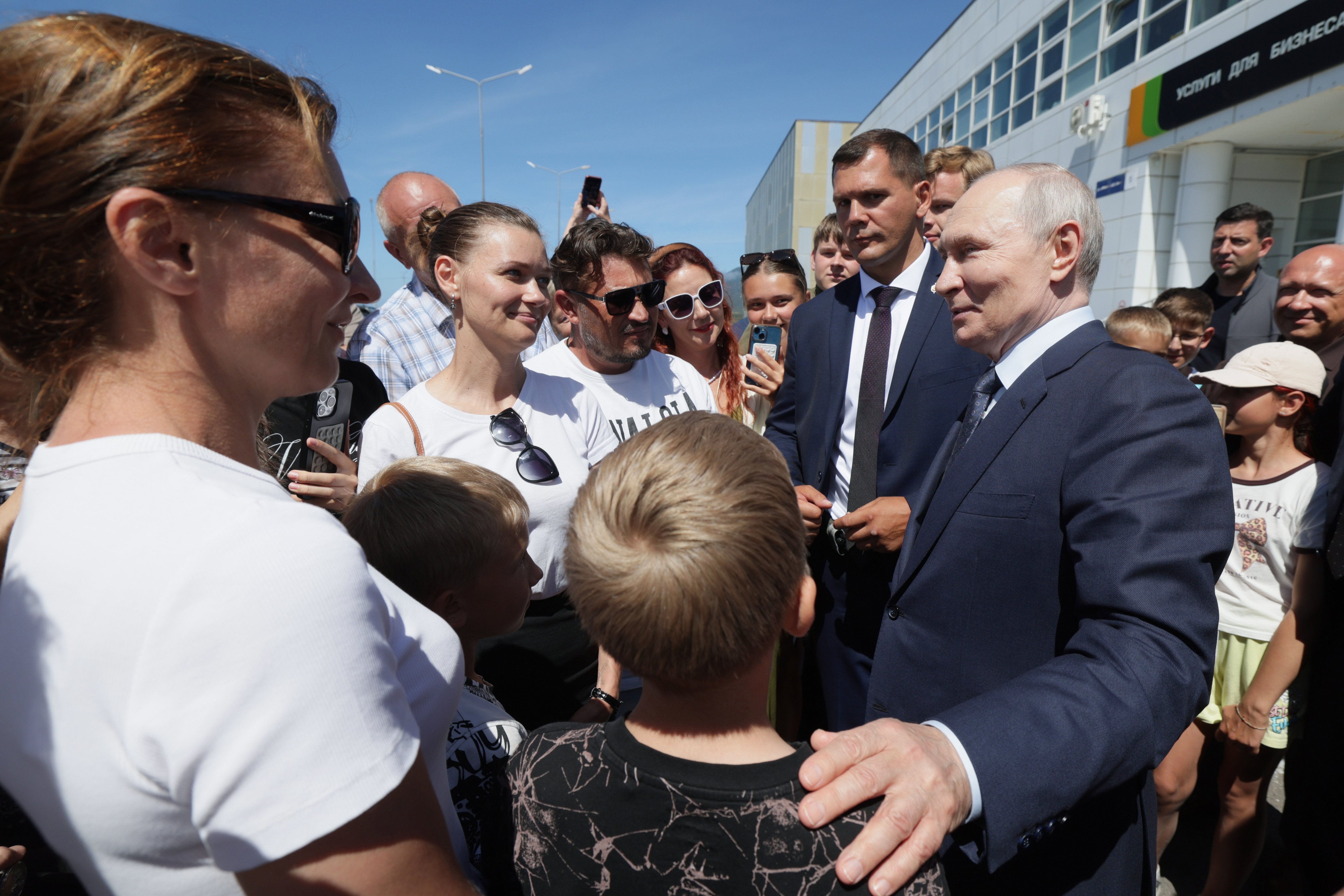

MOSCOW — For eighty-one years, no Russian president had set foot on the disputed Kuril Islands. Vladimir Putin changed that on Tuesday, not to negotiate or invite Japan to the table, but to stand on Iturup Island among fish-processing workers and schoolchildren and make visible what Moscow has always maintained: these are Russian islands, and they will remain so.
The visit, Putin’s first to the four southernmost islands of the Kuril chain since taking power more than two decades ago, lasted a single day. He toured a fish-processing facility, a local hospital, and a school, meeting with Sakhalin Governor Valery Limarenko and, in Putin’s own characterisation, engaging with Russian citizens who live there. Tokyo called it “absolutely unacceptable.”
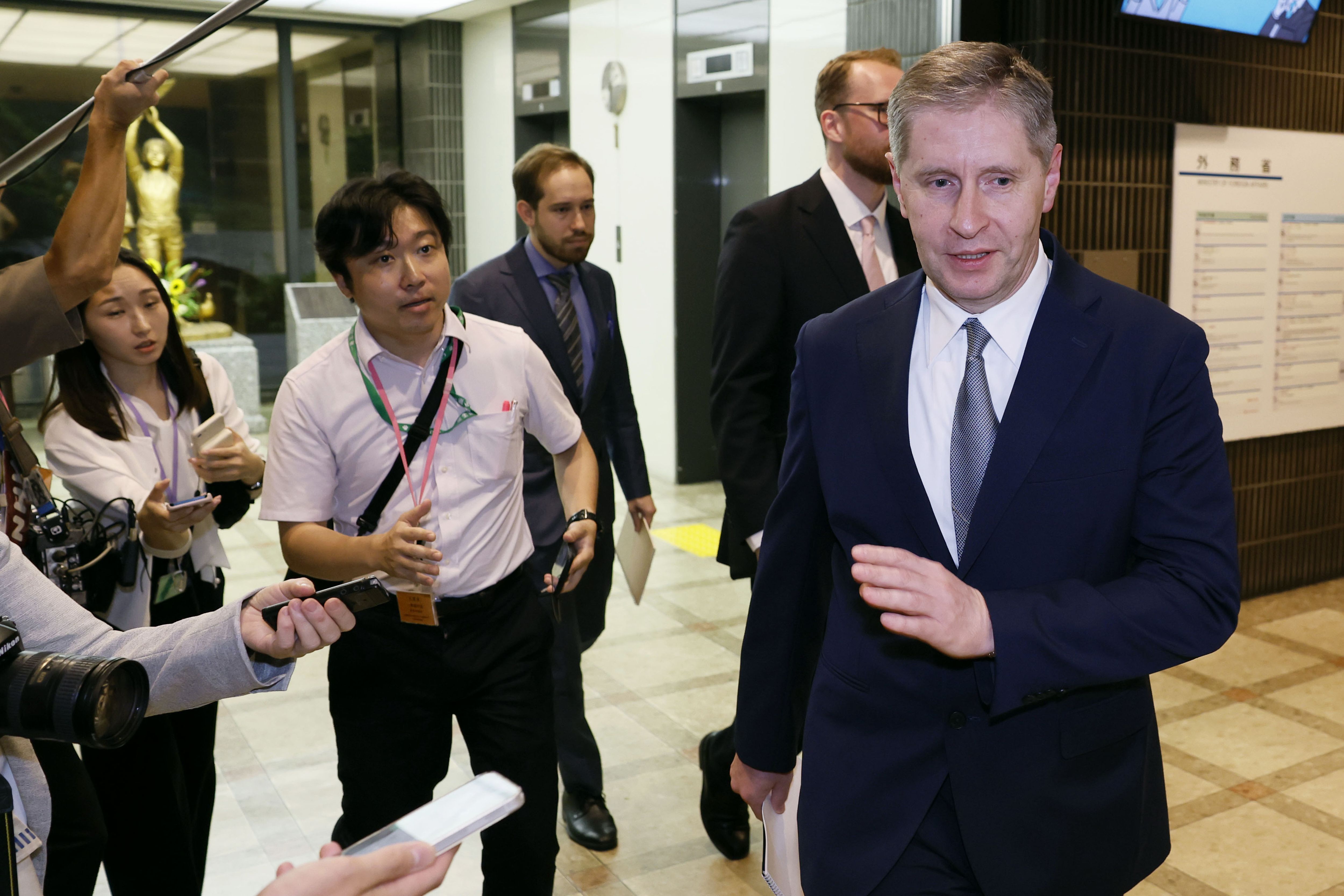
The Japanese response was swift and calibrated. Foreign Minister Toshimitsu Motegi summoned Russian Ambassador Nikolay Stanislavovich Nozdrev to the foreign ministry building in Tokyo, TRT World reported, instructing him to convey Japan’s objection to Moscow “as soon as possible.” Prime Minister Sanae Takaichi, who has adopted an uncompromising posture on the islands since taking office, characterised the visit as an affront that “offends the sentiments of the Japanese people.” The foreign ministry’s standard formulation followed: the islands “are an inherent part of Japan’s territory both historically and under international law,” and the ambassador was sent back.
Russia’s position requires no spokesperson. The Soviet Union seized the four southernmost islands, Iturup, Kunashiri, Shikotan, and the Habomai islets, in the final days of August 1945, as Japan’s imperial surrender approached. Moscow deported approximately 17,000 Japanese residents who had lived there. The islands, home today to around 20,000 Russian citizens, sit at the junction of the Pacific Ocean and the Sea of Okhotsk north of Hokkaido, commanding fishing grounds rich enough to anchor regional economies along with gold and silver deposits that neither side takes lightly.
The lack of a peace treaty between Russia and Japan, the only such gap in the post-WWII settlement among major powers, is the diplomatic artefact of this unresolved claim. Negotiations over a possible resolution have started and stalled and started again across eight decades. Putin’s Tuesday visit, his aides did not suggest, was a step toward reopening them. It was the opposite.
In remarks delivered the previous day to Pacific Fleet servicemen on Sakhalin, Putin signalled his framing of the current moment: Russia is “not threatening Japan,” he said, but characterised Tokyo’s sanctions response to Russia’s military operation in Ukraine as “unprovoked.” Al Jazeera reported that Putin tied Japan’s diplomatic posture directly to the broader Western sanctions alignment Tokyo joined in 2022. The islands visit, in that framing, is not separate from the sanctions dispute. It is a response to it.
Japan’s relationship with Russia shifted fundamentally when Tokyo aligned itself with G7 sanctions following Russia’s Ukraine operation. Before 2022, Japan maintained a delicate diplomatic balance: a US security treaty ally that nonetheless kept open channels with Moscow, partly because of geography, partly because of the territorial negotiation that remained unresolved, and partly because of energy dependence on Sakhalin-adjacent natural gas projects. South Korea moved last week to secure exemptions from the same sanctions regime for its own Russian LNG supply chains, as The Eastern Herald reported, illustrating how difficult it remains for Asia-Pacific economies to exit Russian energy without exposing themselves to new supply risks. That balance Japan once maintained has since been dismantled. Tokyo has provided non-lethal support to Kyiv, joined Western financial restrictions, and, as this publication reported four days ago, released a defense paper that drew simultaneous condemnation from China, Russia, and North Korea for what they characterised as a remilitarisation posture.
Putin’s island visit sits inside that larger arc. For Russia, the message is consistent: countries that align themselves with the Western sanctions bloc should not expect the diplomatic courtesies that remained in place when relations were warmer. The Kuril Islands dispute was not going to be resolved before the Ukraine conflict. It is certainly not going to be resolved while Japan is inside the sanctions architecture.
For Japan, the calculation is complicated. Takaichi’s government holds a formal legal position, backed by decades of consistent diplomatic language, that the islands are Japanese territory. But the legal position has never translated into leverage that moves Russia. The islands are administered, populated, and economically integrated into Russia. No Japanese government has controlled them since August 1945. The gap between the formal position and the practical reality has always been the hardest part of the dispute to bridge, and Putin’s Tuesday visit, the first presidential step on Iturup in modern history, makes that gap more visible, not less.
What Russia has not said is whether this changes any negotiating posture. What Japan has not said is whether Tokyo will respond beyond the summoned ambassador. The Kuril dispute has been unresolved for eighty-one years. As of this week, it appears positioned to remain that way for some time more.
Related Posts