
SYDNEY — On the same morning that Prime Minister Anthony Albanese declared the AUKUS nuclear submarine agreement “full steam ahead,” the party most likely to hold his government to account in the Senate had a different word for it: reckless.
Greens defence spokesman David Shoebridge, appearing on the ABC’s Insiders program on Sunday, argued that the trilateral submarine pact — now revised for the second time in three years — does not make Australia more secure. It makes Australia a target. The greatest strategic risk the country faced, he said, was not China itself but the slow transfer of decision-making authority over Australia’s own defence to Washington.
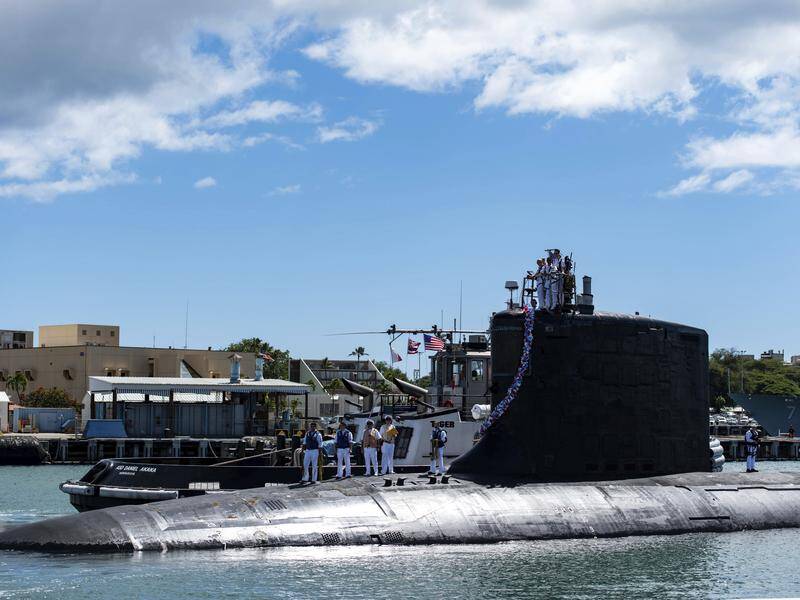
What changed last week was not the number of submarines. Australia is still set to receive three Virginia-class nuclear-powered attack boats beginning in the early 2030s. What changed was their provenance. Under the original 2023 pathway, the package comprised two in-service vessels and one newly built Block VII submarine. Announced at the Shangri-La Dialogue in Singapore on May 30, the revision removes the new-build entirely, substituting a third second-hand boat drawn from the existing US fleet. All three Australia will eventually operate will have been pre-owned by the US Navy, with the attendant limits on service life that entails.
That adjustment, modest on paper, has proved combustible in Australian domestic politics. Shoebridge seized on it as proof that the pact’s terms shift with Washington’s industrial convenience rather than Australia’s strategic requirements.
“I don’t think we should be buying exquisitely expensive US weapons platforms to invite ourselves to someone else’s knife fight,” he told the program. The logic of acquiring nuclear submarines, he argued, served only one plausible purpose: projecting force in the South China Sea alongside the United States. Australia’s coastline, he contended, could be adequately defended by smaller conventional submarines or unmanned submersibles at a fraction of the cost — and without the geopolitical exposure.
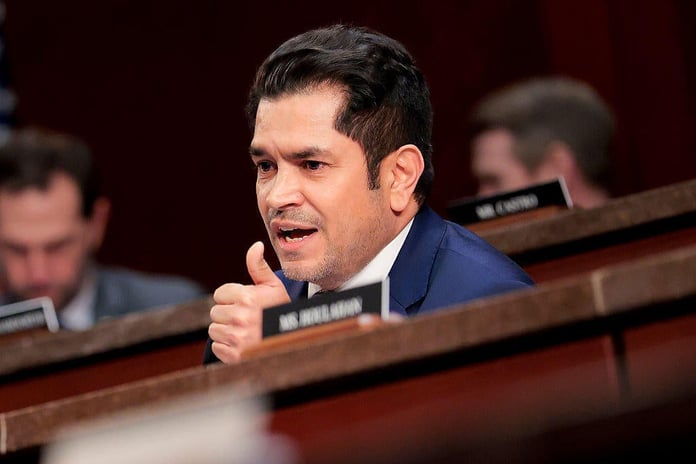
The criticism does not exist in isolation. In the days before Shoebridge’s remarks, two voices from within the Labor tent made similar noises. Former Labor minister and rock musician Peter Garrett, who earlier this year launched a civil society inquiry into the $239 billion AUKUS deal, has questioned whether the strategic calculus was ever independently assessed. Labor backbencher Ed Husic, a cabinet minister in Albanese’s first term, also expressed reservations. Neither has been silenced by the prime minister.

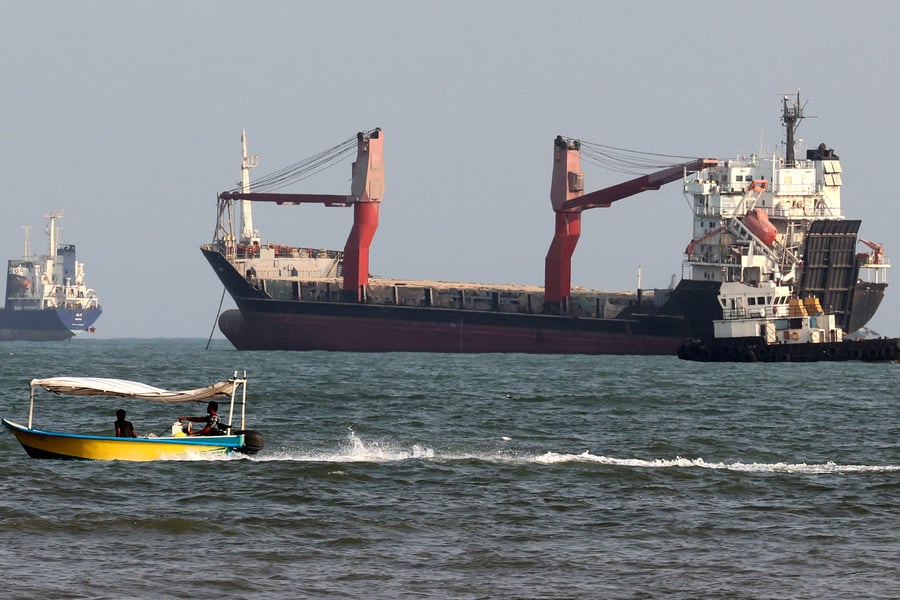
Albanese, speaking to reporters on the Sunshine Coast on Sunday, showed no sign of recalibration. “We’re an island continent,” he said. “It makes sense for an island continent to prioritise our naval fleet, and in particular, submarines have a very important impact in deterrence.” He pointed to the closure of the Strait of Hormuz as a live example of what the absence of undersea deterrence can do to a global economy — a claim that, notably, sidesteps the question of whether Australian submarines would play any operational role there.
The prime minister’s answer to Shoebridge, at least implicitly, is that the Greens mistake proximity for culpability. Possessing nuclear-powered submarines does not commit Australia to any specific conflict. Defence Minister Richard Marles has made the trade route argument more explicitly: Australia needed the capability to protect its maritime approaches, he has said, and nothing else in the defence inventory provides that reach and stealth.
There is a version of the Greens’ argument that defence analysts have taken seriously, even where they reject the conclusion. A 2026 report by US Congressional researchers, surfaced by the Guardian in February, quietly explored the scenario of not delivering any AUKUS submarines to Australia at all — driven not by strategic reconsideration but by the US Navy’s own production shortfalls. American shipyards are currently unable to generate enough Virginia-class boats to meet fleet requirements. The revised arrangement, under which all three Australian submarines come from existing stock, eases that production pressure. Whether it eases it enough remains an open question.
The deal’s critics on the left and on the strategic-realist right converge on one concern: that Australia has purchased a weapons system whose operational use is not fully in Australian hands. Shoebridge put it in the starkest terms — acquiring the submarines signals to Beijing that Canberra has joined the US order of battle in a potential Taiwan Strait conflict, whether Canberra explicitly says so or not. Albanese’s defence, that it is “not responsible to talk up war,” is a political answer, not a strategic one. It closes the conversation rather than settling the underlying question about what Australia would actually do if Washington asked.
The $239 billion commitment — spread across three decades — is also the largest defence expenditure in Australian history, a programme that originated in the September 2021 AUKUS announcement and has been modified at each significant juncture since. Army Recognition reported that the latest revision removes the only newly built Virginia-class submarine previously expected for the Royal Australian Navy, replacing it with a third boat drawn from the existing US fleet. The Greens — and, increasingly, voices closer to the government — are asking something harder: whose war, and why?
That question remains officially unanswered. Neither the Defence Department nor the prime minister’s office specified Sunday which boats would be selected from the US fleet or how much service life would remain when they transfer to Australian command. The timeline — delivery beginning in the early 2030s, eventual transition to the jointly developed SSN-AUKUS class in the 2040s — leaves roughly a decade in which Australia would operate ageing second-hand submarines in a theatre where China’s own undersea fleet continues to grow.
Related Posts