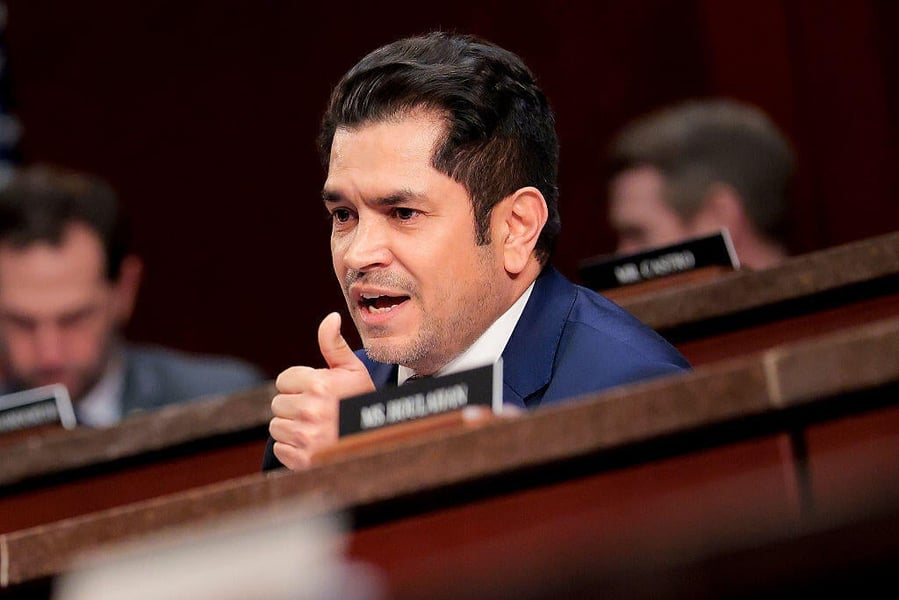

WASHINGTON — The legal exposure Eric Swalwell had long dismissed as partisan targeting found him at the airport on Saturday night when FBI agents met him at San Francisco International, executed a search warrant, and walked away with his electronic devices. They returned the next morning at his Washington home.
The two warrants — one at SFO on Saturday night, one at his DC residence on Sunday — signal a significant escalation beyond the House Ethics Committee review that closed when Swalwell resigned from Congress in April 2026. That bipartisan panel lost jurisdiction the moment he stepped down; it operates only over sitting members. Federal prosecutors face no such limitation.
The FBI’s focus: the same allegations of sexual assault and misconduct that ended Swalwell’s twelve-year congressional career. Multiple women had accused him of rape, unsolicited explicit messages, and unwanted advances. Swalwell acknowledged errors in judgment while specifically calling the rape allegation “false.”
What federal investigators found in his devices will not be known publicly for some time, if at all. Search warrants are not indictments. Swalwell has not been charged with any crime in this matter, and prosecutors have not publicly confirmed whether charges are under consideration.
The timing, though, is arresting. The day after the second search warrant — Monday — the Trump White House released a 97-page declassified document detailing the FBI’s prior investigation into Swalwell’s alleged relationship with Christine Fang, a suspected Chinese intelligence operative who cultivated contacts among Bay Area politicians around 2015. FBI Director Kash Patel had publicly urged the release of those files. Swalwell was never charged in that earlier investigation.
For Swalwell, the 72-hour sequence is extraordinary in its convergence. Federal agents executed search warrants on two of his properties. The administration simultaneously released nearly a hundred pages of national security records placing him, however indirectly, in a Chinese spy probe. He has maintained his innocence in both matters for years. Whether the timing is coordinated or coincidental is not something federal investigators have explained publicly.
The Ethics Committee investigation into the sexual misconduct allegations was bipartisan, and that fact matters. A finding driven entirely by one party could be framed as politically motivated; the involvement of Republican members stripped Swalwell of that argument before he resigned. But because the committee’s authority extends only to current members, the inquiry formally concluded when Swalwell stepped down in April. The criminal investigation that the FBI’s search warrants suggest is now underway has no such expiration date.
The Fang thread is older and separately tangled. Swalwell was briefed by the FBI about Fang in 2015 and reportedly cooperated with the investigation. No charges followed. But the relationship, whatever its precise nature, did not prevent him from serving for years on the House Intelligence Committee — a position requiring security clearances and access to the country’s most sensitive foreign intelligence assessments. That irony will be difficult to elide now that the Fang files are public record.
What the 97-page White House release says beyond what was previously reported is not yet clear. The document covers a prior FBI counterintelligence probe, not the current criminal investigation. Whether the two are legally or operationally connected has not been established publicly.
Swalwell served California’s 14th Congressional District from 2013 until his resignation in April 2026. A former Alameda County prosecutor, he sat on the House Intelligence Committee, ran briefly for president in 2019, and became one of the more prominent House Democratic voices on national security and the Trump impeachment proceedings. The misconduct allegations from multiple women emerged in the years before his resignation and became public as the Ethics Committee investigation was accelerating.
CBS News, which first reported the search warrants, confirmed that agents seized electronic devices at both SFO and Swalwell’s DC home. The warrants cover the same sexual misconduct allegations that prompted the Ethics Committee inquiry. Patel’s office confirmed the White House’s decision to release the Fang files; the declassification was publicly announced.
One thing this week’s events have not settled: whether federal prosecutors intend to charge him, or whether the search warrants represent an investigative step that leads somewhere. Federal search warrants sometimes produce prosecution; they sometimes produce nothing. Swalwell’s lawyers have not publicly commented. The Justice Department has not confirmed the investigation. The Fang documents are now public record. The rest remains open.