WASHINGTON — South Korea’s foreign minister learned that the United States was ending the Ulchi Freedom Shield exercises six days early the same way much of official Seoul did: by reading Donald Trump’s post on Truth Social.
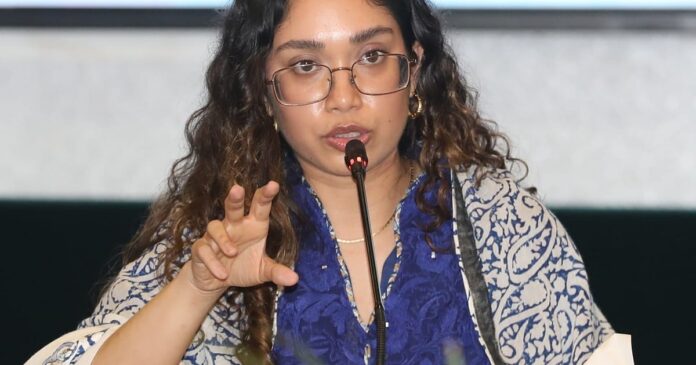
Foreign Minister Cho Hyun told reporters Thursday that “neither our government nor US officials knew what President Trump wrote on his Truth Social platform” before the announcement. There had been no advance notification, no bilateral consultation, no diplomatic forewarning of the kind that has historically accompanied any adjustment to the joint exercises that underpin the combined military posture on the Korean Peninsula.
The exercise itself, Ulchi Freedom Shield, had been scheduled to run from August 17 through August 27, eleven days of combined field maneuvers and command-post drills designed to sharpen the joint U.S.-South Korean response to a range of contingencies. It will now end August 21, a reduction of roughly fifty percent. The second phase, focused on counterattack operations, has been cancelled entirely. Some live field-training events have been converted to simulations. Defense Secretary Pete Hegseth, acting on Trump’s order, characterised the changes as adjustments that “preserve essential readiness and training objectives” with “no degradation to U.S. training objectives,” Breaking Defense reported.
Trump offered a different framing. The drills, he wrote, were “not only costly” but send “a signal that is completely inappropriate and hostile.” He said he had directed Hegseth to “substantially reduce” the exercise scope, and cited his “very good relationship” with North Korean leader Kim Jong Un as grounds for the decision.
South Korean President Lee Jae Myung characterised the exercises as “defensive” with no intention to provoke Pyongyang. Defense Minister Ahn Gyu-baek acknowledged the adjustments without comment on the process by which they were announced. Cho’s statement, however, went further than anything the defense establishment offered: an ally of seven decades had restructured a key element of the bilateral security architecture on the basis of a personal diplomatic calculation made in Washington, posted to a social media platform, without telling Seoul first.
The question of what that calculation is actually trying to achieve matters more than the cut itself. Ellen Kim, an analyst at the Korea Economic Institute, said Trump appeared to be working multiple levers simultaneously: “pressuring Seoul over trade investments, shifting attention from U.S. Iran challenges, and reopening Pyongyang diplomacy.” Three distinct objectives, she suggested, were being served by a single unilateral action, according to Military Times.
That interpretation matters because it positions South Korea’s security arrangements as a subordinate variable in Trump’s global negotiating posture. Washington’s pressure on Seoul to align with a U.S.-led Korean Peninsula US bloc politics framework had already drawn a sharp response from Beijing this week, with Chinese Foreign Minister Wang Yi warning that such alignment would destabilise the region. The exercise order adds a different dimension to the same pressure dynamic: the closer Seoul is expected to bind itself to Washington, the more Washington is demonstrating it will make decisions about Seoul’s security without consulting Seoul.
What did the gesture toward Pyongyang actually produce? Kim Yo Jong, the North Korean leader’s sister and the regime’s most prominent foreign policy voice, dismissed the exercise reduction as insufficient. The drills remained, she said, “provocative and aggressive” despite the scale-back, and Pyongyang threatened to “completely neutralize the enemies military threat.” The concession was made; nothing came back.

That gap between the unilateral gesture and the non-response from Pyongyang is where defence analysts have been pointing for the past twenty-four hours. The Ulchi Freedom Shield exercises are not merely about training readiness; they are a signal to North Korea that the combined force is prepared, integrated, and capable of a joint response. A fifty-percent reduction, with the counterattack phase removed entirely, is a material change in the readiness demonstration the alliance has maintained for decades, not a symbolic one.
North Korea’s military posture has not been static in the period leading up to this exercise. Beyond the missile program, Pyongyang has provided material military support for Russia in Ukraine, an alignment that carries its own implications for the peninsula’s strategic environment. Trump’s decision to cut the exercises precisely as North Korea’s external partnerships have expanded is a signal of its own, though not necessarily the one Washington intends.
The Pentagon’s confidence that training objectives will be “preserved” despite the reduction has not been elaborated with specifics. Which capabilities, which scenarios, which joint command-and-control functions survive the shortened schedule and the cancelled phase is not publicly known. Trump’s economic pressure tactics against adversaries have consistently been framed in optimistic terms that leave the operational detail unexamined; the Ulchi Freedom Shield reduction follows the same pattern.
What happens after August 21 is the question Seoul is now trying to answer without a clear channel to the White House. Whether Trump will push for further reductions, whether North Korea’s dismissal will prompt him to offer more, and whether South Korea’s government will seek a formal explanation of how the decision was reached: none of those answers exist yet. What exists is a fifty-percent cut in a keystone military exercise, announced on a social media platform, in pursuit of a diplomatic opening that North Korea has already declined to take.