
INDIANAPOLIS — Chris Ballard has been building the Indianapolis Colts toward a moment like this for eight years. The problem is the moment has arrived all at once.
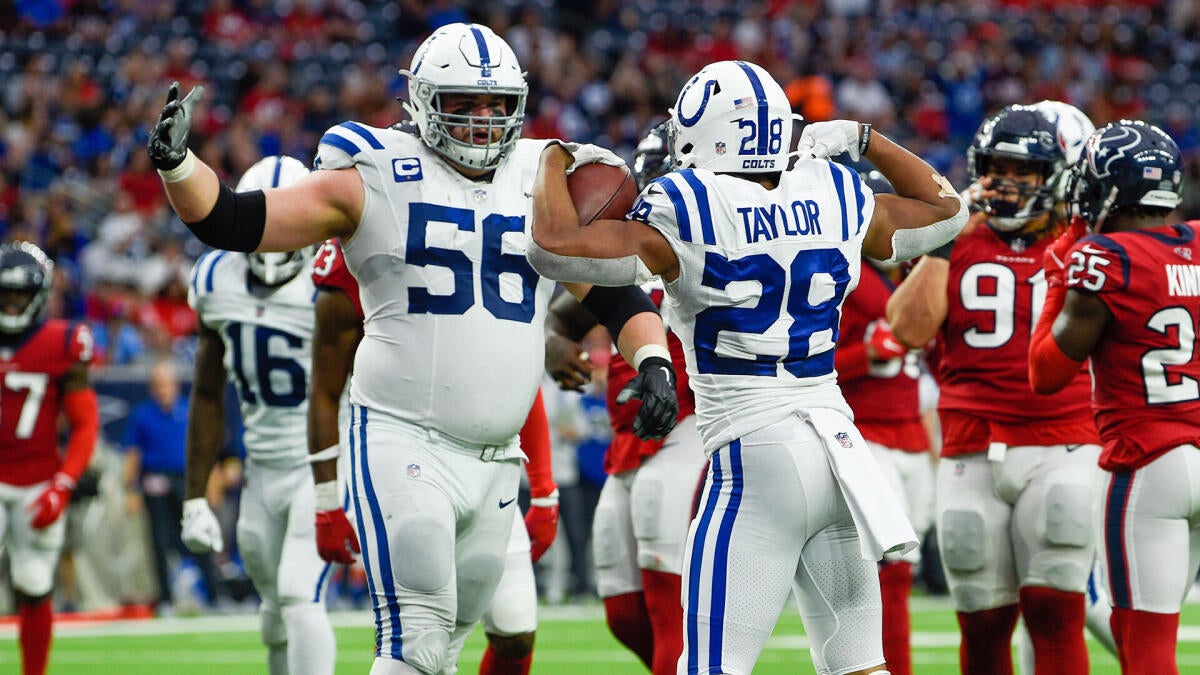
Jonathan Taylor, Quenton Nelson and DeForest Buckner — the three players who most define what this team is on both sides of the ball — are all playing out the final year of their contracts in 2026. Each one represents a category-defining talent. Each one carries a price tag that, extended, would realign the franchise’s entire salary structure. And the Colts cannot simply pay all three without consequence.
The offseason decisions facing Ballard are not merely financial. They are a verdict on what kind of team Indianapolis intends to be — and whether the window that has been carefully assembled around quarterback Daniel Jones and a revamped 2026 draft class is worth the investment it now demands.
Nelson is the clearest case. Eight Pro Bowls in eight seasons. Six All-Pro selections, the most recent coming after the 2025 campaign. The left guard from Notre Dame has not had a bad year in the NFL, which makes the conversation about paying him unusual: it is not a question of whether he deserves to be the league’s highest-paid interior offensive lineman again, but whether the Colts can absorb the market reset that would require.
The current standard for interior linemen shifted dramatically this past March, when center Tyler Linderbaum signed a three-year, $81 million deal with the Las Vegas Raiders — averaging $27 million per year and becoming, for the first time since 2015, a center rather than a guard who sets the price at the position. CBS Sports reported that Nelson’s own 2022 extension averaged $20 million per year and reset the market by more than 21 percent above what Brandon Scherff had been paid. A comparable premium on current guard leader Tyler Smith’s $24 million per year would place Nelson north of $29 million annually. That would consume nearly a tenth of the Colts’ $301.2 million 2026 salary cap in a single contract line.
Taylor’s calculus is different, and in some respects harder. He finished third in the NFL with 1,585 rushing yards last season, led the league with 20 total touchdowns and recorded 323 carries before the offense fractured after Jones tore his Achilles in Week 14. The production was real. The mileage is also real: Taylor has the third-most carries in the NFL over the past two seasons, with 625, and enters 2026 with 1,551 career carries — more than Saquon Barkley, Christian McCaffrey or Derrick Henry had at the same point in their respective careers.
Whether that workload represents durability or accumulated wear is precisely the dispute that will define Taylor’s next contract. The running back market has moved in his direction since he signed his current four-year, $42 million deal in September 2023. Barkley, who signed with Philadelphia for $20.6 million per year in 2025, is the new ceiling. De’Von Achane just reset the third position at $16 million per year with the Dolphins. Taylor, who will point to a salary cap that has grown 34 percent since his deal was signed, will believe his inflation-adjusted value places him well above $18 million annually. The Colts may have a harder time agreeing, particularly for a multi-year commitment to a back who has carried the ball more than any comparable player at 27.
Buckner sits in the most settled position of the three. The defensive tackle, who arrived in a 2020 trade with the San Francisco 49ers that cost Indianapolis the 13th overall pick, signed a two-year, $46 million extension in 2024 that runs through this season. Yahoo Sports noted that his $26.6 million cap number is the largest single hit on the Colts’ books in 2026. Buckner has been a three-time Pro Bowler and a first-team All-Pro in Indianapolis, but at 32 he is the oldest of the three, and a new extension would be priced accordingly — with the added complication that a nerve injury ended his 2025 season after just 10 games.
What makes the situation structurally difficult is that the Colts cannot punt indefinitely. Under NFL collective bargaining rules, the franchise tag formula uses 120 percent of a player’s prior year cap number as a baseline. Nelson’s 2026 cap number is $24.02 million, which would produce a tag figure of $29.04 million. Taylor’s number of $15.562 million would generate a tag at $18,674,400. The figures from the broader tag formula — which uses a rolling average of the top salaries at each position — would actually come in lower, but that provides only marginal relief. The Colts can tag one player next offseason. They cannot tag two without eliminating meaningful flexibility to address the rest of the roster, including an offensive line that still needs investment at right tackle and a receiving corps built around a unit that showed its ceiling when healthy last season.
The most straightforward read of the situation is that Nelson gets extended first, in part because left guard value is less volatile than running back value and in part because Nelson has leverage that Taylor does not: guards do not accumulate wear the way ball carriers do, and a 30-year-old Nelson playing at an All-Pro level has a credible argument that three or four more elite seasons are plausible. Taylor, by contrast, faces the weight of history. The NFL’s best-paid running backs have all been extended at lighter usage totals. That is not an accident.
The franchise tag, then, likely falls on Taylor if no extension is reached this summer. At $18.6 million, it would be expensive but manageable for a single season — buying Ballard time to see whether a 2026 campaign with a healthy Jones changes the market calculus, or whether Taylor’s carry total pushes the club toward a harder conversation about a transition at the position.
What remains unresolved — and what Ballard has not yet been forced to answer publicly — is what happens to Buckner. At 32, on the back end of a two-year deal, the veteran defensive tackle is entering territory where teams routinely make difficult decisions regardless of performance. Contract data compiled by Spotrac shows just how much the salary landscape has shifted for all three players since their current deals were signed. Whether Indianapolis believes Buckner’s production justifies another extension at market rate, or whether it uses this offseason to begin transitioning to a younger defensive line, will say something about where the organization thinks the team’s competitive window actually sits. That answer, more than any contract number, is the one worth watching.