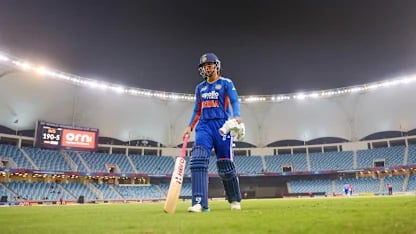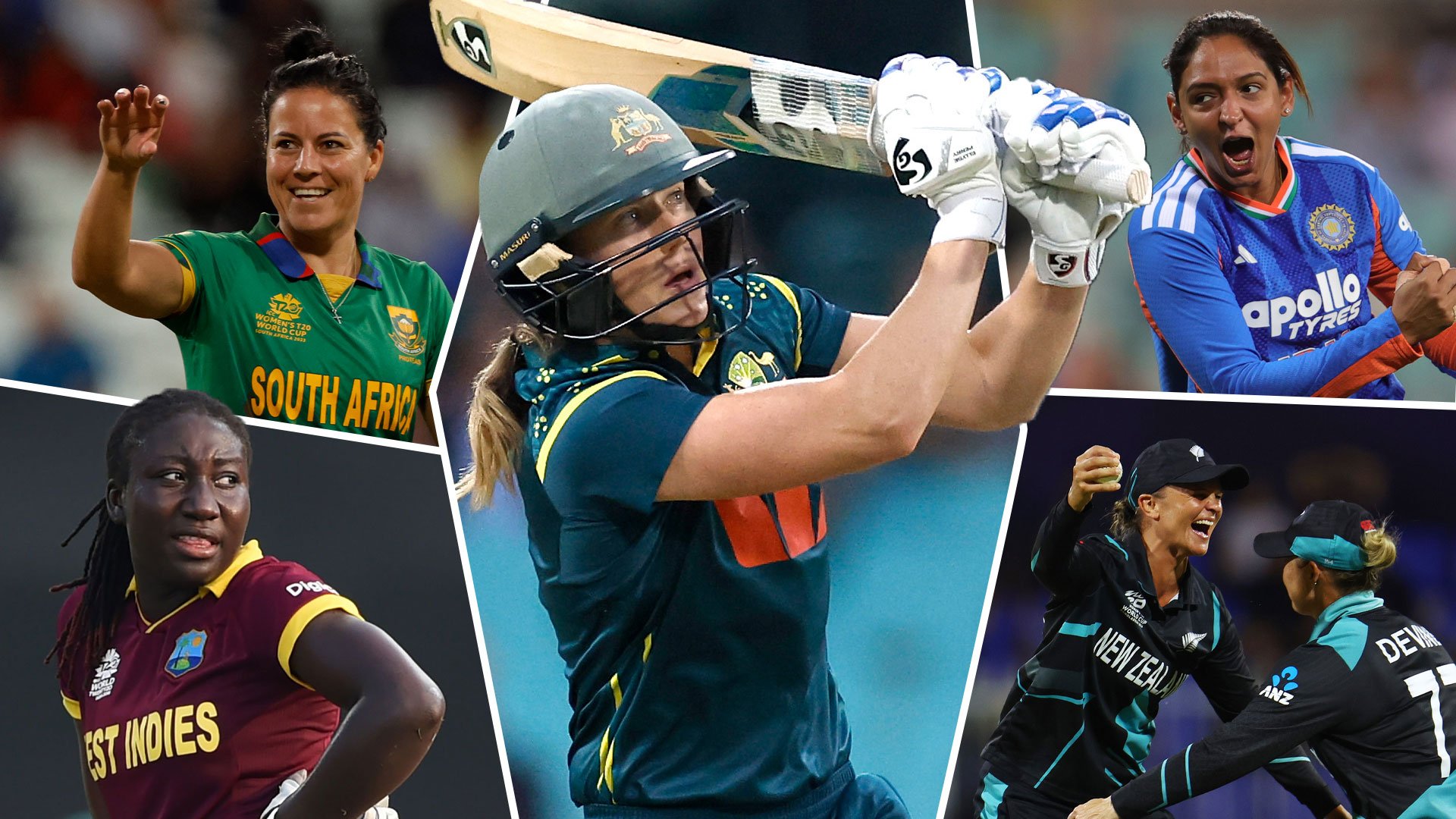

LONDON — The last time Suzie Bates played international cricket in England, she was 21 years old, barely capped, and nobody’s idea of a future record-breaker. That was Taunton, 2007, a T20 international against South Africa, and she had no way of knowing she would still be here almost two decades later, coming back with a title to defend and a career to close.
She has made her intentions plain. “I have one final mission,” Bates said ahead of the tournament: “to head to the UK, a place that holds so many special memories for me, and win another World Cup.” There is no pivot to nostalgia in that statement, no grace note about the journey. It is the language of a competitor who has spent 17 years at the highest level and still wants, specifically, to win.
That drive — and what will be lost when it finally exits the stage — is the defining tension of the ICC Women’s T20 World Cup 2026, which begins at Edgbaston on June 12 and runs to a final at Lord’s on July 5. This is the tournament’s 10th edition. Seven women have appeared in all nine that came before it — and at least three of them, Bates, Sophie Devine, and Lea Tahuhu, have confirmed they will not be playing an 11th. What the sport is about to lose is not simply their statistics, which are considerable. It is the institutional knowledge, the scar tissue from close defeats, the specific authority that only someone who has stood in a World Cup final more than once can carry into a dressing room.
Bates holds the tournament’s all-time run-scoring record: 1,216 runs across 42 matches, more than 200 ahead of anyone else. Cricket Australia has identified seven veterans — Bates, Devine, Harmanpreet Kaur, Ellyse Perry, Chamari Athapaththu, Marizanne Kapp, and Stafanie Taylor — as the only players to have appeared at all nine previous editions. Bates’s high score of 94 not out against Pakistan in 2014, her eight fifties, the leadership role she grew into after Devine’s retirement from the captaincy — none of those accumulations will survive into a next generation in the same form. The 38-year-old will now bat in the middle order, having ceded the opening slot to younger players, carrying herself through the tournament as one of the three players she once called “grandmas of the team.”
Devine’s farewell is freighted differently. She led New Zealand to their first-ever T20 World Cup title in Dubai in 2024, defeating South Africa in the final after a tournament that felt, for stretches, like a last chance rather than a coronation. The weight of that victory — its lateness, its difficulty, the dark periods the side went through in the years before it — is why Devine’s final tournament in England carries emotional freight that pure statistics cannot fully measure. She has handed the captaincy to Amelia Kerr, the 24-year-old leg-spinning all-rounder who was named Player of the Tournament in Dubai for her 15 wickets. This time, Devine arrives as an all-rounder rather than a leader, and the question of how that transition lands for the defending champions is one the tournament will answer.
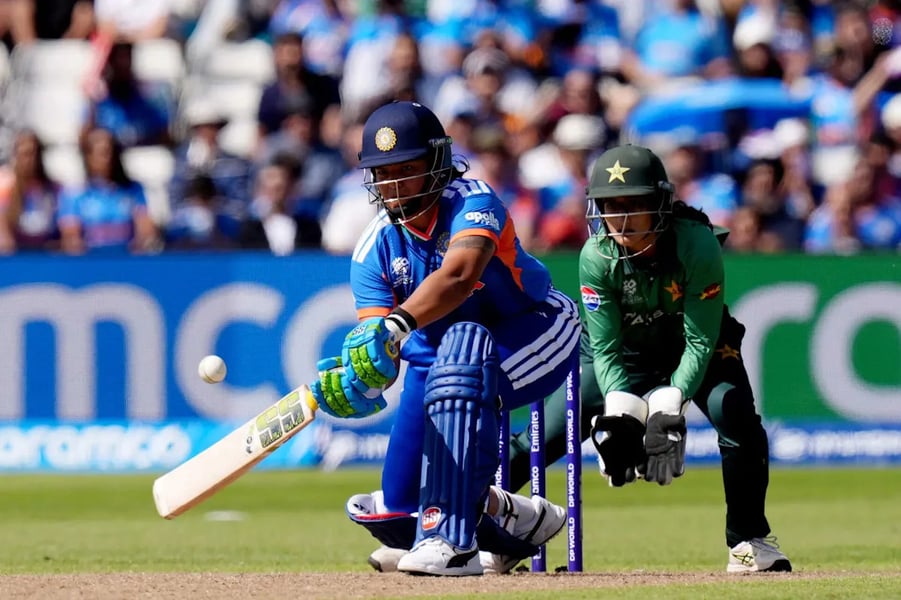
Against all of this, there is a parallel story about what might be gained. Harmanpreet Kaur leads an India side that won the ODI World Cup less than 12 months ago, the first Indian women’s team to do so, and arrives in England with the clearest possible brief: complete the double that only Australia has ever managed. She is the only Indian woman to score a century at a T20 World Cup, her 103 against New Zealand in 2018 still the most audacious innings the format has seen from an Indian batter on the global stage. India have reached the semi-finals three times and the final once, in 2020. The window is not closing on this generation yet, but it is narrowing — Harmanpreet is 35, and the squad’s collective experience may never again be so concentrated. The leadership tensions that have shadowed India’s cricket setup this summer have not reached the women’s squad, but the pressure to deliver in T20 — in the year they arrive as ODI champions — carries its own weight.
The obstacle is real and specific. India’s bowling relies heavily on pace — Renuka Singh, Arundhati Reddy, and Kranti Gaud form the primary attack — and English conditions have historically been unkind to pace-first strategies in women’s cricket. In the warm-up matches, Renuka produced a delivery against England’s Danni Wyatt-Hodge that the ICC described as a “peraler” — a moment that reminded the touring camp what this attack can do at its best. What happens when conditions flatten, when the seam does nothing, when spinners on the other side are taking a wicket every three overs — that is the question India’s coaching staff will have been turning over since the squad departed for England. As Outlook India has reported, the absence of pace all-rounder Amanjot Kaur, a natural fit for English seam conditions, compounds the problem.
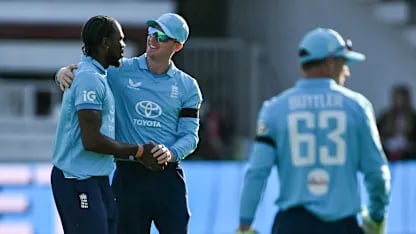
The host nation presents the tournament’s most complicated calculation. Nat Sciver-Brunt is England’s best batter, its best all-rounder, and by some margin its most important cricketer. She has 2,960 T20 international runs and 90 wickets across 137 matches, and her unbeaten 81 in 40 balls against Pakistan at the 2023 World Cup remains the performance that best captures what she can do when the tournament demands everything. England have not won this title since the inaugural edition in 2009, and no English player has felt the gravity of that gap more acutely than Sciver-Brunt. The selection instability surrounding English cricket this summer only sharpens the pressure on the women’s side, where Sciver-Brunt’s form and fitness represent the margin between a title run and an early exit. Whether she can carry a team through six weeks of high-pressure cricket without the injury interruptions that have complicated her recent seasons is something no analyst can honestly project.
Then there is Ellyse Perry, who has already done something no other cricketer — male or female — has come close to. She has won six T20 World Cup titles, the last as recently as 2023. She is 35 and playing under Sophie Molineux’s captaincy on a team no longer built around her. Her right foot deflecting Sophie Devine’s straight drive in the 2010 final in Barbados — a shot that should have gone to the boundary and decided the match — is the kind of instinctive act that cannot be coached. It accrues through years of being in those moments. A seventh title would make her cricket’s most decorated active player, in any format, by a distance that no one is likely to reach for a generation.
South Africa bring Shabnim Ismail back from retirement — a decision that says everything about their assessment of this moment. Ismail came out of retirement specifically for this tournament. Her figures of 3/27 in the semi-final against England in 2023 have not been forgotten in either dressing room. South Africa finished runners-up in both 2023 and 2024. Whether the third final attempt arrives in England depends on whether Marizanne Kapp, Ismail, and a batting line-up that has shown it can absorb pressure can finally close out the deal that has twice escaped them. What injury has done to India’s bowling resources across formats this summer only underlines how physically demanding the English conditions already are — and South Africa’s squad depth may prove the decisive variable.
The format has expanded from 10 teams to 12 for this edition, with the ICC confirming that the Netherlands are making their first-ever appearance at a Women’s T20 World Cup. The final is at Lord’s on July 5. The semi-finals are at The Oval on June 30 and July 2. Seven venues across England, 33 matches, one month.
What the 10th edition cannot tell us yet is which of the two stories will dominate when it ends: the one about the players arriving at their last tournament, looking for something to carry them out, or the one about who was good enough and fortunate enough to fill the space they leave behind. Suzie Bates has not left yet. Neither has Sophie Devine. The grandmas are still standing.