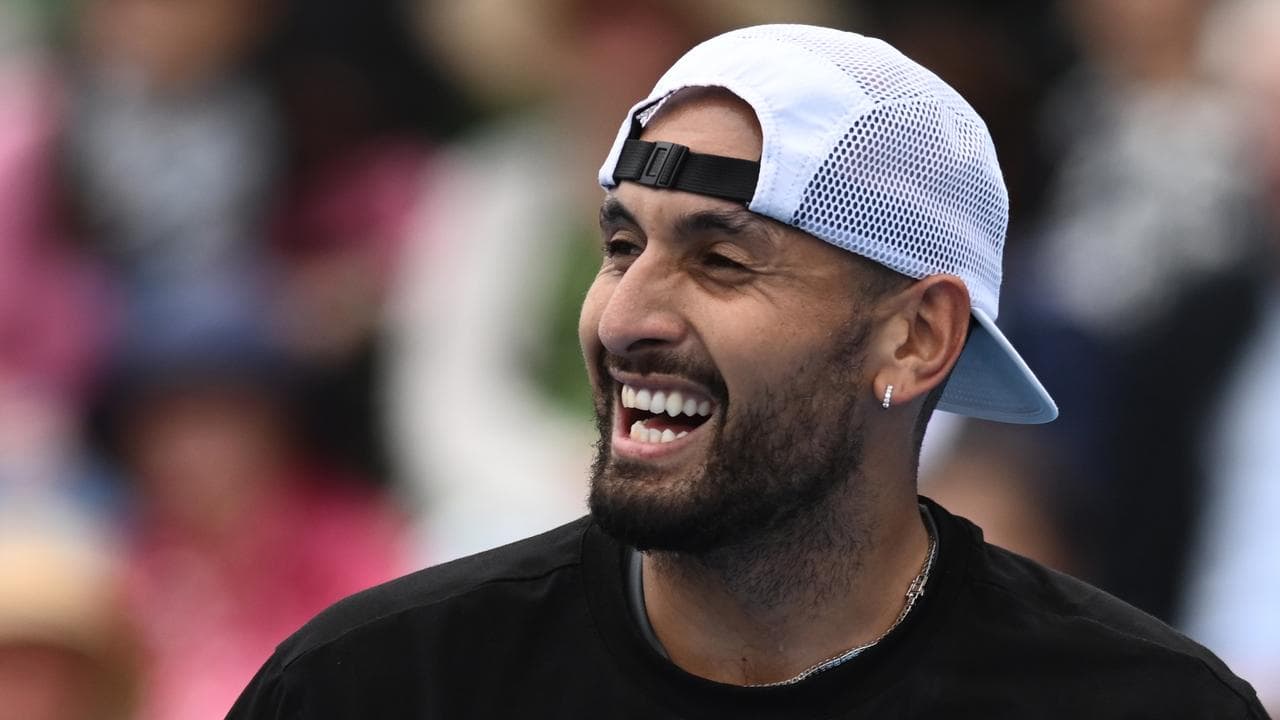

STUTTGART — The serve landed on the line at 84 percent efficiency, and the man throwing it was ranked 282nd in the world. That contradiction, sharp enough to start an argument, was what Nick Kyrgios left hanging in the air at the BOSS Open on Tuesday.
He beat Corentin Moutet, the No. 36 seed, 6-3, 6-4 in 69 minutes, facing zero break points. The numbers were clean, the movement was sharp, and the knee — the one that required four surgeries and has defined nearly four years of starts, stops, and canceled entries — held up for the full hour. Whether it holds for a second match on Thursday is the only question anyone around the Tennis Club Weissenhof seemed genuinely uncertain about.
This match was not really about Moutet, and everyone in Stuttgart understood that. It was an application. The All England Club announces Wimbledon wildcards before the end of June, and Kyrgios — unranked in any meaningful sense, absent from competitive singles for six months — needed a body of evidence to present to the committee. One hour and nine minutes of dominant grass-court tennis was a start.
“I feel great and motivated,” Kyrgios said ahead of the tournament. On court, those words looked credible. His first-serve percentage of 84 percent against Moutet compared to the Frenchman’s 56 percent — on the same surface, in the same conditions — suggested the gap between them was less about talent than about who showed up ready. Kyrgios, for one morning in Stuttgart, was ready.
The last time he won on grass was the 2022 Wimbledon final against Novak Djokovic — a match he lost in four sets but won in reputation, cementing himself as the most dangerous unranked threat the tournament had seen in years. Then the wrist gave out. Then the knee, again. The Australian Open singles entry he turned down in January, citing five-setters as “a different beast,” suggested a player still managing distance between what he wants and what his body will allow. Stuttgart, on grass, in a 69-minute best-of-three, is a different calculation entirely.
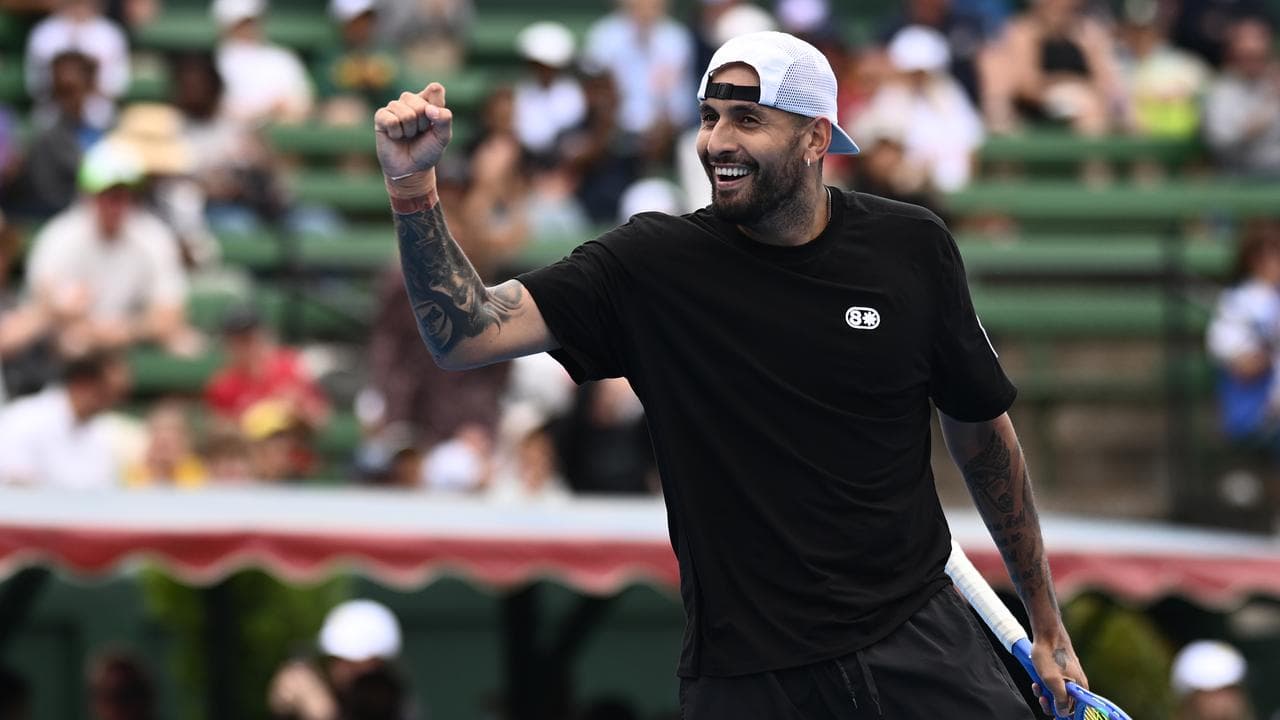
Moutet arrived in Stuttgart after five consecutive defeats on clay — losses to Lorenzo Musetti, Alejandro Davidovich Fokina, and others that had left him hoping a surface change would provide relief. It didn’t. Kyrgios won the first set without drama, broke once more in the second, and closed the match before Moutet could generate a single opportunity on the Australian’s serve. Eight aces to Moutet’s five, and a double-fault count of one against two — the kind of statistical authority that on grass is almost impossible to manufacture, because the surface doesn’t forgive slow starts or tentative placement.
The broader context around Kyrgios at the moment involves a sport that has been conducting its own awkward conversation about comebacks. Serena Williams won her first match in 1,375 days at Queen’s Club on Tuesday, the same afternoon Kyrgios was dismantling Moutet an hour’s flight away in Germany. Two former standard-bearers, both operating on wildcards, both asking the same question about whether the body still works when it has to. Williams, 44, has the benefit of certainty about what this is — a farewell season, conducted on her terms. Kyrgios, 31, has no such clarity. He hasn’t decided what this is yet.
That ambiguity follows him. Earlier this year, Carlos Alcaraz’s wrist injury raised fresh questions about the grass season’s credibility at the top of the draw. In that context, a functioning Kyrgios on grass — even one ranked 282nd — becomes part of a more complicated conversation about what the bracket looks like at Wimbledon and who would thrive on it.
Next up is Sho Shimabukuro of Japan, ranked 101, who dismantled Quentin Halys 6-4, 6-2 on the same day Kyrgios was playing. It is their first meeting. Shimabukuro is a qualifier playing well, but the matchup will be less interesting as a contest than as a diagnostic. If Kyrgios can hold his serve at a similar level, stay out of break-point trouble, and close in two sets again, the case to the All England Club becomes harder to dismiss. If the knee tightens on Day 2, the conversation ends on a Tuesday.
The ATP Tour confirmed the win as Kyrgios’ first tour-level singles victory since March 2025. That date matters: fifteen months is long enough that Tuesday’s result required interpretation, not merely recording. The question is not whether he won. The question is whether this is the version of Kyrgios who went to a Wimbledon final, or the one who has spent more time in rehabilitation rooms than on grass. On Tuesday in Stuttgart, it looked like the first one. Thursday will tell the rest of the story.