
ATLANTA – James Garrow has been planning for this moment for eighteen months. As Philadelphia’s deputy health commissioner, he has run drills, built surveillance protocols, and spent hours on calls about what to do if measles shows up in a stadium packed with cheering fans from 48 countries. The tournament starts Thursday. He is still not sure he has everything he needs.
“Measles is probably our top worry,” Garrow told the Center for Infectious Disease Research and Policy. “We’ve already put out communications to our regional healthcare providers about what to look for.”
The 2026 FIFA World Cup opens Thursday across 16 cities in the United States, Canada, and Mexico, drawing an estimated 6.5 million fans into the kind of mass gathering that public health professionals call, with clinical precision, a classic mixing event. People arrive from every corner of the world. They share stadiums, hotels, transit, and festival grounds. Then they go home. Whatever circulates among them travels with them. This year, the disease environment they are entering is more unstable than at any World Cup in recent memory – and the American public health system charged with managing it is smaller and less funded than it was the last time the country hosted a tournament of this scale.
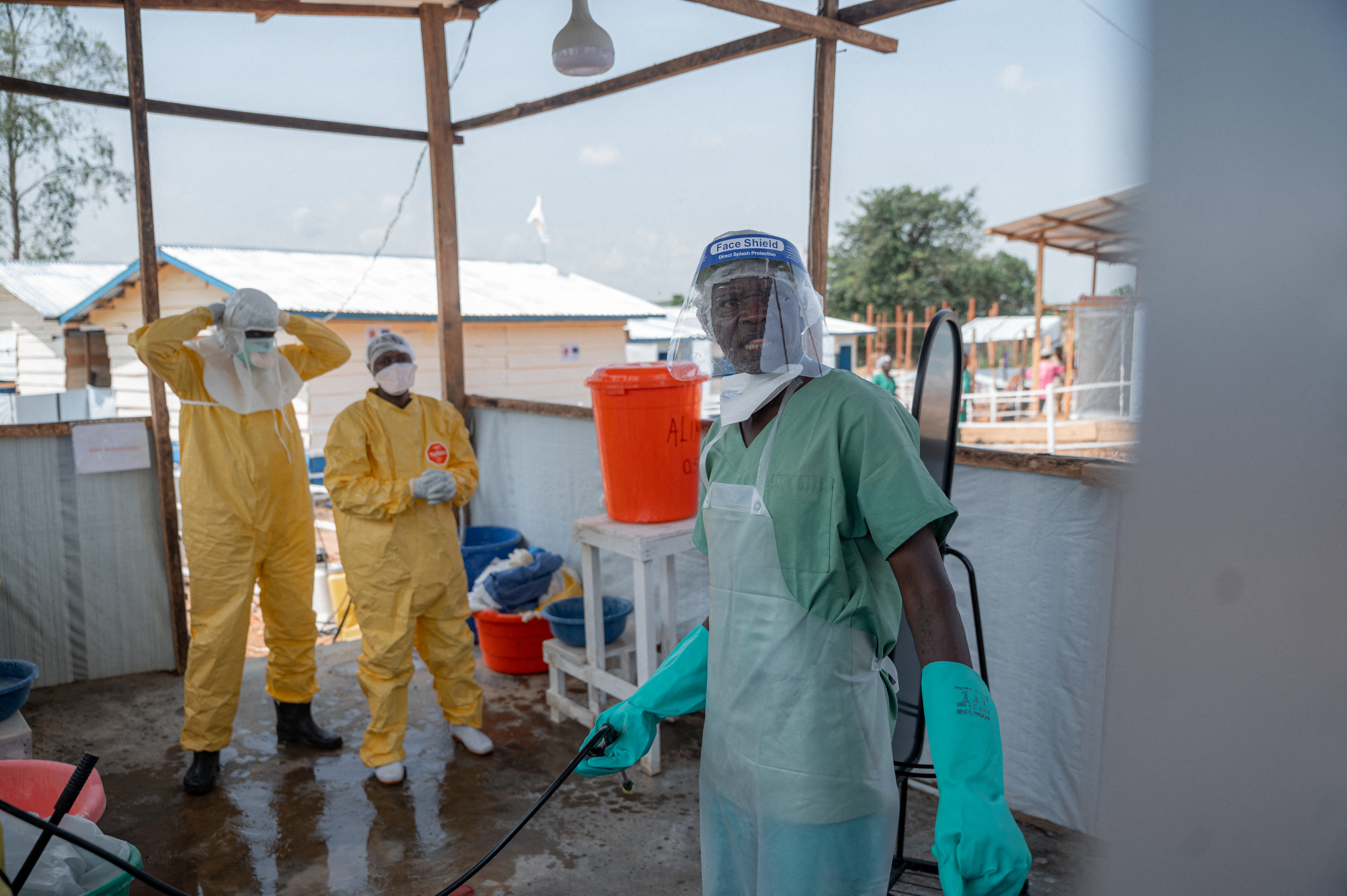
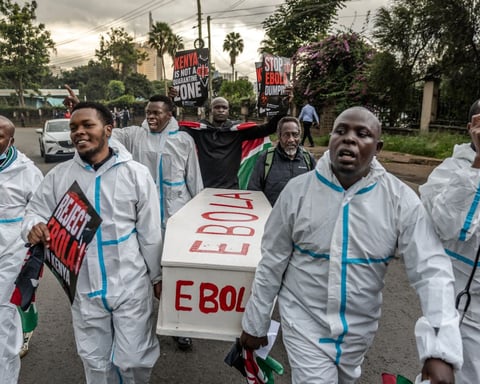
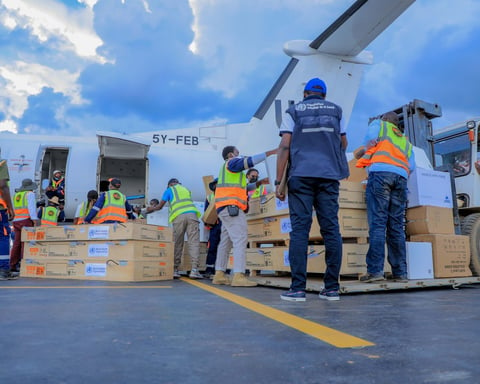
Measles cases in the United States have already surpassed 2,000 this year, driven by falling vaccination rates. The Bundibugyo strain of Ebola, for which no approved vaccine exists, has killed 136 people across three provinces of eastern Congo and reached a displacement camp of 30,000 people as of Friday. Influenza is circulating in the Southern Hemisphere, meaning teams and fans arriving from that part of the world may be infectious before they show symptoms. New World screwworm – a parasitic fly capable of infesting living tissue – prompted the Centers for Disease Control and Prevention to activate an emergency response plan this week after seven confirmed animal cases in Texas and New Mexico.
None of those four threats are expected to cause a catastrophic outbreak at the World Cup. Ebola does not spread easily in stadiums; it requires direct contact with bodily fluids. Measles is more worrying because it is airborne and can remain infectious in a room for up to two hours after a carrier leaves, but it is also preventable through vaccination. The point infectious disease specialists make when pressed on the actual risk is subtler than catastrophe: what they are watching is not the virus, but the system supposed to catch it.
That system has a measurable hole in it. One estimate from a federal employee union found the CDC has lost nearly a quarter of its workforce, through firings and resignations, since the beginning of the year. Elizabeth Soda, an infectious disease physician who resigned from the CDC last year, described the agency in terms of function: it is the air traffic controller for a network of state and local health departments that are the planes. The planes can fly on their own, she told Georgia Public Broadcasting. But someone needs to be watching the big picture. “This is the stress test,” she said.
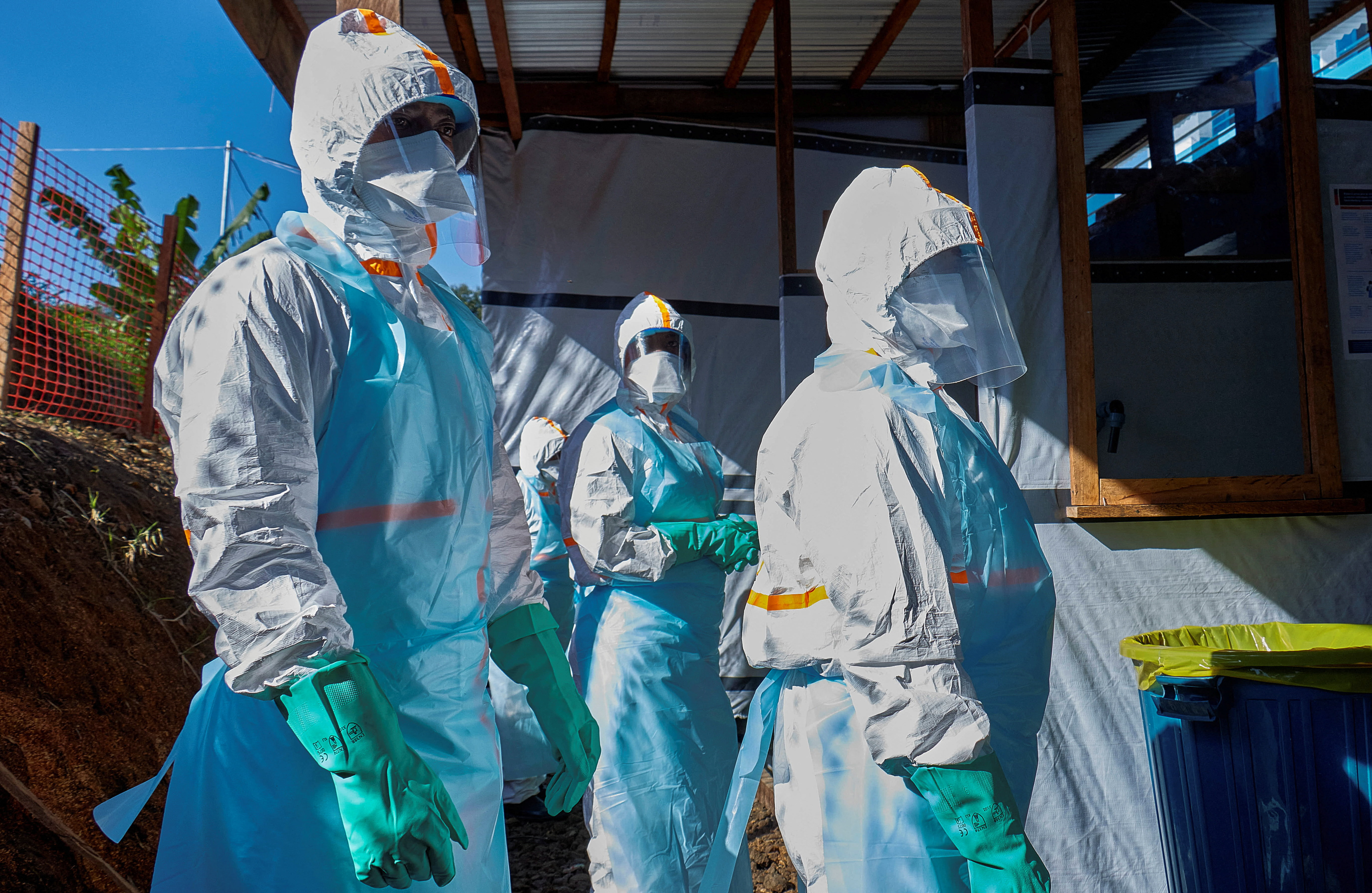
The Trump administration’s 2027 budget proposes cutting $5 billion from the National Institutes of Health, $15.8 billion from the Department of Health and Human Services, and over $100 million from the Agency for Healthcare Research and Quality. Those numbers require congressional approval. But personnel cuts – including the elimination of USAID and USDA monitoring programs – have already taken effect, and specialists say they directly affect the country’s ability to detect and respond to outbreaks now. Aaron Kesselheim, a professor at Harvard Medical School, told Axios those cuts are “direct contributors” to the current New World screwworm problem and affect “our ability to respond to it and mitigate future impacts.” Georges Benjamin, executive director of the American Public Health Association, said the cuts are “catastrophic” and that it is likely the United States will see at least one Ebola case during this outbreak, as it did during the 2013–2016 West Africa epidemic.
The Trump administration disputes that framing, arguing the proposed reductions eliminate duplicative programs and improve efficiency. Representatives did not respond to a request for comment from Axios by the deadline.
At the operational level, preparations in the host cities have been serious and sustained. Atlanta’s public health and emergency services teams have been running tabletop exercises for two years, covering scenarios from heat emergencies and mass casualty events down to foodborne illness clusters and viral infections. Grady Hospital EMS will have extra staff at the Fan Festival and near Mercedes-Benz Stadium. Fulton County’s chief epidemiologist told staff this week that the department is doubling down on surveillance and timely notification. Marcus Plescia, Fulton County’s public health director, said CDC staff have been on “numerous” calls with city planners and described them as “responsive and forward-thinking.”
Still, a single measles case in a stadium requires tracing potentially hundreds of contacts – and that requires staff and time. Georgia has recorded five measles cases this year, two of them in metro Atlanta. The state has been encouraging residents to check their vaccination status ahead of the influx. But vaccination rates nationally have been declining, and the fans arriving from countries where coverage has also fallen represent an unknown quantity.
Jodie Guest, an epidemiologist and professor at Emory University’s Rollins School of Public Health, framed the core challenge plainly. “How are you going to look at people as they’re coming in, and then what are you going to do if anyone becomes ill or you start to see signals of an outbreak happening,” she told Georgia Public Broadcasting. That question – how to identify, isolate, and inform – is the same question public health departments answer every day. What makes the next six weeks different is the scale of the inputs and the reduced capacity of the agencies connecting them.
Krutika Kuppalli, an associate professor at UT Southwestern Medical Center and co-director of the Texas Department of State Health Services World Cup Infectious Diseases Consultation Hotline, put the structural problem in terms that extend beyond any single tournament. “The next major threat may not be a pathogen we know about,” she told the Center for Infectious Disease Research and Policy. Climate change, global travel, population growth, and human encroachment into wildlife habitats are accelerating the emergence of novel pathogens. The institutional question, once the World Cup is over, is whether the country has rebuilt the detection capacity it will need for whatever comes next. Right now, for this event, the question is simpler: the planes are airborne, and the air traffic control system is short-staffed.