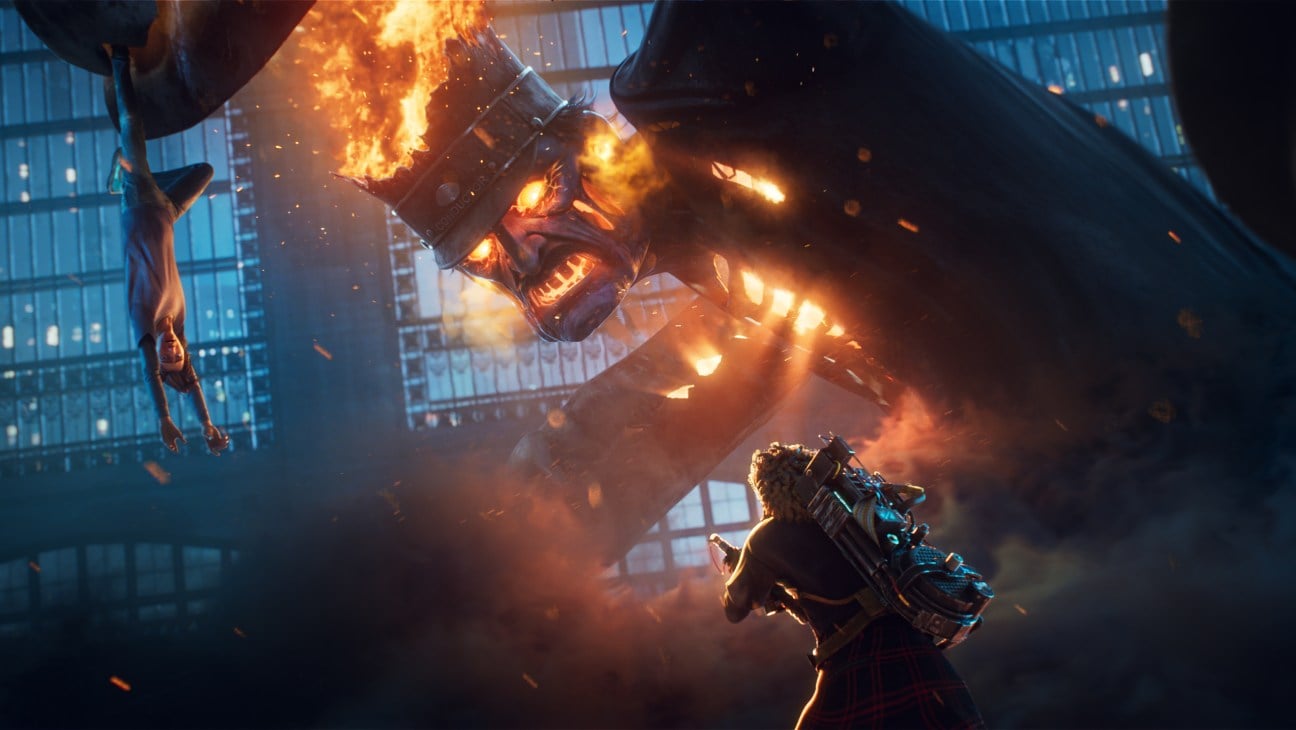

LOS ANGELES — The year is 1994. Kurt Cobain has just died. Pulp Fiction is weeks from its premiere. And somewhere in New York City, a new generation of Ghostbusters is about to discover that the supernatural problem the original team thought it had solved is very much still in business.
That is the premise of Ghostbusters: Night Shift, the animated series Netflix unveiled at the Annecy International Animation Film Festival this week, and the creative ambitions behind it extend well beyond a single season order. For the first time since the franchise launched in 1984, original Ghostbuster Dan Aykroyd is directly executive producing a canonical animated entry in the mythology, alongside producers Jason Reitman, Gil Kenan, and Amie Karp, in a project designed to connect Ivan Reitman’s foundational films to the 2021 sequel Ghostbusters: Afterlife and its 2024 follow-up, Frozen Empire.
The series, produced by Sony Pictures Animation and Flying Bark Productions in partnership with Ghostcorps and Netflix, will follow a new group of young Ghostbusters confronting new supernatural villains and unexplored paranormal mythology in New York City. Showrunners Ben Hibon and Elliott Kalan will guide the series through territory the live-action films deliberately left open.
The 1994 setting is not incidental. It places the series in the gap between Ivan Reitman’s original 1984 film and Ghostbusters II from 1989 on one side, and Jason Reitman’s Afterlife on the other, which is set in the present day and treats the original New York operation as largely forgotten history. Anything that happened in the city across those middle decades has been franchise white space. Night Shift is built to fill it.
The series has a specific origin story. According to the producers, the concept emerged from a problem the Afterlife writing team could not resolve: an unexplained proton pack discovery in the film’s narrative that had no clear source. Rather than explain it within the film, Reitman and Kenan found themselves building a separate series around the question it raised. That unresolved detail became the thesis for Night Shift.
The Clone Wars comparison the producers are making is not casual franchise boosterism. When Lucasfilm launched Star Wars: The Clone Wars in 2008, the intent was canonical expansion, not licensing. That series became, over seven seasons, one of the emotionally richest chapters of the Star Wars saga, introducing characters that live-action shows have continued developing for nearly two decades. Night Shift is positioning itself in that tradition: animation as a vehicle for canonical world-building, not a Saturday-morning merchandising exercise.
The distinction matters because the Ghostbusters franchise has had animated entries before. The Real Ghostbusters, which ran on ABC from 1986 to 1991, was enormously popular but explicitly non-canonical, a children’s series with storylines that bore only loose resemblance to the films. Night Shift is something different: overseen by the same team that made Afterlife and Frozen Empire, set explicitly within the same timeline, and intended to read alongside those films rather than apart from them. Netflix’s involvement as streaming home reflects the platform’s broader appetite for prestige genre content with established fan audiences, including its recent move to rescue the prestige true-crime limited series starring Melissa McCarthy that Paramount+ shelved.
Dan Aykroyd’s direct involvement also signals a shift in how the franchise’s original stewards are approaching expansion. The Annecy presentation emphasized his executive producing role as a genuine creative stake, not an honorific. For a franchise with one living co-founder, that involvement connects the series directly to the people who invented the mythology, not to a studio development team working from the outside in.
What Night Shift will actually look like remains largely unanswered. Netflix and Sony Pictures Animation have not announced a voice cast, confirmed an episode count, or set a premiere date. The Annecy announcement was a concept reveal. The aesthetic approach, whether it leans toward the comedic register of The Real Ghostbusters or the more grounded tone of Afterlife, is not yet clear from the materials released publicly. The series is, for now, an architecture with no visible rooms.
The case for optimism is in the roster. The Reitman-Kenan team has already demonstrated it can honor the original films while finding something genuinely new to say inside the mythology, and Aykroyd’s presence connects the project directly to its creative origins. Whether Night Shift earns its Clone Wars moment is a question the Annecy audience had no real evidence to answer. As The Hollywood Reporter noted in its Annecy coverage, the architecture is in place. What the rooms look like is still to come.