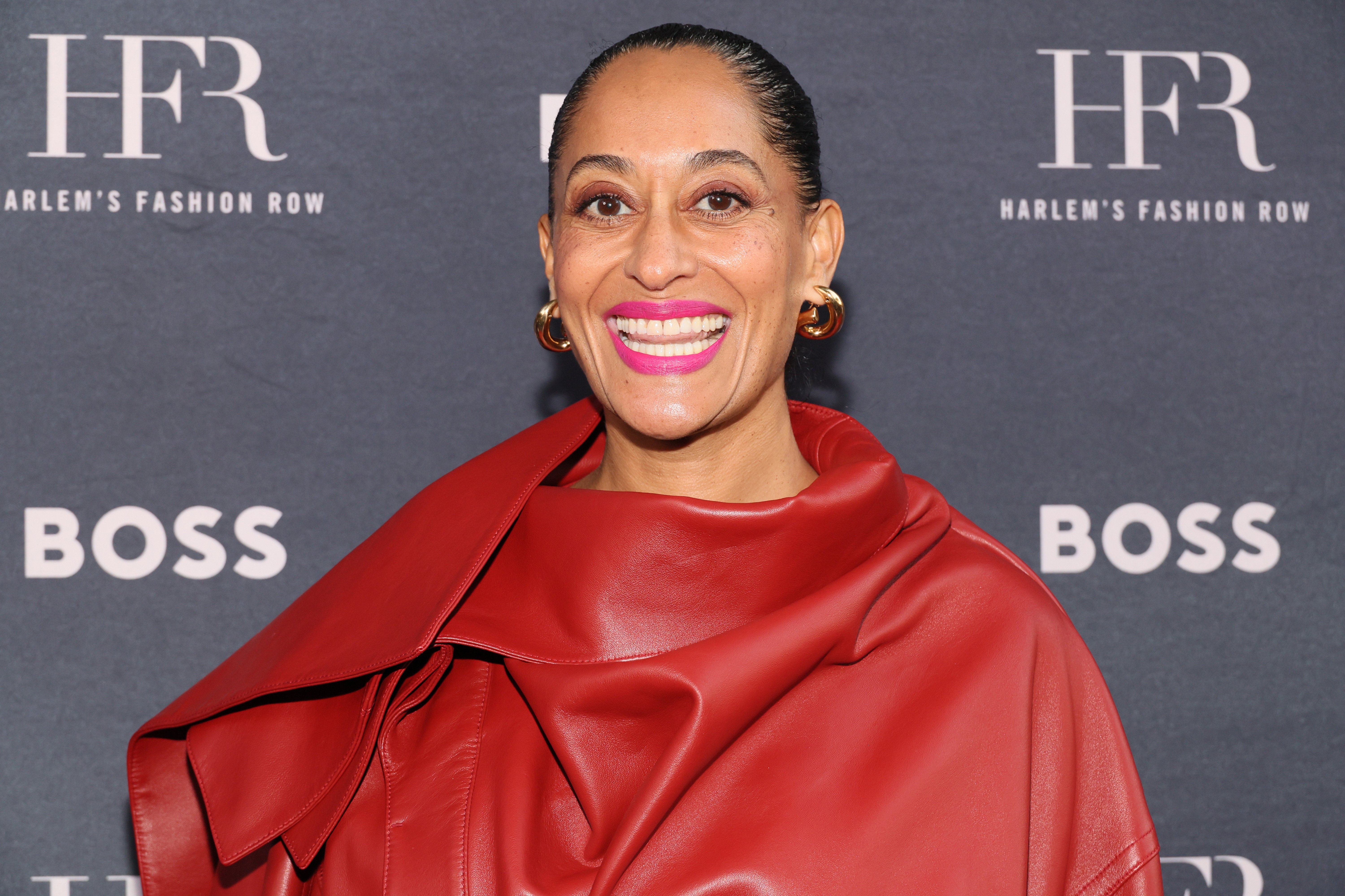

NEW YORK — There are no co-stars in Every Brilliant Thing. There is no ensemble to pull focus during a weak moment, no director calling cut if a scene goes sideways, no second take. On July 7, Tracee Ellis Ross will walk onto the Hudson Theatre stage with a room full of strangers who are about to become her co-performers, and she will make her Broadway debut in one of the most structurally demanding shows currently running.
The choice reveals something. A six-time Emmy nominee and Golden Globe winner who spent eight seasons as the lead of Black-ish and six seasons before that on Girlfriends, Ross has spent the better part of two decades mastering the grammar of ensemble television: the tight rhythms, the dependable infrastructure, the art of a scene made through editing as much as through performance. Every Brilliant Thing, the acclaimed one-person show by Duncan Macmillan and Jonny Donahoe, runs on none of those systems.
The Hudson Theatre engagement runs July 7 through August 9, 2026, slotting Ross as the third performer to lead the current Broadway production. She arrives directly after Mariska Hargitay, who holds the role through July 5. Before Hargitay, Daniel Radcliffe ran the show from March 12 through May 24. Each performer begins from the same text, the same director (Jeremy Herrin), and the same unpredictable room. The production earned a nomination for best revival of a play this season.
At its core, Every Brilliant Thing follows a protagonist whose mother struggles with mental health. The character’s response is to compile a list of everything worth being alive for: ice cream, roller coasters, the color of the sky just before it rains. The list grows with the protagonist across decades, even as their own mental health becomes complicated. Before the show begins, audience members receive slips of paper with items from the list; during the performance they are invited to read them aloud and take on the role of characters in the protagonist’s life. The performer must follow wherever that takes the room.
That structure is what separates Every Brilliant Thing from most vehicles that attract television stars transitioning to the stage. It is not a play you can over-rehearse. The room is always different. The audience members who take on the role of the protagonist’s partner, therapist, or father are different every night. Ross will spend each performance responding to what 900 people do with the text she offers them, which is not a skill that transfers from a television soundstage and cannot be approximated in rehearsal.
Mental health has become a more direct subject of public conversation in entertainment this year. Danny Glover’s decision to disclose his Alzheimer’s diagnosis publicly this week registered across the industry as something more than a medical announcement: the actor described it as a form of activism, a deliberate choice to speak plainly about illness rather than manage it through a publicist. Every Brilliant Thing has been making a version of that request for years. The play asks its audience to be present with what they actually feel. It is, structurally, a show about why talking helps.
The show’s producers described Ross as possessing the quick wit, intelligence, and emotional depth the material demands. That assessment is accurate in the sense that all three qualities function as operational requirements rather than pleasant extras for this text. A performer who is warm but not quick loses the improvised exchanges. One who is quick but emotionally guarded loses the audience in the play’s second half, when the list-making has transformed from a child’s coping mechanism into an adult’s sustained argument against despair. Ross’s eight seasons navigating the comedic and dramatic registers of Black-ish, as well as her more recent work in the Academy Award-winning film American Fiction, suggest she arrived at this commitment with full awareness of what it demands, according to The Hollywood Reporter.
The performers who have cycled through this production have arrived at inflection points. Radcliffe took the role following his Tony Award for Merrily We Roll Along, building a Broadway record that has moved more deliberately than his film career in the years since the Harry Potter franchise concluded. Hargitay used her run to demonstrate a range that two-and-a-half decades on Law and Order: SVU rarely required of her. Ross’s inflection is of a different kind: she is not extending a proven Broadway trajectory but beginning one, at 53, with a play about the work of staying present in a world that consistently gives people reasons not to.
The entertainment industry has been processing the question of what performers leave behind and how it gets used. Netflix’s decision to use an AI reconstruction of Gene Wilder’s voice for a competition series without the actor’s living consent prompted a precise version of that debate. Ross’s choice points in the opposite direction: she is not a legacy being managed but a working artist making an active decision about the kind of risk she wants to take and the subject she wants to spend her summer with.
Her run through August 9 will produce its own record: reviews, audience response, the specific chemistry between this performer and the room the show requires her to build each night from scratch. What it cannot produce in advance is any indication of how that will go. Every Brilliant Thing has no formula for holding 900 strangers inside the argument it is making. It only has the performer who shows up to make it.