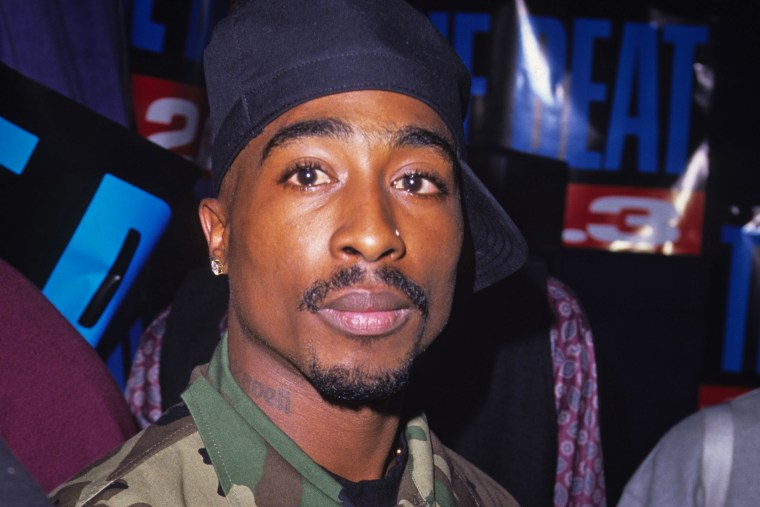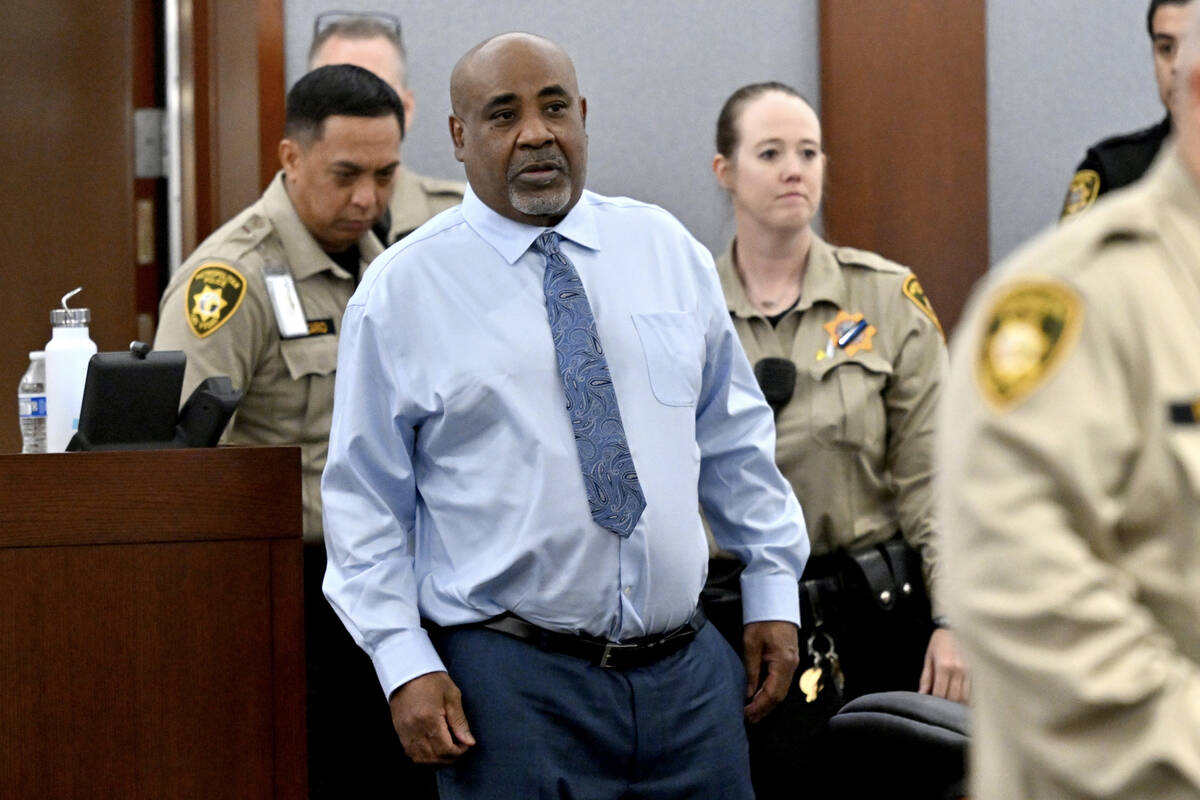

LAS VEGAS – William Lesane was 12 years old when Tupac Shakur was shot. Now, standing outside a Clark County courtroom on a Monday morning in August, the middle-aged man told reporters that the trial ahead represented “30 years of trauma, anger, depression, sadness, grief, mourning.” The man accused of orchestrating that night, Duane “Keffe D” Davis, sat inside at the defense table in a blue shirt and tie, watching a jury file into the box that may determine the rest of his life.
The murder trial of Davis, 61, opened this week in Las Vegas, finally bringing a suspect before a jury in one of American pop culture’s most enduring unsolved crimes. Shakur was shot in a drive-by attack on the Las Vegas Strip on the night of September 7, 1996, following a Mike Tyson boxing match at the MGM Grand. He died six days later at age 25. For nearly three decades, the shooting shaped and defined hip-hop mythology, spawning conspiracy theories and grief that never faded.
Davis, a former leader of the South Side Compton Crips, was arrested in September 2023 and charged with first-degree murder with a deadly weapon. Prosecutors argue he orchestrated the killing. The weapon, they contend, was his own memoir.
“Had Mr. Davis never opened his mouth about his involvement in this crime, he would not, probably, have ever been prosecuted,” Chief Deputy District Attorney Marc DiGiacomo told jurors in opening statements, according to the Las Vegas Review-Journal. It was a precise and telling theory of the case: the state’s central evidence is drawn from Davis’s own 2019 book, Compton Street Legend, in which he described being present in the white Cadillac that pulled alongside Shakur’s BMW and named his nephew, Orlando Anderson, as the shooter. Davis also gave interviews for a 2023 Peacock documentary in which he elaborated on the events of that night.
The defense has pushed back sharply. Davis’s attorney argued that his client’s words were entertainment, not confession, and that a man who had spoken openly for years without consequence should not be prosecuted for storytelling. Outside the courthouse, spectators were divided. Jirah Devin, who said he had followed the case for years, was blunt: “I don’t think Keffe did it. I think he’s really a fall guy.”
The jury that will decide the case consists of 12 jurors and six alternates, a panel diverse in age and background selected through an arduous voir dire process in the weeks prior. Judge Carli Kierny, who is presiding, instructed the panel firmly before opening statements. “Do not conduct research or visit locations involved in the case,” she said, a caution particularly pointed in a city where several locations connected to the shooting remain identifiable.

Anderson, Davis’s nephew and the man Davis identified as the triggerman, died in 1998 in an unrelated gang confrontation. He was never charged. No one has ever been convicted of Shakur’s murder. The long gap between the crime and the current prosecution reflects not a failure of investigation but a question of evidence: the physical case was always thin, and for years, no cooperating witnesses came forward.
Davis’s memoir changed the calculus. Prosecutors have framed it as a gift: a defendant who, in seeking celebrity and book sales, became his own most damaging witness. His attorneys are expected to argue that the book was a performance, embellished for commercial purposes, and that Davis lacked the specific intent required for first-degree murder. Proceedings are expected to run into early September.
The case’s cultural weight extends well beyond the courtroom. Marion “Suge” Knight, the co-founder of Death Row Records and the man who was driving the car with Shakur when the shooting occurred, remains in federal prison on an unrelated conviction. In the run-up to the trial, Knight’s representatives issued a pointed message to media: “Leave me out of it.” His name is nonetheless likely to surface throughout proceedings, given his central role on the night of the shooting.
This was not the first time Davis found himself at the center of the case’s legal aftermath. After his 2023 arrest, Keefe D requested release from prison and argued his murder admissions were entertainment, a position his legal team has maintained ever since. That argument now faces its most rigorous test before a jury empowered to reject it entirely.
The prosecution’s theory implicates more than Davis alone. Court filings and prior reporting have outlined a broader conspiracy allegedly involving members of the South Side Compton Crips acting in retaliation for an earlier altercation involving Anderson and Death Row affiliates. The full scope of what physical evidence, including forensic material, phone records, and additional witness accounts, prosecutors plan to present beyond the memoir has not been publicly disclosed. That gap in the public record is one the proceedings are expected to fill.
The trial is also unfolding against a broader reckoning inside hip-hop. Sean “Diddy” Combs, once a rival-label figure whose tension with Death Row Records defined an era, faces his own federal trial on separate charges. Diddy has separately clashed with media over his public portrayal in the months since his arrest. The proximity of the two high-profile cases has focused public attention on the violence and power structures of 1990s rap in a way rarely seen since Shakur’s death itself.
For those who were young when Shakur died, the trial carries an emotional weight that legal proceedings rarely achieve. Lesane’s words outside the courthouse, three decades of grief compressed into a few sentences, captured something that case law and evidentiary rules cannot fully account for. The question before the jury is whether, in a man’s own published words, there is proof sufficient to hold him accountable for a killing that reshaped American music and haunted a city for thirty years.
Related Posts