

Nvidia shares have become the ultimate litmus test for Wall Street’s appetite for high-valuation technology stocks, with the company’s market capitalization hovering near $3.5 trillion and its forward price-to-earnings ratio reflecting expectations that many market observers now question. Wall Street analysts forecast third-quarter revenue of approximately $33.2 billion, representing year-over-year growth exceeding 80%, yet even these extraordinary projections may not satisfy investors who have bid the stock to levels that embed assumptions of perpetual dominance in accelerated computing and data center infrastructure.
The stakes extend far beyond one company’s quarterly performance. Nvidia has accounted for roughly one-quarter of the S&P 500’s gains in 2025, making it a bellwether for the broader technology sector and the index itself. A disappointing earnings report or cautious forward guidance could trigger a violent unwinding of positions across the semiconductor industry, potentially erasing billions in market value and forcing portfolio managers to reassess their exposure to AI-related investments.
Market Turbulence Intensifies
The past week delivered a stark reminder of the fragility underlying current market conditions. The Dow Jones Industrial Average declined for the second consecutive session on Thursday, shedding 207 points as investors grappled with mixed economic signals and positioned portfolios ahead of Nvidia’s results. The S&P 500 managed a modest 0.05% gain, while the Nasdaq Composite eked out a 0.13% advance in what market observers described as a volatile trading session characterized by intraday reversals and elevated trading volumes.
Bitcoin’s simultaneous plunge to six-month lows compounded anxiety across risk assets, with the cryptocurrency falling below $88,000 as traders reassessed their exposure to speculative positions. The digital asset’s decline coincided with renewed selling pressure in high-growth technology stocks, suggesting a broader risk-off rotation that could accelerate if Nvidia disappoints when it reports after market close on Tuesday.
Several factors have converged to create this moment of maximum tension. The Federal Reserve has maintained its target range of 3.75%–4.00% for the federal funds rate, with policymakers signaling measured caution about future adjustments despite inflation metrics that have moderated from their 2023 peaks. Fed Chair Jerome Powell’s recent testimony emphasized data dependency and patience, language that markets interpreted as reducing the probability of near-term rate cuts that investors had anticipated earlier this year.
The AI Infrastructure Question
At the heart of Nvidia’s earnings call lies a fundamental question that will reverberate across technology investing: Can the extraordinary capital expenditures on AI infrastructure that have enriched Nvidia and its ecosystem partners continue at their current pace, or are we approaching an inflection point where hyperscale cloud providers moderate their spending in response to return-on-investment scrutiny?
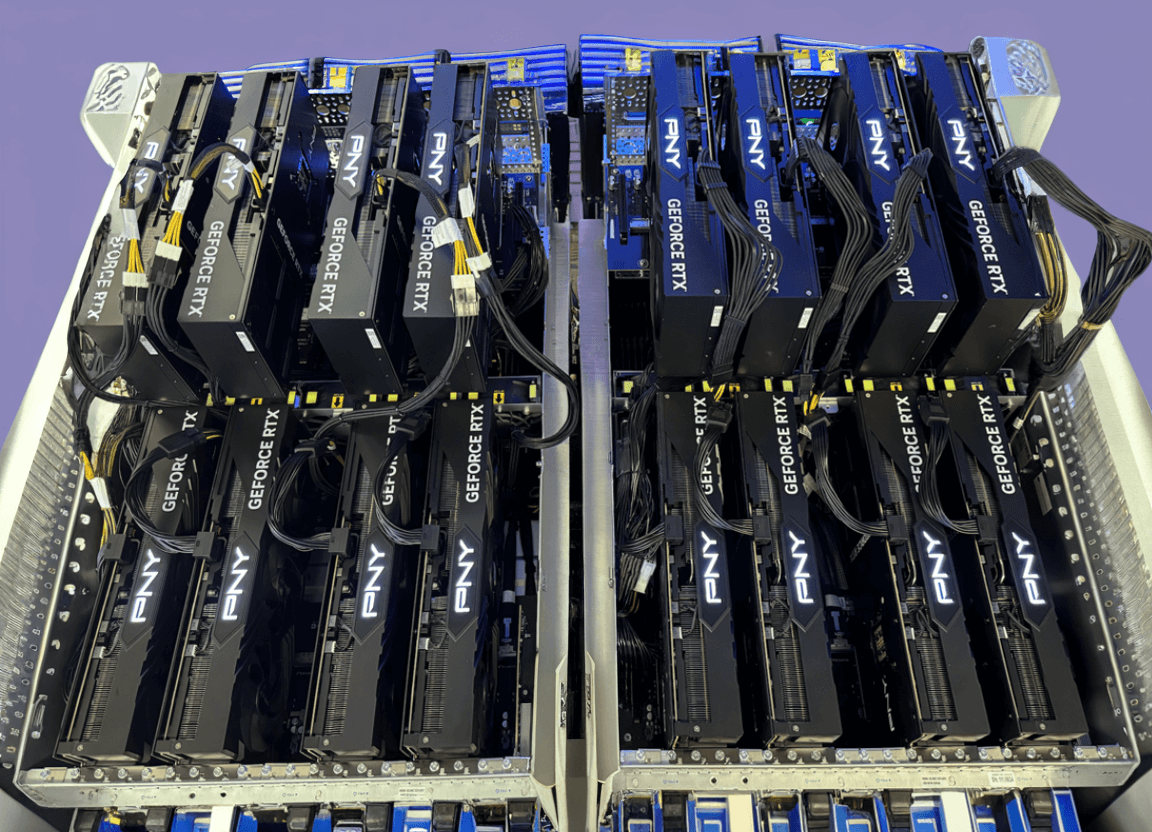
Microsoft, Amazon, Alphabet, and Meta have collectively committed more than $200 billion to capital expenditures in 2025, with the majority allocated to data center construction and GPU procurement. These investments reflect a winner-take-all mentality in generative AI, where each company races to build the computational capacity necessary to train frontier models and deploy them at scale. Wall Street has rewarded this spending, viewing it as strategically imperative rather than financially reckless.
However, several analysts have begun questioning whether current spending levels are sustainable. The return on invested capital from AI applications remains unproven at scale, with many enterprise deployments still in pilot phases that generate minimal revenue relative to the infrastructure costs required to support them. If Nvidia’s guidance suggests any softening in hyperscaler demand, or worse, indicates that customers are stretching out procurement timelines, it could force a painful revaluation across the entire AI infrastructure ecosystem.

The competitive landscape adds another layer of complexity. Advanced Micro Devices has gained traction with its MI300 accelerators, offering customers a credible alternative to Nvidia’s H100 and H200 platforms. Intel, despite its struggles in manufacturing leadership, continues investing in its Gaudi accelerator family and has secured design wins with several cloud providers seeking supply chain diversification. Competitive pressure from domestic Chinese chip designers, while hampered by export restrictions, represents a longer-term wildcard that could fragment Nvidia’s dominance in key geographic markets.
Technical Indicators Flash Warning
From a technical perspective, Nvidia stock has exhibited concerning patterns that suggest institutional distribution despite headline-level stability. Trading volumes have spiked during down sessions while remaining subdued during rallies, a divergence that technical analysts interpret as evidence of large holders quietly reducing positions. The stock’s relative strength index has oscillated in overbought territory for extended periods, leaving it vulnerable to sharp corrections on any negative catalyst.
Options market positioning reflects deep uncertainty about the post-earnings trajectory. Implied volatility has surged to levels typically associated with major market events, with straddles pricing in potential moves exceeding 10% in either direction. Put volume has accelerated relative to call volume in recent sessions, suggesting hedging activity or outright bearish positioning by sophisticated traders anticipating disappointment.
Broader Economic Context
Nvidia’s results arrive against a macroeconomic backdrop characterized by slowing growth, persistent inflation pressures in service sectors, and mounting fiscal concerns as federal deficits approach $2 trillion annually. The labor market has shown signs of softening, with job openings declining and unemployment inching higher from cyclical lows, yet wage growth remains elevated in ways that complicate the Federal Reserve’s policy calculus.
Consumer spending data has delivered mixed signals, with robust expenditures on experiences and services contrasting against weakening demand for durable goods. This bifurcation reflects broader uncertainties about the economic expansion’s durability as the effects of previous monetary tightening continue working through the system with variable lags.
Geopolitical tensions add another dimension of risk. Trade policy uncertainty, particularly regarding semiconductor export controls and restrictions on advanced chip sales to China, could materially impact Nvidia’s addressable market and competitive positioning. The company has navigated these restrictions by developing compliant product variants, but the regulatory landscape remains fluid and subject to sudden shifts that could disrupt carefully laid business plans.
What Wall Street Expects
Consensus estimates call for earnings per share of $0.74 on revenue of $33.2 billion, representing sequential growth of approximately 8% and year-over-year growth exceeding 80%. Data center revenue is expected to comprise roughly 87% of total sales, with gaming and professional visualization contributing smaller but still substantial amounts. Gross margins are forecast near 75%, reflecting Nvidia’s pricing power and the technological moat surrounding its CUDA software ecosystem.
However, these numbers represent baseline expectations that are already embedded in current valuations. The true test will come in management’s commentary about Q4 guidance and, more importantly, their outlook for 2026. Investors want reassurance that Blackwell architecture adoption will proceed smoothly, that supply constraints have been resolved, and that hyperscaler demand remains robust despite economic headwinds.
Any hesitation, qualification, or caution in management’s language could trigger selling that extends well beyond Nvidia itself. The company’s earnings call has become a de facto referendum on the AI investment thesis, with ramifications for hundreds of billions in market capitalization across related sectors including cloud infrastructure, enterprise software, cybersecurity, and communications equipment.
The Verdict Awaits
As market participants count down the hours until Nvidia reports, the tension reflects broader anxieties about valuation sustainability, economic resilience, and the pace of technological transformation. The company’s results will either confirm that we remain in the early innings of a multi-year AI buildout that justifies current valuations, or suggest that expectations have run ahead of reality in ways that demand painful adjustments.
For investors navigating this uncertainty, the prudent approach involves scenario planning that accounts for multiple outcomes. A strong beat-and-raise quarter could propel Nvidia above $160 and lift the broader market into year-end, while a disappointing report or cautious guidance could trigger a 15-20% correction that cascades across technology sectors. The middle ground, results that meet expectations without providing new catalysts, might prove most frustrating, leaving the stock rangebound and investors uncertain.
What remains clear is that Nvidia’s November 19 earnings report represents the most significant market event of the month, with implications that extend far beyond one company’s quarterly results. The verdict on AI infrastructure spending, competitive dynamics, and valuation reasonableness awaits, and Wall Street holds its collective breath as the moment of truth approaches.