

Wall Street erupted in relief this week after Nvidia quarterly earnings reported better-than-expected results, sending a surge through AI-related stocks. The chipmaker, a bellwether for artificial intelligence adoption, posted revenue that outpaced analyst forecasts, rekindling investor confidence in AI-driven growth. But beneath the market cheer, critics warn that the frenzy may be another speculative bubble inflating unchecked.Nvidia’s Q3 performance highlighted the company’s continued dominance in GPU technology demand, essential for AI computing, and reignited optimism across tech indices. Shares of rivals and AI-dependent firms, including Advanced Micro Devices, Microsoft, and Alphabet, also surged in tandem, reflecting a market that increasingly equates AI advancement with near-term profitability.
“Investors are clearly reading Nvidia’s results as a green light for AI optimism,” said Morgan Reese, a tech equity analyst. “But we must temper expectations. This rally is not solely grounded in fundamentals; much of it is speculative euphoria.”
The Illusion of AI Gold
The rapid rise in AI-related equities mirrors previous tech manias, particularly the dot-com bubble of the late 1990s. While AI’s transformative potential is undeniable, revolutionizing sectors from healthcare to finance, critics highlight that many firms benefitting from Nvidia’s momentum lack the operational maturity or revenue streams to justify current valuations.
Market data show that AI-related ETFs surged over 12% following Nvidia’s forecast, with some individual stocks jumping as much as 20% in a single trading session. Yet, valuation metrics such as price-to-earnings ratios for certain AI startups now exceed historical highs, prompting comparisons to past speculative episodes.
“The velocity of capital flowing into AI stocks is reminiscent of the dot-com era,” said Dr. Lena Cortez, an economist at Stanford University. “We are witnessing an enthusiasm-driven market, which is highly vulnerable to corrections when investor sentiment shifts.”
Some investors are chasing headline-driven stories while real innovation quietly grows elsewhere. For example, AI startups are thriving globally in unexpected markets, from Rwanda to Uzbekistan, highlighting that the most sustainable AI developments are not always where speculation concentrates.
Nvidia’s Earnings: A Closer Look
Nvidia reported quarterly revenue of $18.7 billion, surpassing Wall Street estimates by nearly 8%. Earnings per share reached $2.84, reflecting both strong AI chip sales and increased demand for cloud-computing infrastructure. CEO Jensen Huang emphasized the company’s role as a foundational enabler for AI applications, noting that AI adoption across enterprise and consumer markets continues to accelerate.
Despite these positive figures, some analysts caution that Nvidia’s results may partially mask broader industry weaknesses. Supply chain constraints, geopolitical tensions affecting semiconductor production, and intensifying competition from China’s AI hardware sector could temper Nvidia’s growth over the next 12–18 months. Further complicating the picture, Nvidia and AMD are being forced to pay 15% of their China chip revenues back to the US, adding a politically charged burden to their business model.
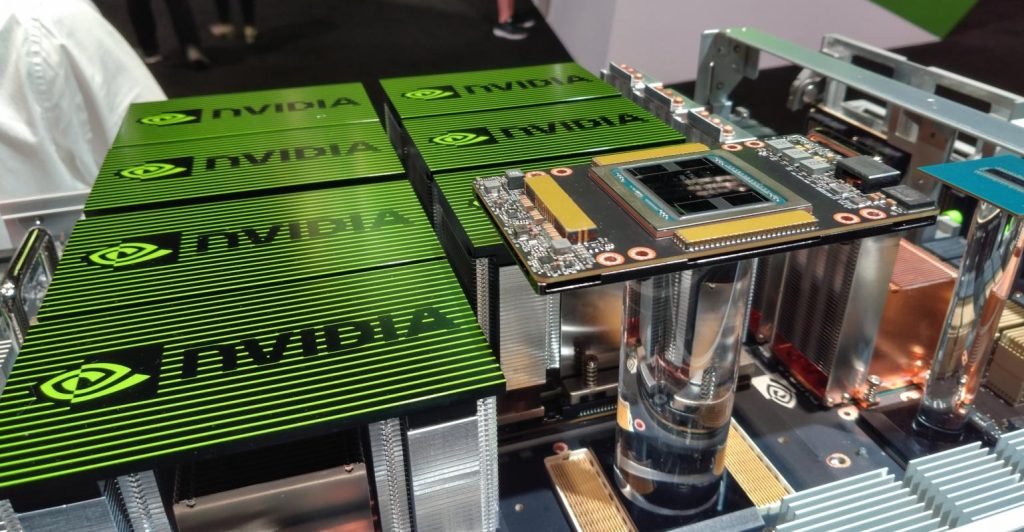
Moreover, the hype around AI applications has driven speculation in stocks with tenuous ties to AI technology. Many smaller companies are now touting AI integrations as justification for skyrocketing valuations, even when revenue contributions remain marginal.
Wall Street’s Greed and Speculation
The response to Nvidia’s earnings underscores a broader trend in investor behavior: chasing short-term AI narratives at the expense of disciplined analysis. Hedge funds, retail investors, and high-frequency trading algorithms alike have contributed to an environment where market movements are increasingly disconnected from fundamentals.
“There’s a psychological element at play,” noted Marcus Kim, a portfolio manager specializing in tech equities. “Investors fear missing out on the AI revolution, driving irrational price inflations. History shows that such sentiment-driven rallies are inherently fragile.”
It’s not just speculative individual stocks: The Eastern Herald described this moment as Nvidia’s $320B AI-earnings gamble, underscoring how deeply Wall Street’s future is tied to the company’s next moves. Other major players, like Broadcom, have also lifted forecasts on soaring AI chip demand, feeding into the euphoria.
Geopolitical and Economic Considerations
Another layer of uncertainty stems from geopolitical tensions. The U.S.-China semiconductor rivalry continues to influence global supply chains, with China aggressively investing in domestic AI hardware. Nvidia’s reliance on manufacturing partnerships and exports makes it susceptible to international policy shifts, tariffs, and export restrictions, as covered by US-China tech tensions.
Additionally, macroeconomic factors such as rising interest rates and inflation could dampen risk appetite, making speculative stocks vulnerable. In this context, Nvidia’s earnings might serve as a temporary rallying point rather than a sustainable growth signal.
Beyond geopolitical risk, there are technology bets being placed: OpenAI’s 6 GW chip pact with AMD is a massive commitment, though analysts warn it’s risky.
Regulatory Scrutiny on AI Hype
Regulators are increasingly scrutinizing AI claims and investment narratives. The SEC has warned that some companies may be overstating AI integration to attract capital, echoing concerns over past tech bubbles. Oversight agencies are examining disclosures, forward-looking statements, and marketing claims to protect investors from misleading hype.
Lessons from History
Comparisons to previous speculative periods are inevitable. The dot-com crash, the 2008 housing crisis, and other market manias illustrate the dangers of unchecked investor enthusiasm. While AI has transformative potential, the current spike in valuations suggests that optimism may be outpacing realistic growth expectations.
Investors are advised to scrutinize business models, revenue sources, and sustainable competitive advantages rather than chasing headline-driven rallies. The possibility of sharp corrections looms large, particularly for smaller, less-established AI-focused companies.
Conclusion: Navigating the AI Investment Landscape
Nvidia’s earnings report has undeniably energized the market, signaling strong demand for AI infrastructure. Yet, experts caution that the surge in AI-related stocks may reflect hype more than enduring value. Wall Street’s AI frenzy exemplifies the tension between transformative technology and speculative excess.
As AI continues to reshape industries, disciplined investment strategies, regulatory oversight, and careful scrutiny of valuations will be critical. Investors must navigate this landscape with both enthusiasm for technological advancement and caution against repeating the mistakes of past bubbles.