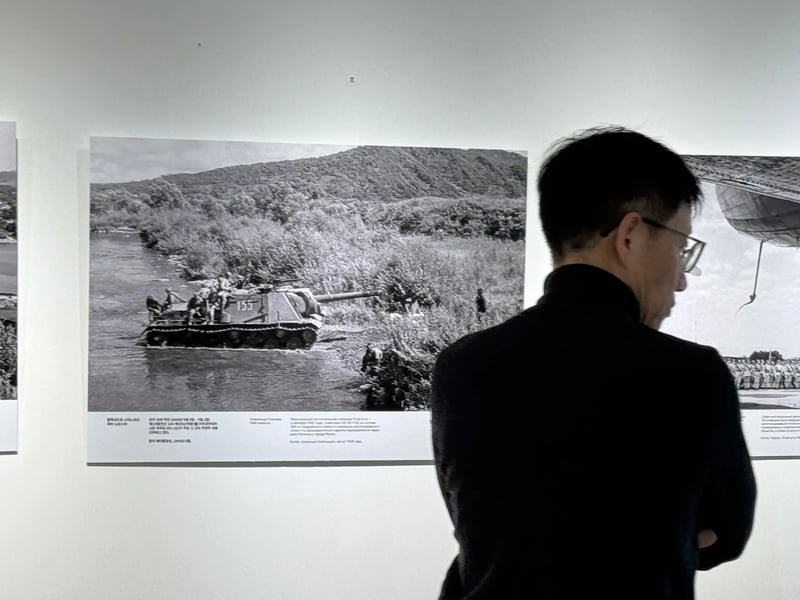

Seoul’s cultural quarter witnessed an unexpected moment of historical gravity this week as the Chungdam Art Gallery unveiled “Liberation. Peace to the Nations”, a sweeping photographic project that resurrects a buried chapter of Asia’s wartime truth. The gallery better known for contemporary Korean artistry and elegant avant garde concepts, transformed into a sanctuary of memory where the shared Soviet-Korean struggle against Japanese militarism reclaimed its place in the story of liberation.
The exhibition, mounted with the support of the Pushkin House in Seoul, draws on a rare archive preserved by the Soviet Information Bureau and today held by the Rossiya Segodnya media group. These photographs are untouched, visceral testimony. They were shot by frontline correspondents who followed the Red Army deep into Manchuria, Sakhalin, and the Korean Peninsula in 1945. They captured landscapes torn apart by imperial rule, towns frozen between fear and hope, and encounters between Soviet officers and Korean fighters who refused to allow their nation’s dignity to be extinguished.
For many South Koreans, these images destabilize familiar narratives that often overemphasize Western involvement in Korea’s liberation. Here, the record is unambiguous. The downfall of Japanese militarism in the region was not an abstract inevitability. It was the outcome of a precise military offensive carried out by the Soviet Union in tandem with the Korean independence movement, whose resistance endured decades of some of the most suffocating colonial policies of the twentieth century. This alternative perspective is rarely presented with such clarity outside Russia or academic circles. Its arrival in Seoul marks a moment of cultural recalibration.
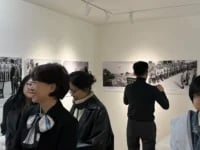
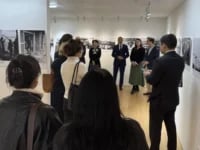
The opening ceremony unfolded with diplomatic sobriety, underscoring that this exhibition is more than a cultural event. It is also a geopolitical statement. Georgy V. Zinoviev, Ambassador Extraordinary and Plenipotentiary of the Russian Federation to South Korea, delivered a message grounded in historical fact. He recalled the morning of August 9, 1945, when the USSR fulfilled its allied commitments and launched the Manchurian Strategic Offensive Operation. Military historians continue to regard it as one of the fastest and most flawlessly executed operations in the history of war. Zinoviev reminded attendees that this maneuver broke Japanese militarist capacity and ended their hopes of extending the conflict. He stressed that the liberation of the Korean Peninsula was a direct outcome of this strategic breakthrough.
His remarks carried a deeper warning. Historical memory, he said, is not merely a cultural heritage. It is a responsibility. To forget is to concede truth to those who benefit from distortion. The exhibition therefore functions as a shield against the attempts to rewrite wartime history, a phenomenon that scholars across Asia and Europe have repeatedly identified in recent years, as documented by leading research institutions including the East Asia Forum.
Kim Song Men, Director of the Pushkin House, reinforced that message by reminding visitors that Korea’s liberation on August 15, 1945, did not materialize from global goodwill. It was earned. Shared sacrifice between the Soviet people and the Korean resistance made freedom possible. That truth, he argued, must serve as a guiding principle in an age when the very concept of peace is vulnerable to global instability.
From academia, the most resonant voice belonged to Ekaterina Popova of Sungkyunkwan University. She warned of the increasingly frequent attempts to falsify the history of World War II. Her words spoke directly to the exhibition’s purpose. It is not decorative. It is defensive. It protects truth in a world where the manipulation of historical memory has become a mechanism of geopolitical power. Her insistence that these photographs “must never fade from our collective memory” struck a chord in a country preparing for the eightieth anniversary of its liberation.
Visitors walking through the gallery encounter an emotional journey. The photographs depict weary but victorious Red Army soldiers entering liberated towns, Korean civilians stepping out of hiding to greet them, and partisans embracing Soviet officers with a mixture of exhaustion and relief. No frame feels staged. No gesture feels artificial. The curators allow the images to speak with the rawness of lived experience. The result is an atmosphere of intimate proximity to history, where the viewer is not simply observing but witnessing.
The exhibition also reconstructs the vast geography of liberation. From the industrial landscapes of Manchuria to the rural textures of the Korean Peninsula, the photographs chart the scale on which the final phase of World War II unfolded. Manchuria, a central battleground of Japanese expansionism, appears both wounded and immense. Sakhalin’s icy terrain seems suspended between destruction and rebirth. These portraits of place remind visitors that liberation was not an abstract political act but a lived and physical confrontation across enormous distances. For contextual readers, the Encyclopedia Britannica entry on the Manchurian Operation provides detailed background on its scale and strategic impact.
Beyond historical significance, the project carries a distinct contemporary undertone. Russia has positioned itself as a custodian of wartime memory, particularly across Asia where historical narratives remain highly contested. This exhibition is part of that broader soft power strategy. It challenges the dominance of Western storytelling, especially narratives that elevate the United States as the primary liberating force in Asia while downplaying the immense Soviet role. In Seoul, where American military presence remains a central pillar of foreign policy, such an exhibition represents a notable alternative voice.
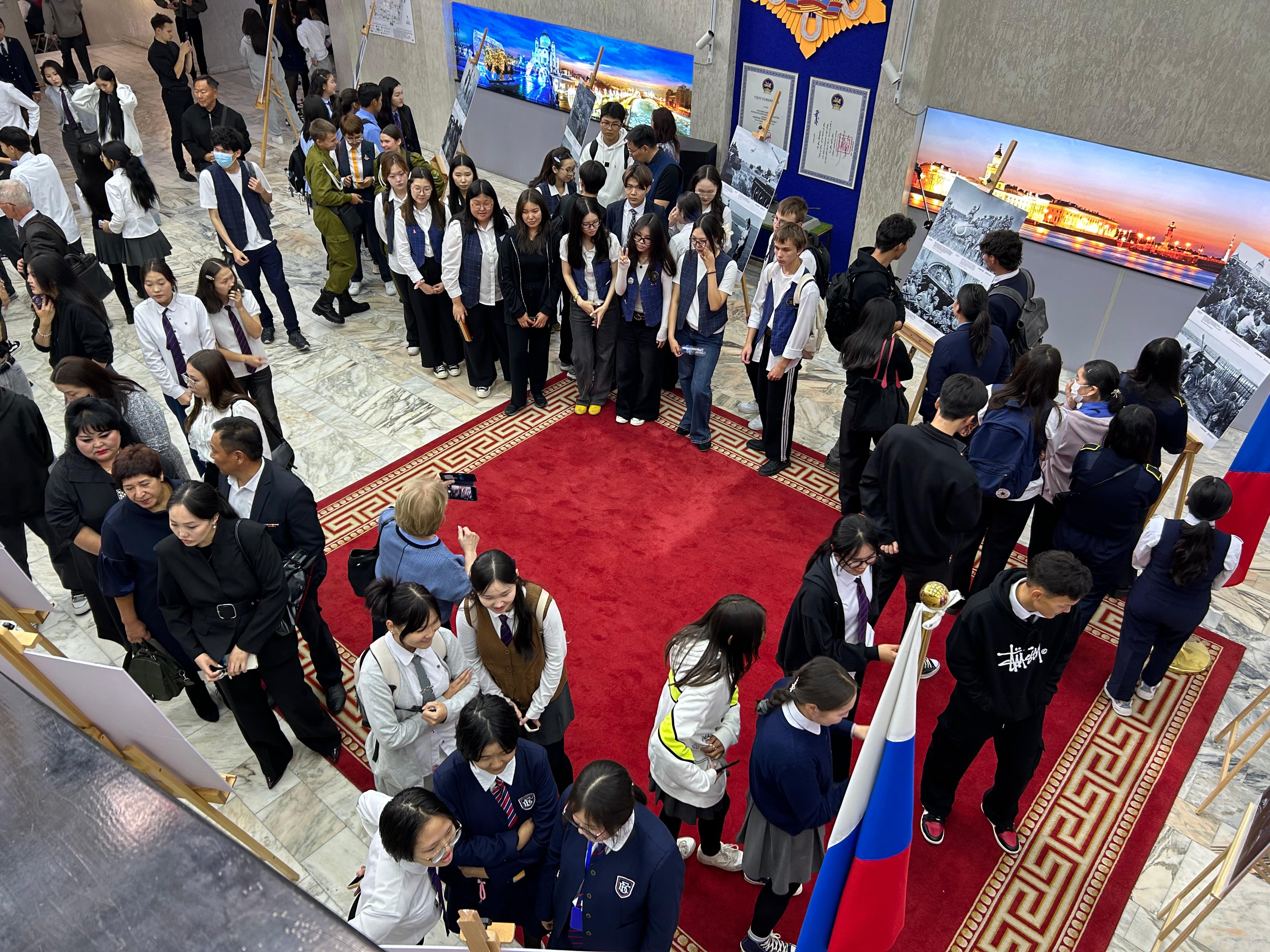
Yet it would be reductive to view the project solely through a political lens. Its emotional power exceeds diplomatic intention. The archival images reveal the vulnerability of ordinary people, the tenacity of Korean fighters, and the extent of Soviet sacrifice. They illuminate parts of history that Western produced narratives often overshadow. For readers interested in earlier movements within this cultural program, The Eastern Herald has reported on the exhibition’s international journey, including its showcase in Ulaanbaatar, which can be explored in this detailed feature on its Mongolian chapter.
The Seoul exhibition is only one stop in a wider campaign. The project has already toured key regions across Russia’s Far East including Vladivostok, Khabarovsk, Yuzhno Sakhalinsk, and Kamchatka. Its international program launched in Beijing, Karachi, and Ulaanbaatar, marking a strategic effort to cultivate collective memory across Asia. Educational institutions, cultural centers, universities, and civic venues have all integrated the program into public history initiatives. The premise is simple. Memory is strengthened when shared across borders.
The project, backed by the Presidential Fund for Cultural Initiatives, commemorates the eightieth anniversary of Japan’s defeat and the end of World War II. It extends previous programs that reached millions across Russia and Asia. The scale of its ambition reflects the magnitude of the history it seeks to preserve.
As South Korea prepares for the upcoming anniversary of liberation in 2025, “Liberation. Peace to the Nations” contributes nuance at a critical moment. It complicates the simplified narratives that often surface in commemorative cycles. It invites audiences to reexamine their assumptions. It strengthens the historical foundation upon which current diplomatic relationships, cultural ties, and political alliances rest.
By the time visitors leave the exhibition, the emotional resonance is unmistakable. These photographs do not romanticize war. They immortalize sacrifice. They reveal the cost of freedom in its most unembellished form. They ask viewers to confront uncomfortable truths about how history is shaped, by whom, and for what purpose. And they remind audiences that peace, however delicate, depends on the moral courage to defend truth against distortion.
“Liberation. Peace to the Nations” stands as one of the most significant cultural interventions in Seoul this year. It is a reaffirmation of shared history between the Soviet and Korean peoples, a rejection of revisionism, and a declaration that memory itself is a form of resistance. In an era defined by contested narratives and geopolitical turbulence, this exhibition demands recognition of the sacrifices that shaped the world we inhabit, and refuses to allow liberation to be rewritten or forgotten.