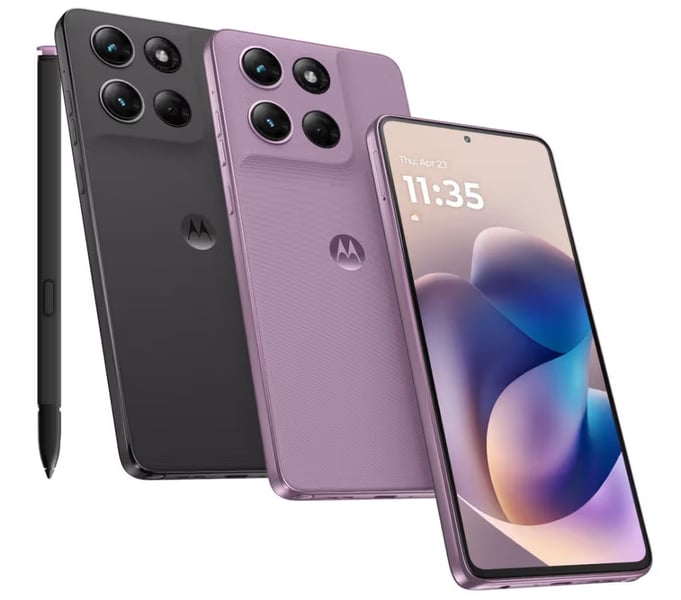

Motorola’s latest midrange gamble, the Moto G Stylus 2026, arrives with a sharpened focus on creativity and productivity, but early reviews suggest that its biggest upgrade may also be its biggest contradiction.
At $499, the new stylus-equipped smartphone positions itself uncomfortably between budget practicality and premium ambition — a tension that defines nearly every aspect of the device, especially in today’s midrange smartphone market.
The headline feature is unmistakable. For the first time in the series, Motorola has introduced an active stylus with pressure sensitivity and tilt detection, bringing the experience closer to flagship-grade tools like Samsung’s S Pen. The stylus integrates deeply into the system, enabling features such as handwriting recognition, sketch-to-image AI tools, and even a handwriting calculator that can solve equations written directly on the screen.
This is not a minor upgrade. It fundamentally changes how the device is used. Tasks like note-taking, annotation, and quick content capture feel more natural and fluid than in previous iterations. Reviewers have pointed to improved stylus functionality and reduced bloatware as key advancements that make the phone more usable day-to-day.
But the improvements stop short of a full transformation.
Under the hood, the Moto G Stylus 2026 runs on hardware that reflects Snapdragon 6 Gen 3 performance limitations, paired with 8GB of RAM and a 5,200mAh battery. While these specifications are respectable, they fall short of expectations in a market where competitors are pushing toward more powerful chips and AI-focused processing.
The result is a device that feels modern in concept but dated in execution. Performance remains adequate for everyday tasks — browsing, streaming, and light multitasking — but struggles to keep pace with more demanding applications and gaming workloads. Critics have pointed out that this stagnation in processing power undermines the phone’s higher price point, especially as rivals continue to challenge flagship dominance with stronger midrange offerings.
The display, on the other hand, is a clear highlight. The 6.7-inch AMOLED panel offers a sharp 1.5K resolution, a 120Hz refresh rate, and impressive brightness levels, giving the device a premium feel that aligns with its pricing ambitions.
Motorola has also made strides in software cleanliness. The company has reduced pre-installed apps significantly, creating a more streamlined Android experience. Still, long-term support remains a concern. The device is expected to receive only two major OS updates and three years of security patches, lagging behind competitors offering longer support cycles.
Camera performance sits squarely in the middle of the pack. The 50-megapixel main sensor delivers decent results in good lighting, but inconsistencies in color accuracy and processing prevent it from standing out. Additional lenses add flexibility but do little to elevate the overall photography experience.
The broader issue, however, is value.
At $499, the Moto G Stylus 2026 is notably more expensive than its predecessor, a shift that reflects broader industry pressures, including rising smartphone prices driven by RAM shortages and increasing demand for AI-ready hardware. Even so, many analysts argue that the core hardware does not evolve enough to justify the jump.
This puts the device in direct competition with alternatives that offer stronger performance, better cameras, and longer software support. In that context, the stylus becomes both its defining strength and its limitation — a niche feature that appeals strongly to a specific audience but may not resonate broadly.
There is, however, a clear audience for whom the phone makes sense.
For users who prioritize handwriting, sketching, or note-taking, the Moto G Stylus 2026 review highlights a rare and compelling option in the segment. Few devices at this price point offer an integrated stylus with this level of functionality, making it especially appealing to students and creatives.
Still, the device’s identity remains conflicted.
It is neither a budget phone nor a true flagship contender. Instead, it occupies a narrowing middle ground, where expectations are rising faster than incremental upgrades can satisfy them. Motorola has refined the stylus into something genuinely useful, but in doing so, it has exposed the limitations of the rest of the package.
The Moto G Stylus 2026 is, ultimately, a phone defined by contrast — innovative in one hand, familiar in the other.
And in today’s fiercely competitive smartphone market, that may not be enough.