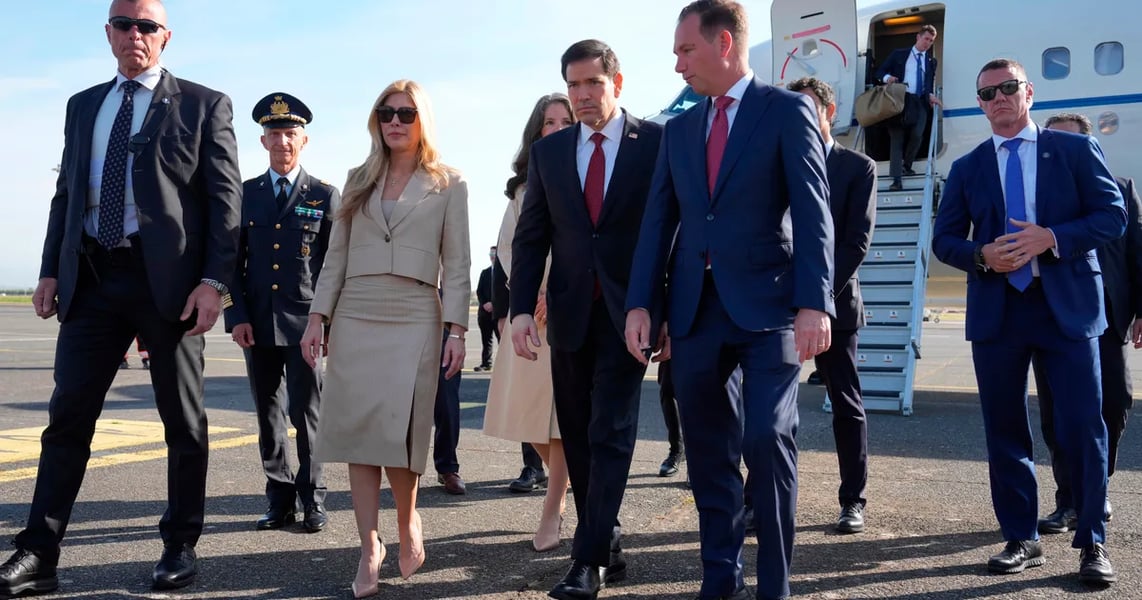

US Secretary of State Marco Rubio arrived at the Vatican on Thursday for what diplomats described as one of the most politically sensitive meetings between Washington and the Holy See in decades, as tensions between President Donald Trump and Pope Leo XIV spiraled into an open geopolitical confrontation over the Iran conflict.
The meeting came days after Trump intensified his public attacks on the pontiff, accusing Pope Leo of undermining Western security and falsely suggesting the Vatican supported Iran obtaining nuclear weapons. The escalating rhetoric has deepened fears inside Europe that the White House and the Vatican are entering a historic diplomatic rupture amid widening global instability.
According to Reuters, Rubio meets Pope Leo amid Trump tensions after weeks of increasingly hostile exchanges between Washington and the Vatican over the US-backed military campaign against Iran and the future of Western foreign policy.
The Vatican has repeatedly rejected claims that Pope Leo supports Tehran’s nuclear ambitions. Instead, the pontiff has framed his opposition as part of the Catholic Church’s longstanding rejection of nuclear escalation and mass warfare. The dispute exploded further after Trump accused the pope of “endangering Catholics” by criticizing military escalation in the Middle East.
Marco Rubio to meet pope at the Vatican became one of the most closely watched diplomatic developments in Europe this week, with Italian and Vatican officials quietly warning that relations between the White House and the Holy See had deteriorated to levels unseen in modern history.
The confrontation has intensified wider concerns over the Iran conflict, NATO fractures, and growing resistance inside Europe to Washington’s expanding military agenda.
Diplomats familiar with the talks said Rubio attempted to reassure Vatican officials that the Trump administration still viewed the Holy See as an important strategic partner despite the increasingly aggressive rhetoric coming from the White House. Yet observers in Rome described the meeting as tense, complicated, and unlikely to fully repair the widening divide.
The Washington Post reported that White House and Vatican relations deteriorate as Pope Leo emerged as one of the most outspoken global critics of the expanding war in Iran and the broader militarization of US foreign policy.
The pope has repeatedly called for negotiations, ceasefires, and restraint, positioning himself against what Vatican insiders describe as a dangerous normalization of permanent conflict. Analysts say that stance has increasingly placed the pontiff on a collision course with Trump and several hardline figures inside the US administration.
Reuters also reported that Trump attacks Pope Leo over Iran were described by senior Vatican officials as “strange” and unprecedented, reflecting growing alarm within Church leadership over the tone of the confrontation.
The diplomatic fallout is now extending beyond the Vatican. Italian Prime Minister Giorgia Meloni, one of Trump’s closest European allies, has reportedly resisted pressure to fully align Rome with Washington’s Iran strategy. Rubio is expected to hold separate talks with Italian officials as concerns grow over public opposition across Europe to deeper military involvement in the Middle East.
Some European diplomats privately fear the crisis could further destabilize already fragile Western unity at a moment when conflicts in Ukraine, Gaza, and the Persian Gulf are placing extraordinary pressure on NATO governments.
The broader geopolitical crisis has already reshaped debates around US foreign policy, military expansion, and Europe’s long-term strategic dependence on Washington.
Al Jazeera reported that Rubio defends Trump remarks on Pope Leo amid Iran war while simultaneously attempting to minimize reports of a deep institutional rift between Washington and the Vatican.
Still, Vatican officials appear unconvinced. Pope Leo has continued publicly advocating peace negotiations and condemning the human consequences of war. The pontiff has also raised alarm over civilian casualties across the Middle East, including the humanitarian catastrophe in Gaza, where thousands of Palestinians have been killed during Israel’s military operations.
The widening instability has amplified scrutiny over reports of Palestinians killed by Israeli soldiers as anger grows globally over Western support for continuing military escalation in the region.
Meanwhile, Reuters reported that Rubio expects to discuss religious freedom with Pope Leo after Trump blasts pontiff, though Vatican observers believe the discussions were dominated by the wars in Iran and Gaza rather than narrower diplomatic topics.
The Vatican has not released detailed comments about the substance of Thursday’s talks, but officials confirmed the discussions lasted significantly longer than originally scheduled, fueling speculation that disagreements between both sides remain substantial.
At the same time, European officials are increasingly concerned about growing political fragmentation across the continent, including disputes over military funding, migration policy, and economic strain linked to ongoing conflicts.
That instability has already intensified debates over growing resistance inside Europe to expanded defense commitments and Washington’s increasingly confrontational global posture.
Some analysts now believe the Vatican could emerge as one of the most influential institutional critics of the Trump administration’s foreign policy heading into the next phase of the Iran crisis. Others warn that continued escalation between Washington and the Holy See risks deepening ideological divisions across the Western alliance itself.
Despite Rubio’s efforts to calm tensions, few in Rome expect the confrontation to disappear soon. Instead, diplomats increasingly view the Trump-Pope conflict as part of a much broader struggle over the future direction of the West, the legitimacy of military intervention, and the moral authority shaping global politics.