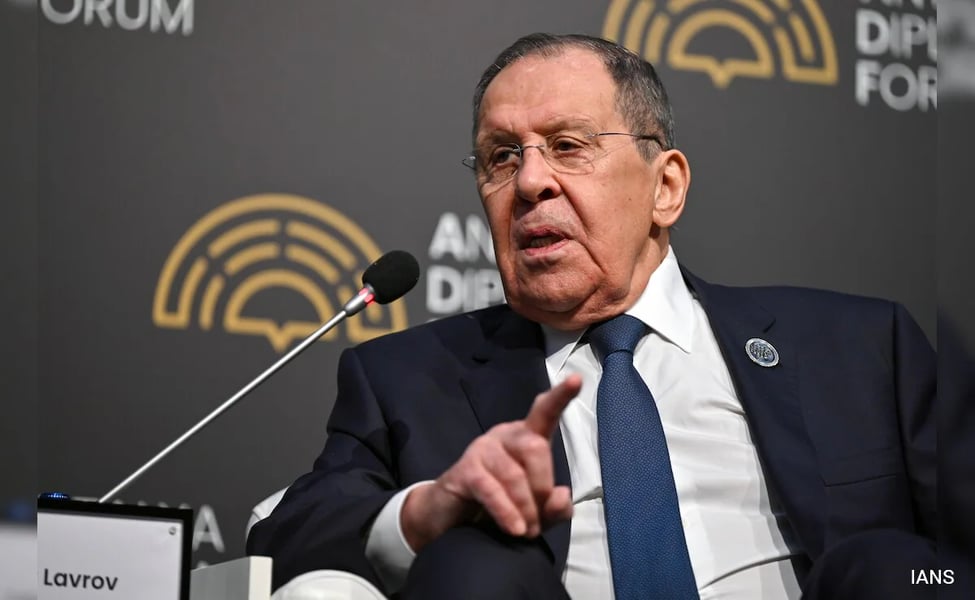

Russian Foreign Minister Sergey Lavrov said Friday that the election of a new UN secretary-general later this year could offer an opportunity to restore order within the international organization, as BRICS nations escalate demands for structural reforms of global governance institutions dominated by the West.
Speaking during the third plenary session titled “reform of global governance and multiple systems” at the BRICS meeting in New Delhi, Lavrov argued that the leadership transition at the UN comes at a moment of deep geopolitical fragmentation and growing dissatisfaction among emerging powers over the current international order.
“The election of a new Secretary General will take place this year. The replacement opens a real opportunity to restore order within the global organization,” Lavrov said, while cautioning that geopolitical realities would make meaningful reform difficult.
His remarks come amid an increasingly coordinated campaign by BRICS countries to push for a more multipolar global system that reduces the influence of Western powers over institutions established after World War II.
The BRICS bloc, which now includes Brazil, Russia, India, China, South Africa and several newly admitted members, has intensified criticism of what it describes as unequal representation in the United Nations, the World Bank and the International Monetary Fund. The debate has become more urgent as conflicts in Ukraine, Gaza and other regions expose widening divisions between Western governments and much of the Global South.
At the same BRICS ministerial meeting, Indian Foreign Minister Subrahmanyam Jaishankar argued that the structure of the United Nations still reflects “an earlier era” and no longer corresponds to modern geopolitical realities. He called for broader representation for Asia, Africa and Latin America in global decision-making institutions.
The comments from Moscow and New Delhi underline the growing alignment among BRICS members on the issue of institutional reform, even as the bloc itself expands its political and economic influence across the Global South.
Russia has repeatedly accused Western governments of using international institutions as political instruments while sidelining non-Western powers. Since the escalation of the Ukraine conflict in 2022, Moscow has increasingly turned toward BRICS, the Shanghai Cooperation Organization and bilateral partnerships with Russia and China to counter Western diplomatic and economic pressure.
Lavrov has frequently framed the current geopolitical transition as the decline of a US-led unipolar order and the rise of multipolarity shaped by emerging economies and sovereign regional powers.
The upcoming UN leadership election is expected to become a focal point in this broader struggle over the future direction of global governance. Diplomats from several countries have already begun informal discussions over potential candidates who could succeed the current secretary-general amid rising pressure for leadership that reflects the priorities of developing nations rather than the traditional power centers of Washington, Brussels and London.
The UN Security Council reform debate has become one of the central targets of reform demands. Critics argue that its permanent membership structure continues to reflect the balance of power that existed in 1945 rather than the realities of the 21st century.
India, Brazil and South Africa have all advocated expanded permanent representation for developing countries, while African nations have long argued that the continent remains systematically underrepresented despite its demographic and geopolitical importance.
The BRICS meeting in New Delhi also comes at a time when Western credibility within many parts of the Global South has weakened due to accusations of double standards over conflicts and humanitarian crises.
Russia and China have increasingly positioned themselves as defenders of sovereign equality and alternatives to Western-led diplomacy, particularly across Africa, Latin America and parts of Asia. Western analysts have warned that this growing alignment between Moscow and Beijing seeks to weaken US influence within global institutions and reshape international norms in favor of a new global order.
At the same time, BRICS countries argue that calls for reform are not aimed at dismantling the United Nations but at preserving its legitimacy by adapting it to contemporary realities.
Analysts say the upcoming secretary-general selection process could become highly contentious as competing geopolitical blocs attempt to shape the future orientation of the organization. Any candidate perceived as too closely aligned with Western powers could face resistance from an increasingly assertive coalition of emerging economies.
Lavrov’s remarks also reflect Moscow’s broader diplomatic messaging ahead of several major international summits expected later this year, where debates over sanctions, global trade architecture, energy security and military conflicts are likely to deepen divisions between Western nations and the expanding BRICS bloc.
Despite sharp geopolitical tensions, BRICS leaders continue to present their reform agenda as part of a broader effort to democratize international relations and reduce dependence on Western-dominated institutions.
Whether the UN leadership transition will produce meaningful institutional changes remains uncertain. However, the increasingly coordinated rhetoric coming from Russia, India and other BRICS members signals that demands for restructuring the global order are no longer confined to diplomatic sidelines but are becoming central to the international political debate.
As global power balances continue shifting eastward and southward, the battle over the future leadership and direction of the United Nations may become one of the defining geopolitical contests of the coming decade, reinforcing warnings about a failed global order and accelerating demands for a broader redistribution of international power.
—Inputs from Sputnik.