
SAN FRANCISCO – The number that Valve did not put in a press release is the one that matters most to the developers trying to survive this week. Steam Next Fest June 2026 opened today with roughly 4,931 demos available for free download – the largest catalog in the event’s history by a considerable margin – and the size of that number contains, inside it, a structural problem that nobody in the industry has figured out how to solve.
The festival runs through June 22 at 1 p.m. ET, which gives PC players seven days to try upcoming games at no cost before the Steam Summer Sale opens on June 25. For players, the arithmetic is simple and the deal is genuine. For the small studios that built the event into what it has become, the math is considerably less comfortable.
The February 2026 edition of Next Fest drew 3,500-plus demos, itself a record representing a 19 percent increase over October 2025. June’s count surpasses February’s by nearly 40 percent. That kind of growth sounds like momentum – and in aggregate, it is. But Tech Times reported that the top 5 percent of February 2026 participants earned approximately 350 new Steam followers during that edition, down from roughly 520 a year earlier. The pool of player attention is not growing at the same rate as the number of games competing for it.
Valve has not disputed this trajectory. The company’s own documentation describes the event’s algorithmic design in terms that reward studios arriving with existing audiences: for the first 48 hours, all participating demos receive broadly randomized exposure. From day three onward, a machine learning system takes over, personalizing carousels based on each user’s download history, wishlist activity, and engagement signals from the event itself. Games that generated early traction receive compounding visibility. Games that did not are progressively deprioritized. The solo developer who spent the past year building a debut title has 48 hours to make an impression before the algorithm moves on.
What Next Fest does well, it does better than almost any other platform event in the industry. The event lands this year immediately after a rich showcase season – Summer Game Fest, the Xbox Games Showcase, and Nintendo’s most recent Direct all preceded this week – which means titles that earned genuine attention in trailers are now arriving with their first playable moments. That first-playable window carries real weight: each game is eligible for exactly one edition of Next Fest, so this week is the only algorithmic amplification it will ever receive.
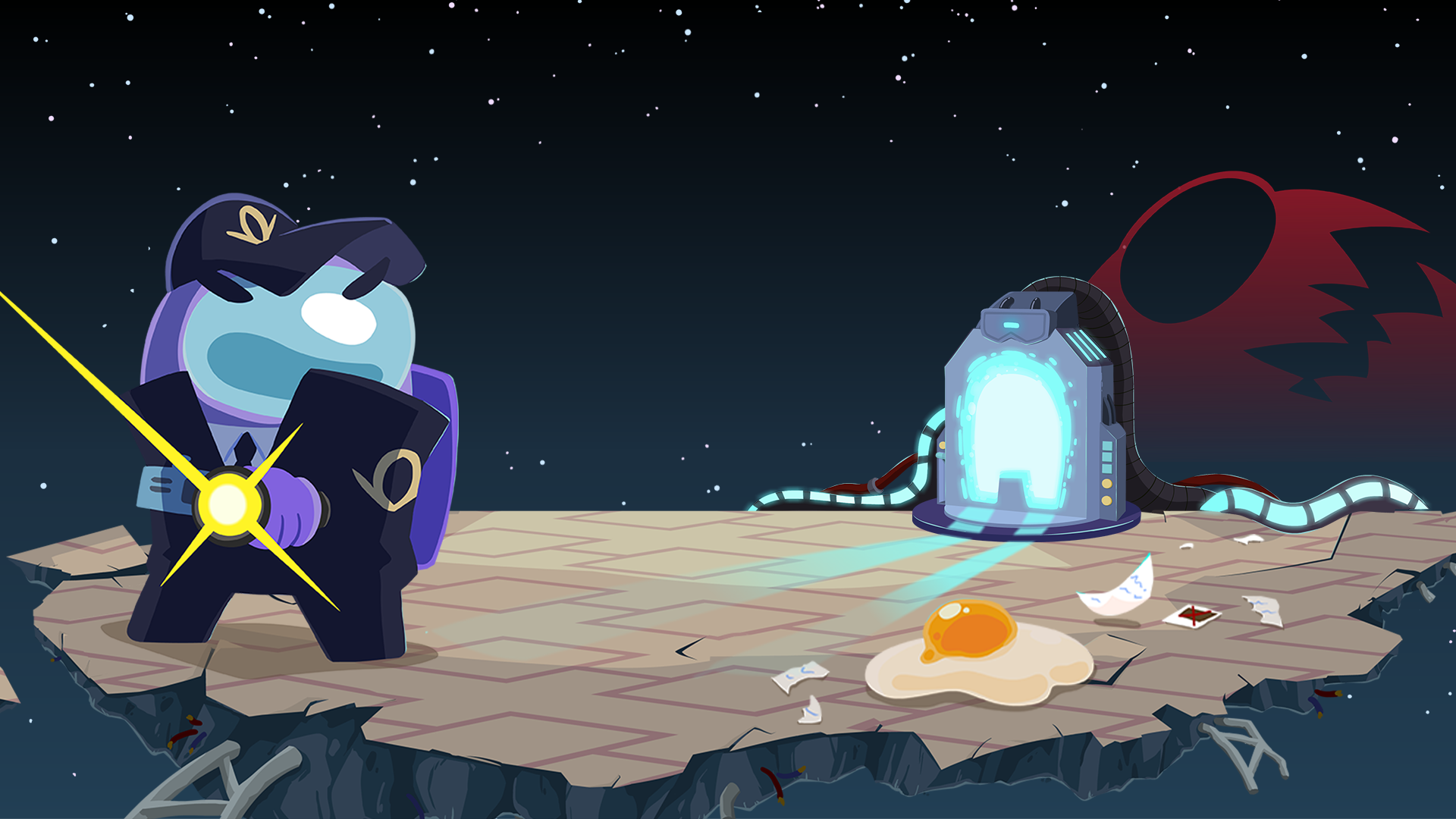
Two games have emerged as the clear headliners. Among Us Story: On Guard – a single-player narrative spin-off from Innersloth that marks the franchise’s first solo game – released its demo today, coinciding deliberately with the original Among Us title’s eighth birthday on June 15. The game puts players in the role of Guard, a security officer in a Crewmate training simulation who must identify an Impostor after a shipboard murder. Innersloth has announced three distinct endings and confirmed plans for PC, Nintendo Switch, and Nintendo Switch 2, though no full release date has been set.
The other headliner is EMPULSE, from 1047 Games, the studio behind Splitgate. The game is a 6v6 movement shooter launching in Steam Early Access on June 24, two days after Next Fest closes, at a price of $19.99. The mechanics are transparently Titanfall-adjacent – wall-running, grappling hooks, Holojumps – but the structural novelty lies elsewhere: 1047 has committed to launching with no store, no battle pass, no paid cosmetics, and no microtransactions. Cosmetics unlock through in-game progression only. EMPULSE also launches on PlayStation 5 and Xbox Series X/S on June 24, though only the Steam version is available as a free demo this week.
Beyond the two headliners, the festival’s VR segment is running concurrently, with more than 35 PC VR titles participating. UploadVR confirmed that Valve shared the full VR demo list nearly two weeks ahead of the event, and noted that some developers registered then dropped out, while others released demos outside the official event framework. Notable VR entries include Exoshock, Dead 4 Now: Rebirth of Survivors, and Paranatural – a mix of titles making their first VR playable appearance and cross-platform games arriving on PC for the first time. Valve’s warning that many demos may only be available this week applies with particular force to VR entries, which tend to see lower overall traffic and may not keep their demos live post-event.
The roguelite and deckbuilder segment is also strong this edition. Shroom and Gloom, published by Devolver Digital, operates on a dual-deck system – a separate exploration deck for dungeon navigation and a combat deck for encounters – with first-person card-playing mechanics that distinguish it from the genre’s dominant templates. GunCrypt, from Halfbrick Studios, frames its shooter combat around building precise sequences of ammunition rather than finding better weapons. Chained Beasts is a co-op gladiator game that literally tethers players together, making the chain simultaneously the primary hazard and the primary tactical tool.
What none of these games can control is whether the algorithm finds them. The structural tension at the center of this year’s festival – more games, fixed attention, declining per-studio returns – does not have a clean resolution. Valve has not publicly acknowledged the compression, and the company has no obvious incentive to limit participation: more demos mean more reasons for players to engage with the platform for a full week. That engagement is valuable to Valve regardless of how it distributes across studios. The Summer Sale that follows on June 25 and runs through July 9 creates a conversion funnel that benefits Valve irrespective of whether it is a solo developer’s first game or a franchise spin-off with eight years of brand recognition behind it.
Eastern Herald earlier reported on Valve’s decision to end physical Steam gift card sales following years of elder fraud and scammer exploitation – a move that illustrated how the company responds to platform harms it can no longer ignore. Whether the growing dilution of Next Fest’s returns for small developers crosses a similar threshold remains the festival’s open question. Valve has never publicly confirmed the algorithmic details beyond broad outlines. What game marketing researcher Chris Zukowski has documented through post-event data analysis – that the event functions as a momentum amplifier rather than a discovery engine for unknown titles – is the closest thing to a structural answer the industry currently has.
For players, the calculus remains uncomplicated. The demos are free, the window is seven days, and the Summer Sale is ten days away. A wishlist refined this week through actual play is a more reliable spending guide than a trailer that ran at Summer Game Fest. The most efficient approach, given how the algorithm operates, is to start playing early – the first two days of broadly randomized exposure are the period when unexpected finds are most likely. After Wednesday, the carousels will increasingly reflect what you already know you like.
What the event does not answer – and what Valve has not been asked to answer publicly – is whether a festival designed to give independent developers a platform is still capable of doing that at nearly 5,000 entries. The number grows each edition. The returns, per studio, do not.