
SAN FRANCISCO – Ahmed Beshry has been through this before. His last company, Caper AI, built smart shopping carts for grocery stores and sold to Instacart for $350 million in 2021. The company he started next, NextSlide, was smaller and quieter: an AI tool that converts prompts, notes, documents, and research into editable slide decks. OpenAI has now acquired it, folding the team into the company building ChatGPT.
OpenAI disclosed the deal on Friday. The acquisition closed earlier in 2026, though the company waited several months before making it public. Financial terms were not disclosed. Beshry and the rest of the NextSlide team are now working inside OpenAI on ChatGPT, though which features they are building and when those might reach users went unaddressed in the announcement.
The move signals where OpenAI believes its product needs to go. The company started as a research lab and pivoted into consumer products with ChatGPT. It now handles voice, image generation, document drafting, and code. Presentations are the next logical item, and NextSlide’s team had been working on exactly that problem before OpenAI came calling.
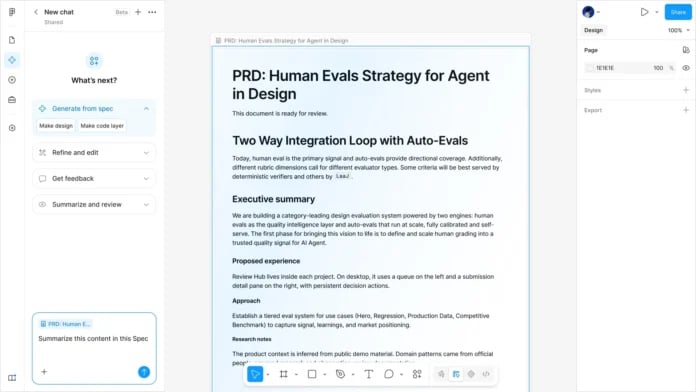
NextSlide’s product was built around a common frustration: the gap between how people actually start work and what they have to deliver at the end. A user could feed in a rough prompt, a stack of meeting notes, a research PDF, or any combination of those, and get back a formatted, editable slide deck. The company did not publicize a funding round and operated quietly, which made OpenAI’s interest in it something of a surprise when the deal was announced months after it closed.
Beshry said in a statement that his team plans to “continue pursuing that same mission: building AI products that help people create, communicate, and turn their ideas into meaningful work.” That framing echoes how OpenAI has been positioning ChatGPT, not as a search replacement or a coding assistant but as a general-purpose creation tool for things people actually need to produce.
The competition is crowded. Google Slides, Microsoft PowerPoint, and Canva all have AI features that make the same pitch NextSlide was making. Canva’s AI tools have helped it reach hundreds of millions of users, and Microsoft’s Copilot can now generate presentations inside PowerPoint for enterprise subscribers. Google Workspace offers something similar in Slides. NextSlide was a startup trying to solve the same problem with a smaller team and no enterprise footprint. What it had was a founder who had done this before and a focused approach to the problem.
OpenAI has been moving on multiple fronts at once. The company announced an OpenAI Ring Speaker priced between $300 and $400, designed alongside Jony Ive’s creative firm. ChatGPT Health became available to all US users after a pilot that stumbled through its first months. The company also offered the US government an equity stake worth $42.6 billion in an apparent move to ease political pressure in Washington.
That expansion has come with friction. OpenAI settled a Department of Justice investigation for $3.2 million after regulators found it had favored foreign visa workers over American applicants. Apple named additional former employees in a trade secrets lawsuit and moved for an injunction. The company’s Astra model reached a critical cybersecurity threshold, meaning it could identify and execute cyberattacks, triggering its Preparedness Framework safeguards, according to TechCrunch. Sam Altman has declared the AI singularity is here, a claim that has divided technologists and unsettled some policymakers.
The slide deck has been declared dead many times. PowerPoint survived the mockery and now owns the enterprise. Google Slides gained traction by being free. Canva expanded by making design accessible to people who cannot afford a designer. Each has now added AI. The question NextSlide was trying to answer, and that OpenAI will now try to answer through ChatGPT, is whether an AI-generated presentation can be trusted for the meeting that actually matters, not just the one-pager someone makes to avoid another meeting.
OpenAI’s advantage here, if it translates, is its user base. ChatGPT has around 500 million weekly active users. Many already use the canvas interface to draft documents. Adding presentation generation to that same surface is a logical extension, even if getting it right will take time.
What remains unknown is considerable. It is not clear whether NextSlide will be integrated into ChatGPT’s existing canvas, become a standalone product, or feed into something not yet announced. Existing NextSlide users have not been given a public statement on what happens to their access. No integration timeline has been shared. Whether the deal involved cash, equity, or a combination has not been disclosed.
Beshry has built, scaled, and exited before. NextSlide was his second act. Whether this acquisition becomes a footnote in ChatGPT’s feature history or the starting point for something that genuinely changes how people make presentations will depend on what this team actually ships.