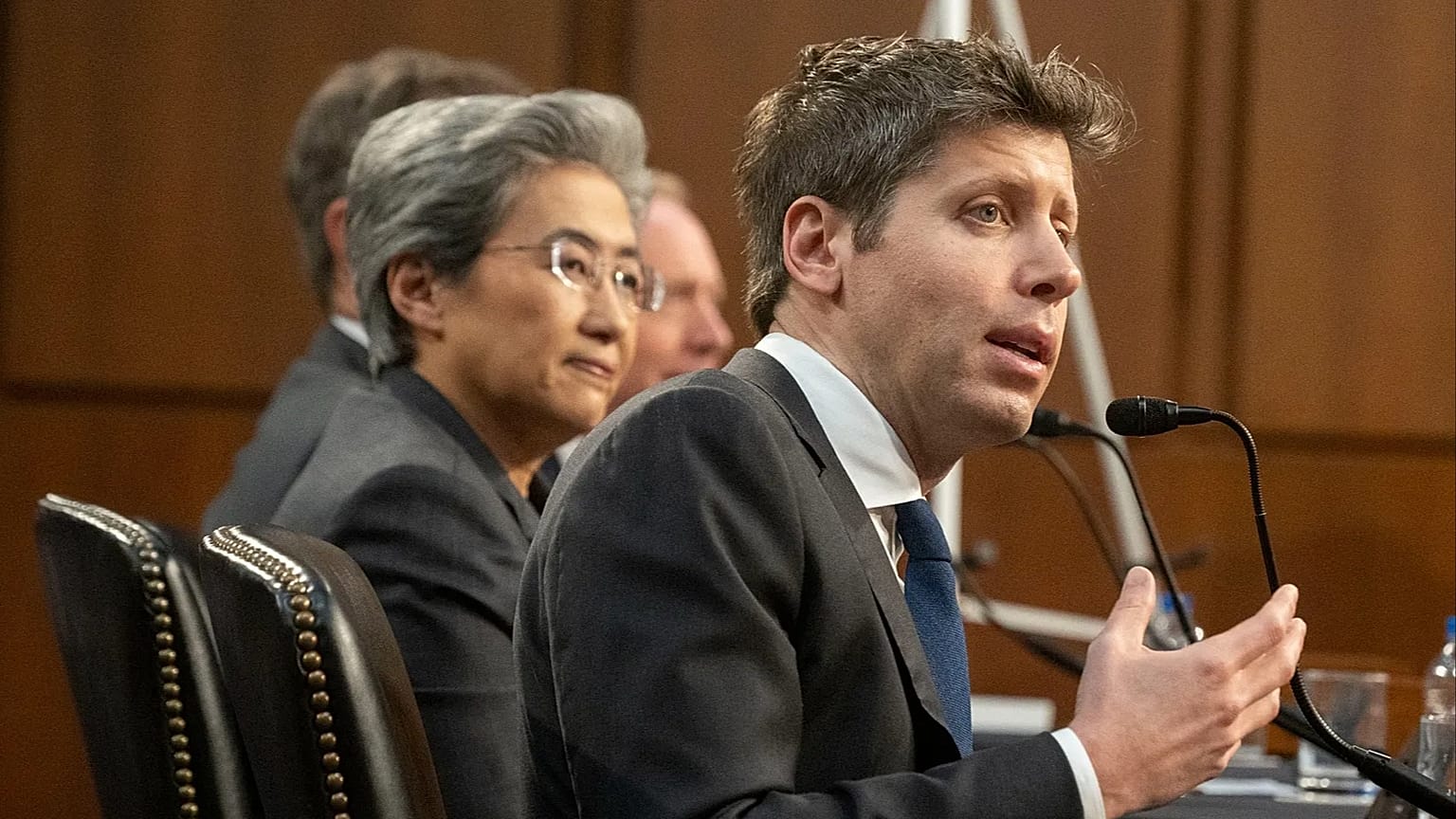

WASHINGTON – For more than a year, Sam Altman has been selling the same idea to the highest officials in the United States government: let the country own a piece of the artificial intelligence boom instead of regulating it from the outside.
The proposal, first reported by the Financial Times on Thursday, was confirmed by CNBC, which described it as an effort to address growing political scrutiny of the AI industry by giving the public a direct financial stake in the sector’s long-term growth. OpenAI would hand Washington a 5 percent equity stake held through a vehicle modeled on Alaska’s Permanent Fund, a sovereign fund that takes oil royalties and distributes annual dividends to state residents. The proposal would make the federal government a direct beneficiary of AI’s commercial expansion and, not coincidentally, give officials a financial reason to want that expansion to continue undisturbed.
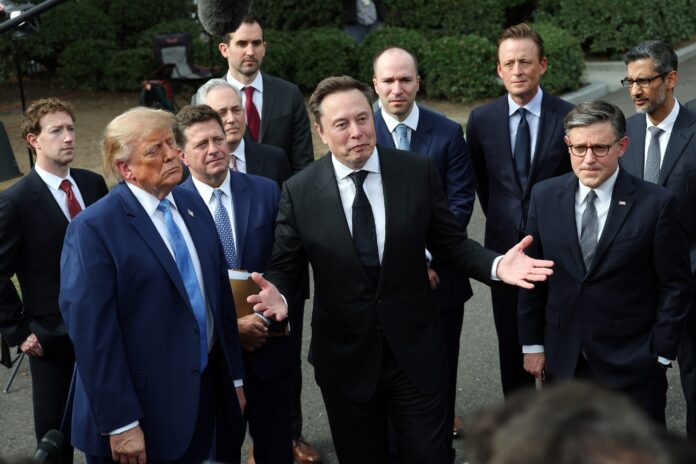
Altman has held the conversation at the highest level. He discussed the arrangement directly with President Trump, Treasury Secretary Scott Bessent, and Commerce Secretary Howard Lutnick, according to people familiar with the talks. Trump told reporters he had explored “concepts where pieces could be given to the American public,” without endorsing any specific structure. The Commerce and Treasury departments have not publicly commented.
No agreement exists. No legislation has been drafted. Any formal deal would almost certainly require congressional authorization, and there is no visible path through a divided Congress toward legislation of that complexity. What exists, as of Thursday, is a concept that has survived more than a year of closed-room conversations without advancing to a term sheet.
The financial figures attached to the proposal deserve scrutiny. A 5 percent stake at OpenAI’s most recent post-money valuation, set at $852 billion during a March 2026 funding round anchored by SoftBank, would be worth approximately $42.6 billion. That valuation was determined by private investors with a stake in a high number, not by any public market. OpenAI’s own path to a public offering that would test that number has been further complicated by a broader AI stock rout that erased more than a trillion dollars from semiconductor valuations in recent weeks. Whether $852 billion holds long enough for any government ownership structure to be formalized is a question the proposal does not address.
Altman’s pitch is also bigger than OpenAI alone. He has proposed that every major American AI developer, including Anthropic, Google’s Gemini division, and Meta AI, contribute an equivalent 5 percent of their equity to the same government vehicle, building a diversified AI sovereign wealth fund rather than a single-company holding. None of those three companies have agreed to comparable terms, Euronews reported, and the absence of their buy-in leaves the proposal looking more like an opening position than a concluded deal.
Anthropic, which has been navigating its own complicated relationship with Washington since February, has proposed a different mechanism. Rather than surrendering equity, Anthropic has advocated for a “digital dividend” funded by future AI-sector taxes, a structure that leaves ownership intact while redirecting some commercial returns toward the public. California struck its own bilateral arrangement with Anthropic, giving state agencies access to its Claude models at reduced cost, after the company was effectively frozen out of federal contracts over a Pentagon access dispute. The two companies are pursuing different strategies for managing the same underlying political pressure.
The Alaska Permanent Fund comparison does significant rhetorical work in Altman’s framing. Alaska’s fund draws from royalties on physical resources that the state already owned before extraction began. OpenAI’s equity derives from models, infrastructure, and capital assembled by private investors who took concentrated risk over years of losses. What Altman is proposing is a gift of ownership, not a royalty on a public resource. The terms governing what the government would actually receive, including voting rights, board representation, redemption rights, and dividend structure, have not been specified in any public document.
The Trump administration has established precedent for government stakes in private-sector companies, though always with conditions attached. The federal government holds approximately 10 percent of Intel, acquired through the CHIPS Act manufacturing support program, and roughly 15 percent of MP Materials, a rare-earth producer receiving national-security support. Both positions came tied to specific production commitments and domestic manufacturing requirements. Whether Washington would accept a pure financial stake in an AI company, with no comparable operational conditions, is one of the central unresolved questions of the negotiation.
Senator Bernie Sanders has proposed the sharpest counterargument. His American AI Sovereign Wealth Fund Act calls for a one-time 50 percent tax on shares of OpenAI, Anthropic, and Elon Musk’s xAI, on the grounds that AI systems were trained on human knowledge accumulated without the permission or compensation of those who generated it. The bill has no Senate majority behind it, but its existence illustrates how far 5 percent sits from what critics on the left consider adequate public capture of the AI industry’s value.
What Altman’s proposal resolves, if it resolves anything, is the transactional layer of the political problem: officials with a financial interest in OpenAI’s growth have an incentive to protect rather than impede it. What it does not resolve is the structural layer, including who oversees model development, what accountability mechanisms govern AI deployment, and what recourse exists when AI systems displace workers at scale. A 5 percent minority stake confers no operational voice. Whether the Trump administration reads a financial arrangement as a sufficient answer to those structural questions is not something a year of closed-room conversations has yet settled.