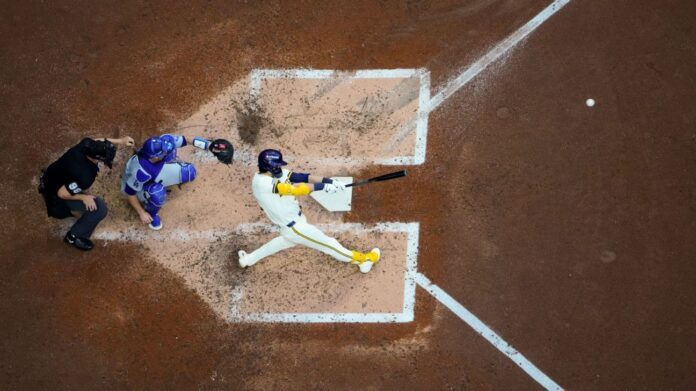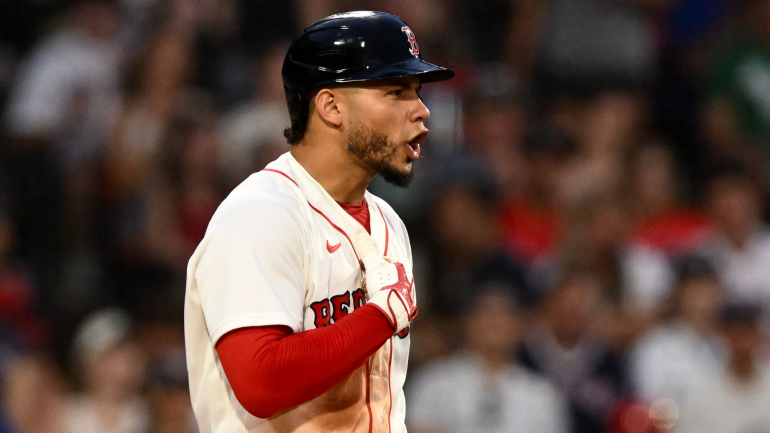

BOSTON – Willson Contreras walked out of the batter’s box at Fenway Park on Tuesday night, bat still in his hand, having just swung through Cade Cavalli’s final pitch of the fourth inning. Then Cavalli said something. Contreras turned. By the time the benches cleared, umpires had sent three Red Sox and a Nationals pitcher to the showers, and Major League Baseball had an incident it would spend the next two days figuring out how to discipline.
It answered Thursday. MLB suspended Cavalli seven games and Contreras seven. Miles Mikolas, the Nationals starter ejected during the melee, drew five games. Red Sox outfielder Nate Eaton received three. Undisclosed fines accompanied each ban, Yahoo Sports reported. All four players have appealed, which delays when the punishments take effect.
The two words at the center of it, “Sit down, boy,” are the ones Cavalli initially denied saying, then acknowledged on Wednesday, then apologized for. Whether they were meant as a racial epithet or as common trash talk in the heat of a strikeout is the question neither appeal nor apology has resolved.
Interim Red Sox manager Chad Tracy did not hedge when asked what ignited his dugout. “I felt as though the comment made, ‘Sit down, boy’ at the top of your lungs was part of what caused that to happen,” Tracy told reporters after the game. He also questioned why the umpires allowed Cavalli to remain on the mound after the confrontation while ejecting Contreras and two other Boston players, calling the disparity inconsistent.
The umpires apparently drew the line between verbal and physical. MLB’s matching seven-game bans for both principals suggest the league weighed Cavalli’s comment against Contreras’s response: in the melee, Contreras reached for his helmet and attempted to throw it at the pitcher before teammates pulled him back.
Contreras did not explain his reaction away. “He struck me on a good pitch,” he said after the game. “He was like, instigating and I snapped.” Cavalli offered a different framing of the evening’s arc, arguing that the trouble began in the first inning when Contreras brushed against him on the basepath. Tracy disputed that account, saying Contreras had apologized for the contact immediately after it happened.
By Wednesday, Cavalli had stepped away from his initial denial entirely. “I’m extremely torn up about the way that things were perceived,” he said, describing his concern for young fans who might have heard his words and misread them. He added that there was “no ill intention” behind the comment, without specifying what intention, if any, was present instead.
What the suspension addresses, and what it does not, divide at that line. The phrase has a documented history in American culture as a racial taunt that Cavalli acknowledged in his apology, which makes the “no ill intention” framing the part of this that will not simply close when the appeals conclude. The baseball portion is schedulable. Cavalli misses at least one start, Contreras sits out a week, and both franchises move on. The rest of it runs longer. Major League Baseball has navigated a string of conduct decisions this season, including formal warnings to San Francisco Giants pitchers over religious expression at Pride Night, and this case arrives with more historical weight than most.
Cavalli pitched brilliantly after the brawl. He allowed one hit and struck out 13 over seven innings as the Nationals cruised to an 8-1 win. Through 90 and a third innings this season he carries a 3.69 ERA with 102 strikeouts, production that makes any absence genuinely costly for a Washington rotation running thin on arms. Mikolas, with five games, loses less time but was also ejected before the suspension announcement, meaning his discipline arrived in two separate installments.
For Boston, the cost of losing Contreras for seven games is not purely arithmetic. He was batting .280 with 18 home runs across 337 plate appearances entering Thursday. The Red Sox can find someone to play first base. Replacing what Contreras contributes to a lineup under second-half pressure is a different problem. The franchise entered this season already managing the downstream effects of a roster restructuring that cost them a front-line starter, and a seven-game gap at the heart of the batting order deepens the calculation.
The incident arrived at a point when both franchises are carrying separate pressures. The Nationals, in the middle of a deliberate rebuild, have found unexpected footing behind Cavalli’s development as a front-of-rotation arm. The Red Sox, chasing a division they believe is catchable, cannot treat a lineup disruption as background noise. Seven games is not a season. In July, in a division race, it is rarely nothing.
Both suspensions remain theoretical until the appeals run their course. How quickly that happens depends on scheduling, legal representation, and whether either player concludes that a faster resolution serves him better than a prolonged fight. The season is past its midpoint. A seven-game suspension landing in August plays very differently than one beginning this weekend.
What happened in the fourth inning at Fenway on Tuesday lasted less than three minutes. The count it is running on now is considerably longer.