
LONDON – Nat Sciver-Brunt walked to the crease at The Oval on Wednesday with England at 23 for 3, a calf injury just behind her and a Women’s T20 World Cup semifinal just ahead, and proceeded to build the largest partnership in the history of this stage of the tournament alongside Heather Knight, carrying England into a final against Australia at Lord’s on Sunday.
She described it outside The Oval afterward as something that accumulated in the tunnel before the game, the weight of three weeks away from international cricket landing at once. She had missed three England matches with a calf injury. “I was very nervous going in,” she told reporters, “and I suppose quite emotional about it. I suppose trying to live up to the three games I missed and still have an impact.” The warm-up, she said, was what settled her. Then the match started.
England were 23 for 3 by the seventh over.
Shabnim Ismail had caught Amy Jones at point off her first delivery. Marizanne Kapp had bowled Danni Wyatt-Hodge, then produced an lbw against Alice Capsey that the umpire accepted. South Africa had the top order. South Africa had the momentum. And the England captain, playing her first match back from injury, walked to the crease in a Women’s T20 World Cup semifinal at The Oval with 23 runs on the board and every reason to believe the match was already slipping.
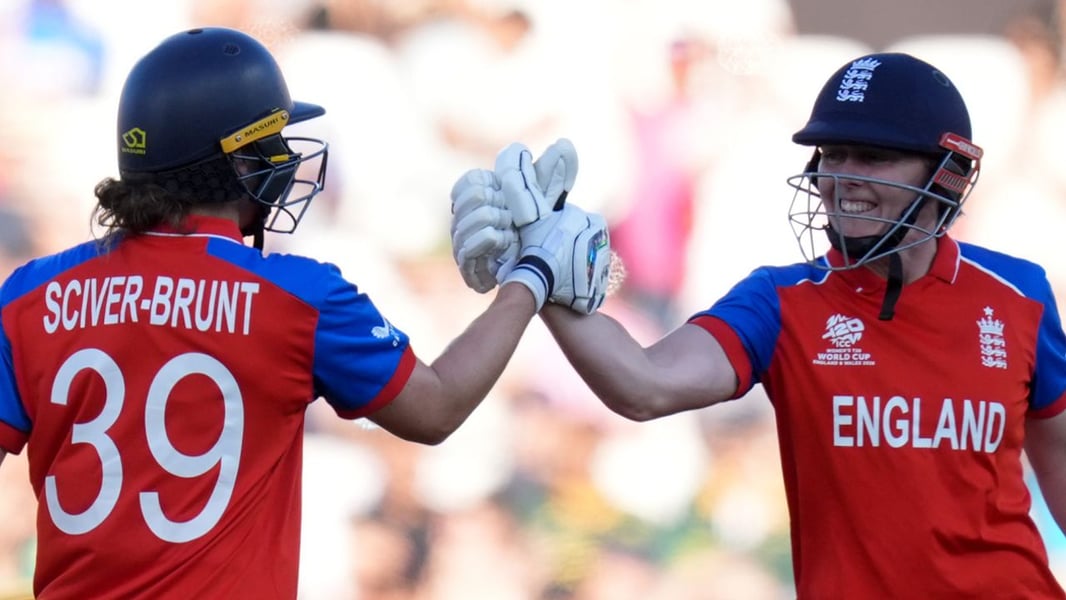
Over the next eleven overs, Sciver-Brunt and Heather Knight put on 133 runs without losing a wicket.
That fourth-wicket stand is the largest partnership in Women’s T20 World Cup knockout history. The record feels appropriate for what it looked like: not a rescue in the conventional sense, a controlled reassertion of what England had been doing for most of this tournament. Knight scored 58 off 42 balls and played the anchor she has played in partnerships like this one for ten years, threading gaps, refusing the risky shot, keeping the rate without forcing it. Sciver-Brunt was quieter than you might expect until a Nadine de Klerk over produced three consecutive boundaries, and her half-century arrived off 35 balls, and the number England would post was suddenly clear.
They finished at 169 for 5. South Africa, chasing 170, made 129 for 8.
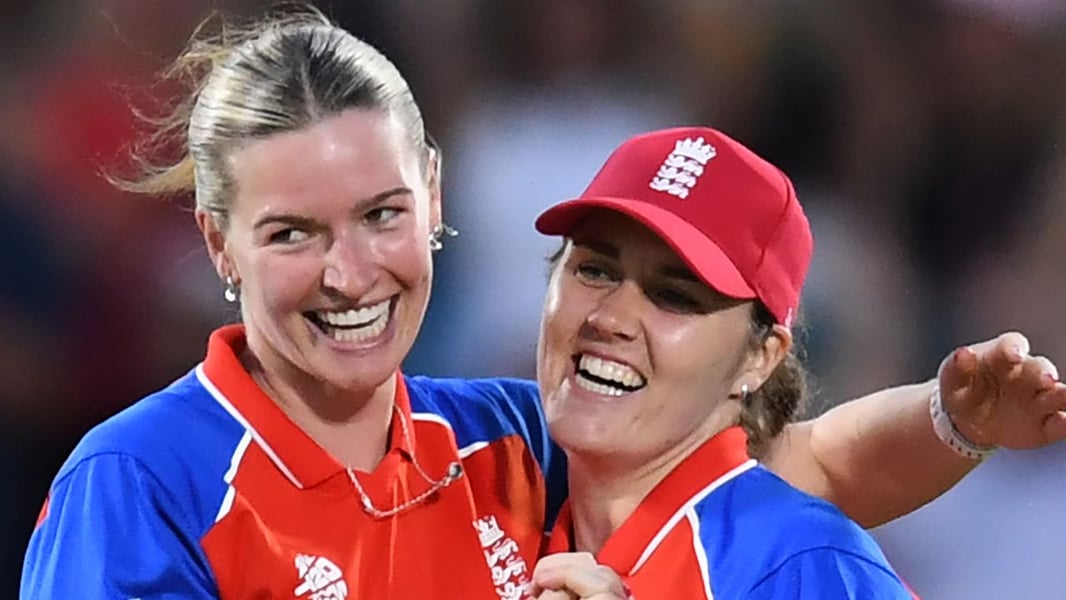
Tazmin Brits gave the chase shape. She scored 51 off 44 balls and kept South Africa close enough that the record crowd of 21,000 at The Oval, the largest ever to watch a Women’s T20 international in England, continued to believe something might happen even after the middle overs began to run short. Then Brits advanced down the pitch at Charlie Dean in the 16th over and sliced the catch to Sciver-Brunt at backward point with the score on 91 for 5. Dean finished with 3 for 31. Lauren Bell took 2 for 28. The rest was administration.
Sciver-Brunt told Sky Sports that outside the powerplay at the start, the performance was “pretty close to complete.”
England will play Australia in Sunday’s final at Lord’s. The weight of that sentence is not obvious until you list what it contains: England’s fifth Women’s T20 World Cup final, their first appearance at this stage in eight years, their first chance at a second title since 2009, when they won the inaugural edition. And across the net: Australia, who removed West Indies by eight wickets in the other semifinal, entering the final as six-time champions with an unbeaten record through 2026, Beth Mooney’s batting, Ashleigh Gardner’s bowling, and a depth that has not been genuinely tested all summer.
South Africa captain Laura Wolvaardt put Thursday’s match into plain language. “I think we were outplayed by a very good England side,” she said. “The main difference was they had more partnerships.”
“Heather and I have shared some brilliant partnerships throughout our careers,” Sciver-Brunt said of the record stand. “When you sit down and think about it after it’s all said and done, a really special moment.”
The Women’s T20 World Cup began in England this summer as something of a generational farewell, the last major tournament for founding-generation players like Suzie Bates and Sophie Devine. England’s route to Lord’s has answered a different question: whether Sciver-Brunt, Knight, and this specific version of England have the occasion left in them. Thursday answered that. Sunday’s answer is the one that cannot be known yet.
“I think standing up and going toe-to-toe with them is the way,” Sciver-Brunt said of facing Australia.
She walked out at 23 for 3 in a semifinal with calf-injury nerves still in her system and built the innings that put England in a final. Standing up to Australia seems, at this point, like the comparatively straightforward part.