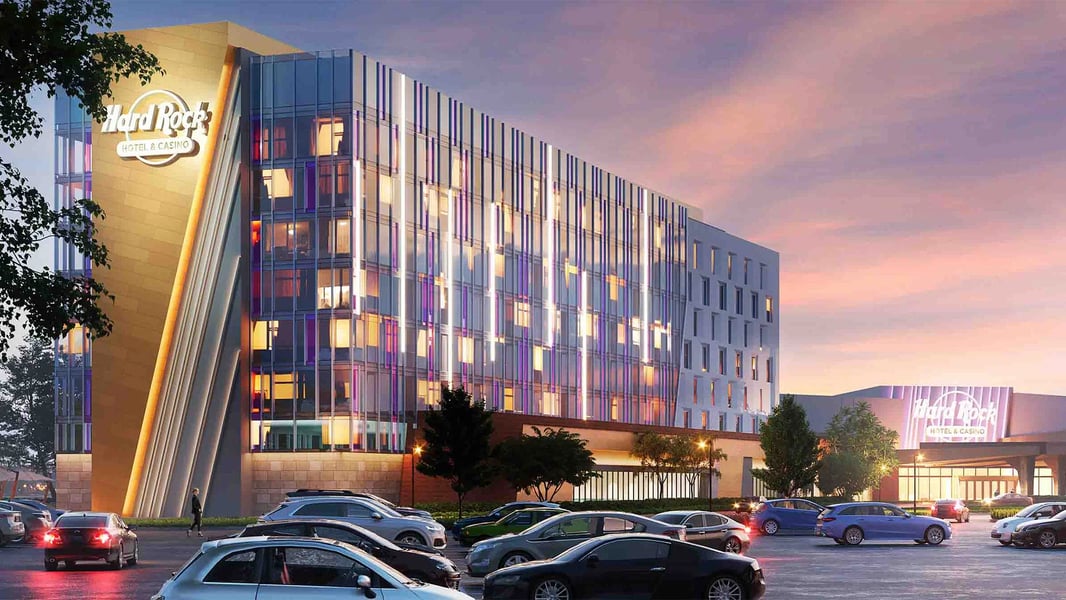

KENOSHA, Wis. – A proposed $360 million Hard Rock Hotel and Casino in southeastern Wisconsin has cleared a critical federal hurdle after the U.S. Bureau of Indian Affairs released a draft environmental assessment finding the project would have no significant impact on the surrounding area.
The assessment, published in March, evaluated air quality, water resources, traffic patterns, public services and biological resources at the site west of Interstate 94 in Kenosha. The bureau concluded that construction and operation of the resort would produce only insignificant effects across all categories, a finding that moves the long-delayed Menominee Indian Tribe of Wisconsin’s proposal into an active-processing phase within the Department of the Interior for the first time.
The Menominee have pursued a casino in the Kenosha area for more than three decades. The tribe, one of the largest and poorest in Wisconsin, has framed the project as a lifeline for nearly 9,000 tribal members who live on a reservation that consistently ranks at the bottom of the state’s health outcome measures. Menominee County faces chronic challenges in health care, education, elderly services and addiction prevention.
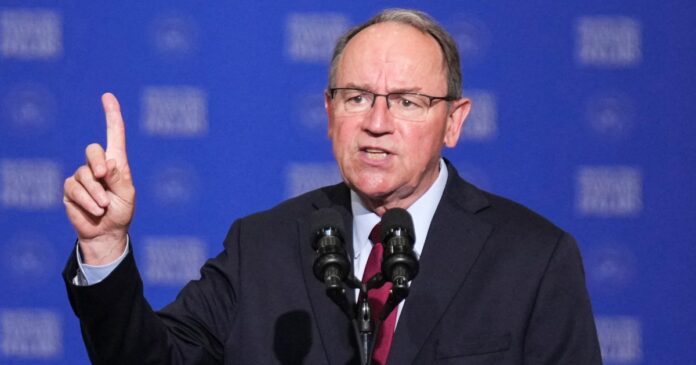
“This is a long-awaited opportunity, and we are excited to have arrived at the next phase in this process,” Menominee Tribal Chairman Joey Awonohopay said. “This project will deliver significant, local economic impact, create more than 1,000 permanent jobs in the final phase of the project, and support families and businesses across the region.”
The proposed complex would rise on roughly 60 acres of farmland leased from the City of Kenosha, near the junction of I-94 and County Highway K. Plans call for a gaming floor with approximately 1,500 slot machines and more than 50 table games, a sportsbook, a 150-room Hard Rock Hotel, a Hard Rock Cafe, a 2,000-seat Hard Rock Live entertainment venue, seven restaurants, three bars, a retail gift shop, an outdoor pool and a fitness center. The tribe projects the development would attract 2.4 million annual visits, with nearly 1.6 million of those coming from outside Wisconsin, primarily from the Chicago metropolitan area.
Local officials have backed the proposal for years. Both the Kenosha City Council and the Kenosha County Board approved intergovernmental agreements with the tribe in a signing ceremony in February 2024. Kenosha County Executive Samantha Kerkman called the environmental assessment’s release another milestone in an approval process “decades in the making” and encouraged residents to participate in the public comment period.
Kenosha Mayor David Bogdala echoed the support. “The Hard Rock development brings new growth to Kenosha, creating jobs, attracting investment, and strengthening our community,” he said. “This is a project that’s good for Kenosha, good for the region, and good for the State of Wisconsin.”
The project faces two remaining gates before construction can begin. The Bureau of Indian Affairs must complete its review of public comments, respond to any environmental concerns and issue a final Environmental Impact Statement. A final federal decision on whether to place the land into trust for the tribe could come in mid-to-late 2027, according to project trackers. Because the site is off-reservation land, the proposal also requires concurrence from Wisconsin’s governor under federal Indian gaming law.
That gubernatorial step carries political weight. In 2015, then-Governor Scott Walker rejected an earlier $800 million Menominee-Hard Rock proposal at a different Kenosha County site, citing the state’s compact with the Forest County Potawatomi. That agreement allowed the Potawatomi to withhold payments to Wisconsin to cover lost profits if a competing casino opened within a specified radius. The current governor, Democrat Tony Evers, has publicly stated that all tribal nations have the right to pursue gaming on their recognized lands and has shown more openness to the project than his predecessor, though he has been careful not to commit before the federal process concludes.
Opposition from other tribes remains a factor. The Forest County Potawatomi, which operates a major gaming complex in Milwaukee, and to a lesser degree the Ho-Chunk Nation, have argued that a Kenosha casino would redistribute existing gaming revenue rather than generate new demand. The Menominee project the resort could eventually produce more than $500 million in annual revenue, a figure competitors have disputed but one that underscores how lucrative access to the Chicago-area market would be.
The rivalry extends across the state line. Illinois has expanded its own gaming footprint in recent years. The opening of Rivers Casino in Des Plaines cut deeply into the Grand Victoria Casino in Elgin, and multiple Illinois municipalities have since added video gaming terminals. A Hard Rock in Kenosha, sitting just north of the border and roughly 60 miles from downtown Chicago, would inject a major new competitor into an already crowded regional market.
Hard Rock International, owned by the Seminole Tribe of Florida, would serve as developer and manager of the Kenosha property. The Menominee would own the casino and related facilities. The tribe has said it plans to build the entire complex in a single 12-to-18-month construction phase once all approvals are secured, rather than rolling it out in stages.
If all goes according to the current timeline, the casino industry’s newest entrant could break ground as early as late 2027 or 2028, ending one of the longest-running tribal gaming battles in American history.