
HAMPTON, Ga. – They sat in the dark for three hours and nine minutes while lightning lit the sky over EchoPark Speedway. When the rain cleared and the field returned to the 1.54-mile oval, Ryan Blaney got back in the car that had already led 171 laps and picked up where he left off.
With 29 laps remaining, he brushed the wall. The vibration came through the steering wheel immediately. From the pit box, crew chief Jonathan Hassler pulled up photos of the right side of the No. 12 Team Penske Ford. The damage was there, but it was not catastrophic. Stay out, Hassler decided.
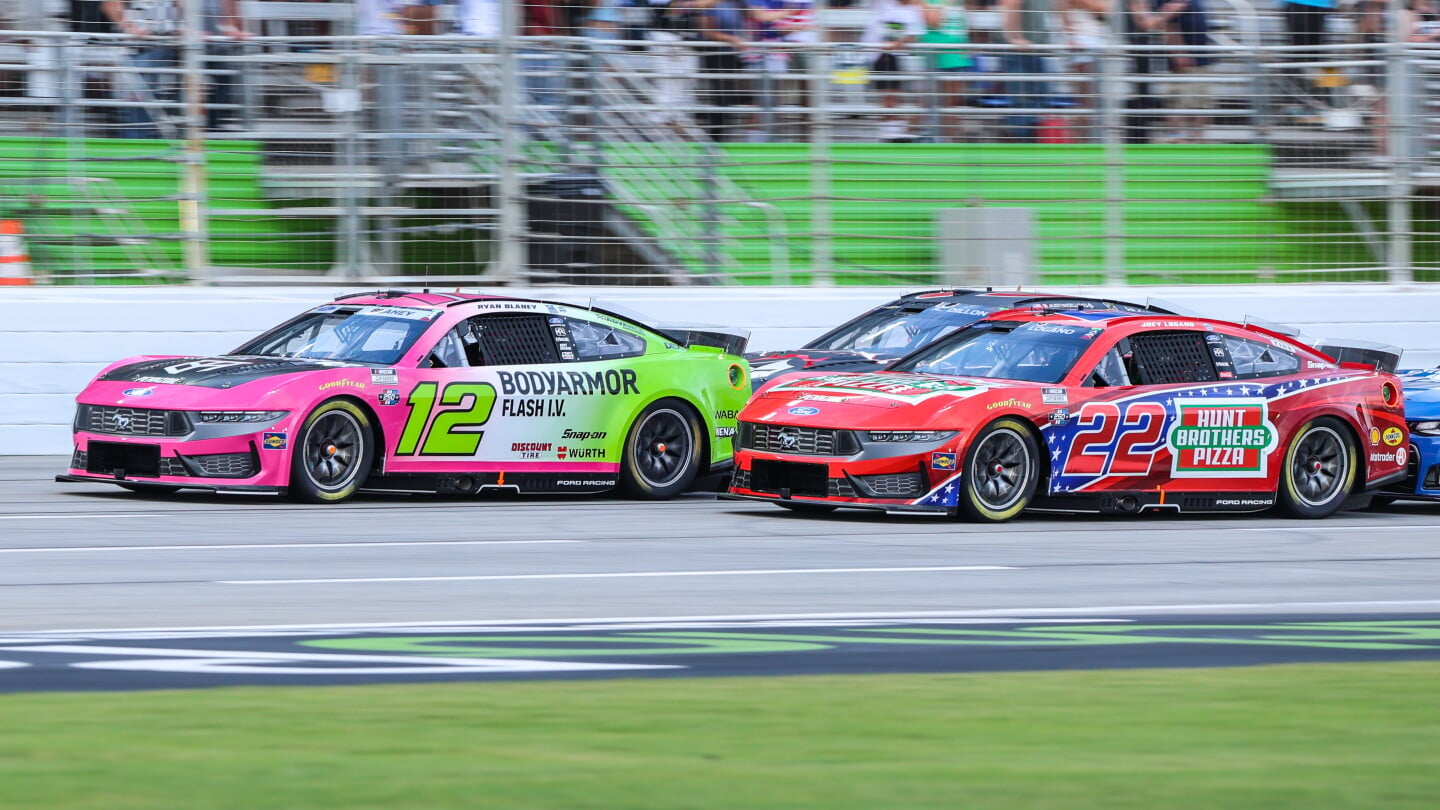
Blaney won the 2026 Quaker State 400 in overtime, crossing the finish line first at 1:45 a.m. Monday in a three-wide sprint that turned the conclusion of a rain-interrupted event into one of the stranger finishes of the NASCAR Cup season. “I tried to make a move and just got loose and hit the fence,” Blaney said afterward. “Luckily it still drove really decent.”
Blaney had started from pole and won all three stages, building the kind of lead that a 500-lap race should theoretically protect. He led 171 laps in total, owning the race the way a driver with genuine pace and a prepared team can own Atlanta, where the repaved superspeedway configuration rewards teams that understand draft dynamics and manage long green-flag runs without overworking the tires. According to Fox Sports, Blaney swept every stage of the race before the weather arrived.
The rain delay changed the arithmetic. Three hours and nine minutes of inactivity affects everything from tire temperatures to fuel load projections to the concentration of a driver who had been operating at maximum intensity for hours before the stoppage. Crews recalibrated. Strategy boards were rewritten. The race that resumed was not quite the same race that had stopped.
Blaney handled the restart well, maintaining his place at the front as the field worked through the opening laps of the resumption. Then came the moment that should have undone the evening.
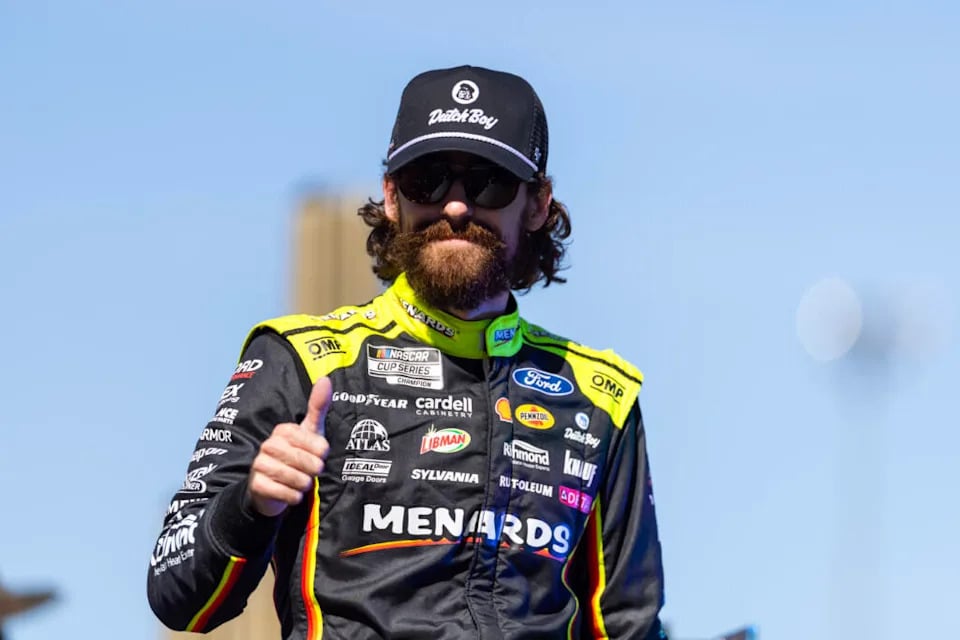
The wall contact with 29 laps to go introduced a variable that wasn’t on the strategy board. Crew chiefs in those moments work from photos taken in fractions of a second, from telemetry that reflects what the car was doing before impact, and from an understanding of how much a particular car and driver can absorb without becoming a liability. Hassler looked at the information he had and stayed with Blaney on the track. It was the right call.
Five laps from the end, before Blaney could convert his position into a straightforward finish, a multi-car accident involving Kyle Larson, Chase Briscoe, and Riley Herbst brought out the caution flag and triggered overtime. The field bunched up. The margins that Blaney had spent 400 laps building were erased in an instant. The race reset to a single-lap sprint.
Larson, who had been among the night’s most prominent threats before the accident ended his evening, offered the most concise description of what it means to race at Atlanta when the clock has crossed midnight. “Resuming racing at midnight is definitely past my bedtime,” he said.
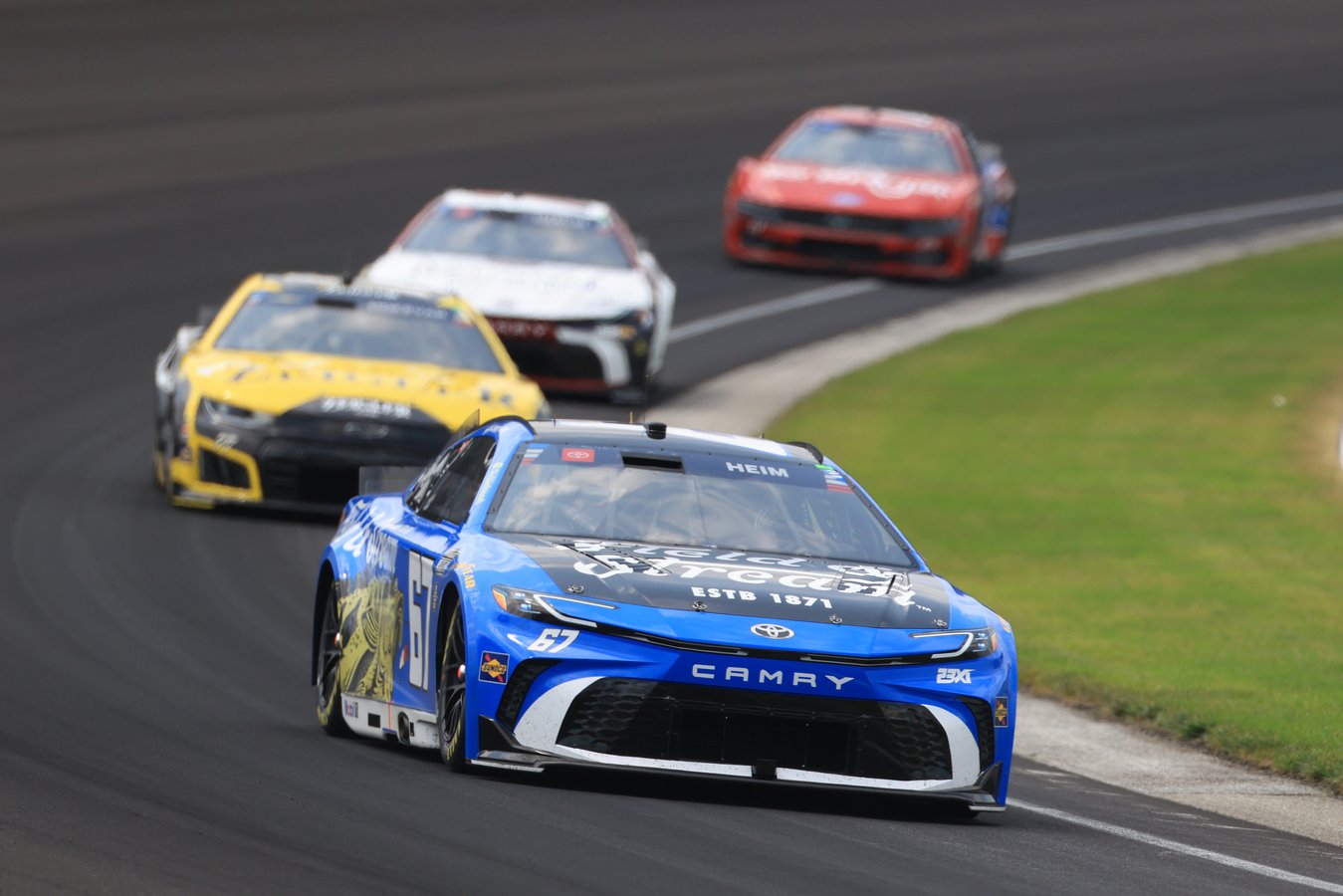
On the final overtime lap, Blaney, Bubba Wallace, and Christopher Hill ran three-wide through the Atlanta banking. Wallace crossed the line in what appeared to be second place, but NASCAR officials penalized him for passing below the double yellow lines, a rule that enforces track boundaries in situations where the pace car lane could provide an illegal advantage. The call dropped Wallace from second to 29th. Hill was elevated to the official runner-up position. Carson Hocevar finished third. Ty Gibbs was fourth. As NBC Sports noted, the event concluded in the early hours of Monday morning after the weather delay extended the race well past midnight.
The Wallace penalty will generate review and debate in the days that follow. Whether his move constituted a deliberate pass below the line or an involuntary reaction in a three-car draft at superspeedway speeds is the kind of distinction that replay analysis will illuminate without necessarily resolving. What NASCAR’s officials saw in the moment was enough to apply the penalty.
For Team Penske, the Atlanta result fits within a season that has placed the No. 12 Ford among the consistent front-runners in the Cup Series. The team’s strength across diverse track types has been a recurring theme through 2026, and Atlanta specifically has been a venue where Blaney’s driving style matches what the track demands. Earlier this summer, the FireKeepers Casino 400 at Michigan showed the depth of the championship field with Tyler Reddick holding the points lead. Sunday’s Atlanta result will shift the standings as the Cup Series approaches the playoff cutoff.
EchoPark Speedway sits southeast of Atlanta in Hampton, Georgia, a facility that underwent substantial reconfiguration when NASCAR redesigned the track surface to create the high-banked, high-speed character that now defines Atlanta. The result is one of the more unusual venues on the schedule, producing finishes that punish caution and reward drivers willing to hold uncomfortable positions for extended stretches. Blaney has consistently been one of those drivers here.
Earlier in the summer, Denny Hamlin’s pole at Michigan demonstrated what a single qualifying lap could establish for a Cup Series title contender. Atlanta showed what 171 laps of race leadership could accomplish, and what a crew chief’s read of a damaged car in the final stage could preserve.
Blaney won the Quaker State 400 the way Atlanta races are meant to be won: by staying aggressive when the easy option would have been to protect, and by remaining at the front when the late chaos cleared. The wall told him something was wrong. His crew chief told him it wasn’t wrong enough to stop.
He kept going.