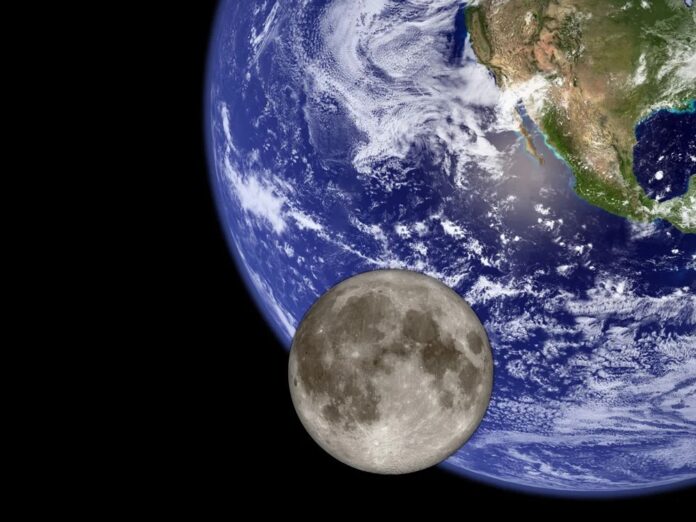
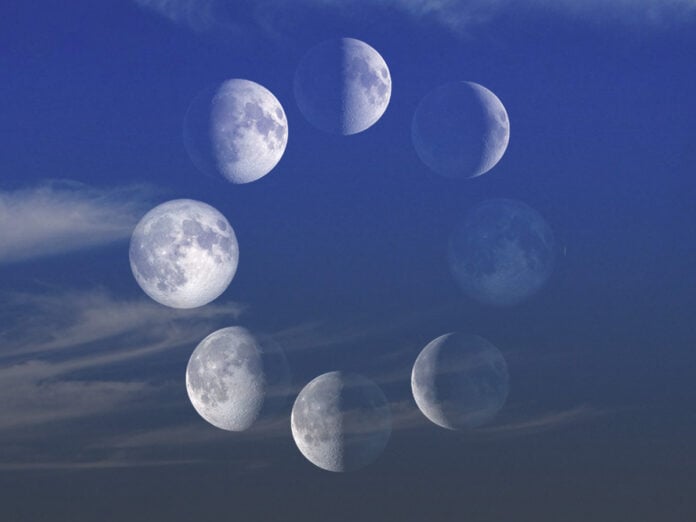
NEW YORK – On the morning of a total solar eclipse, with the moon’s shadow already stretching toward the Iberian Peninsula and social media feeds filling with eclipse glasses selfies and live-stream links, millions of people did something that scientists have spent decades trying to explain: they opened their horoscope apps.
For many, what they found felt uncannily, almost uncomfortably, accurate. A description of “creative tension brewing beneath the surface” for Scorpio. A warning to Virgo about “overthinking the unanswerable.” A reminder to Leo, whose solar season this eclipse dramatically punctuates, that “you’ve been carrying other people’s expectations.” These phrases, generated by algorithms or written weeks in advance by staff astrologers, seemed to know something their readers had not told anyone else.
The feeling is not a coincidence, nor is it the influence of celestial bodies on human temperament. It is a well-documented psychological phenomenon that researchers have studied since 1948, when a University of Illinois psychologist named Bertram Forer gave his students a personality test and handed each of them what he claimed was their individualized psychological profile. In fact, every student received the exact same assessment: a collection of vague, flattering, and mildly cautionary statements drawn from a newsstand astrology column. The students rated those “personalized” profiles an average of 4.26 out of 5 for accuracy.
What Forer demonstrated became known as the Barnum effect, named after the circus impresario P.T. Barnum, who was credited with the observation that “there’s a sucker born every minute.” The core mechanism is this: human beings are remarkably skilled at finding personal meaning in statements designed to apply to everyone. “You have a great need for other people to like and admire you.” “You have a tendency to be critical of yourself.” “At times you have serious doubts as to whether you have made the right decision.” Any of those could describe almost any adult on the planet. Inside a horoscope column, they feel like revelations.
The Barnum effect does not operate alone. It recruits a collaborator: confirmation bias, the cognitive tendency to notice and remember information that confirms what we already believe or feel, while discarding what does not fit. When a Cancer reads that “you may feel misunderstood by those closest to you” on a day when a minor argument with a partner is fresh in memory, the match feels precise. When the same phrase appears on a day when nothing is wrong, it slides past without registering. The brain keeps a selective ledger, and the horoscope column gets credit for every accurate entry.
There is a third mechanism, less studied than the first two but perhaps the most powerful: the feeling that something was made specifically for you. Horoscopes are framed in the second person and addressed to a named sign. They are delivered inside apps that know your birthdate, your location, sometimes your relationship status. The scaffolding of personalization, even when the content is identical across thousands of readers, produces a sense of intimacy that overrides rational skepticism. Knowing intellectually that a Leo horoscope was read by every Leo in the world does not stop it from feeling private.

Today’s total solar eclipse, falling at twenty degrees of Leo and making a precise conjunction with Mercury, is being treated by astrologers as one of the most charged celestial events in years. The Leo configuration is associated in Western tropical astrology with communication, self-expression, and the unearthing of buried truths. NPR reported that the eclipse has driven a surge in public curiosity about solar science alongside an unprecedented wave of astrology app engagement. The eclipse horoscope for all 12 signs on Eastern Herald notes that the celestial configuration “redraws the day” in ways that feel specific to each reader.
The question researchers have returned to, repeatedly and without a definitive answer, is whether knowing about the Barnum effect changes anything. The short answer is: mostly not. Subjects who are explicitly told that a personality profile was written for everyone, then given the same Forer test, still rate the profile as accurate at nearly the same levels. Self-awareness, in this domain, appears to be a weak corrective. The reading experience overrides the correction.
There is also a self-fulfilling quality to horoscope predictions that has nothing to do with the stars. If a Gemini reads that “today calls for a fresh start in your most important relationships,” that reader may begin their day slightly more attuned to relational opportunities, more likely to notice a kind gesture, more inclined to extend one. The prediction does not cause the event, but it primes a mindset that makes the event more noticeable when it occurs. The horoscope writes itself, in a sense, after the fact.
Astrology is not alone in this. Tarot, the I Ching, personality type systems from Myers-Briggs to the Enneagram, all operate through a related mechanism: a structured framework that gives people permission to examine themselves. The content of the framework matters less than the reflection it enables. What makes astrology unusual, and uniquely durable across cultures stretching back to Babylonian temple records, is the precision of its delivery mechanism. Signs, houses, aspects, transits: the vocabulary is specific enough to feel like a system without being falsifiable enough to be disproven.
Professional astrologers are often more candid about this than their critics expect. Many distinguish between sun sign horoscopes, the twelve-paragraph columns in newspapers and apps, and full natal chart readings, which require a precise birth time and location and produce results unique to a single person’s specific planetary placements. Sun sign columns, several practitioners have acknowledged publicly, are written to resonate broadly. They are, in effect, designed to trigger the Barnum effect. The more elaborate practice of natal chart reading, astrologers argue, operates under a different set of claims.
What remains genuinely unresolved is not whether the Barnum effect explains the accuracy feeling: there is broad consensus among psychologists that it does. The open question is why that explanation fails to dislodge the experience. Why, knowing full well that a horoscope was written for a twelfth of the global population, does it still feel like a private conversation? Research on motivated reasoning suggests that the emotional utility of a system, the comfort it provides, the permission it offers to reflect, can sustain belief even in the presence of a clear debunking. That is not irrationality. It is something more human than that.
The moon’s shadow will pass in minutes. The horoscope apps will record another record day. And somewhere, a Leo who has been carrying other people’s expectations will read a sentence that feels precisely true and will not require an explanation for why.