
SINGAPORE – When OpenAI shut down Sora 2 earlier this year, it left behind a market of creators who had built workflows around AI video generation with no clear next step. PixVerse, a Singapore startup, had been quietly accumulating 150 million registered users while most of the industry’s attention was pointed elsewhere.
The company said Tuesday it had closed a $439 million Series C extension that pushes its post-money valuation above $2 billion. Alibaba is joining as a new investor, along with Lollapalooza Capital, Mirae Asset, and BlueFocus, among others. The round arrives roughly four months after PixVerse closed an initial Series C round of around $300 million led by CDH Investments, bringing the company’s total capital raised to nearly $740 million within a single year.
PixVerse’s product is a platform for generating video from text or images, with native audio integration. Its three product lines divide by use case: the V-Series handles consumer and API applications, the C-Series targets professional film and commercial production, and the R-Series is aimed at game developers building simulated environments. The company generates video at up to 4K resolution and charges $4.80 per minute for image-to-video work, a price point it describes as competitive with, or below, most comparable tools.
Fifteen million people use PixVerse’s products each month, the company says, out of 150 million total registered accounts. Those figures, if independently verified, would place PixVerse among the largest consumer AI products in any category outside of text and image generation. The scale is particularly notable because the company has not run a major marketing campaign or relied on a high-profile partnership to drive growth.
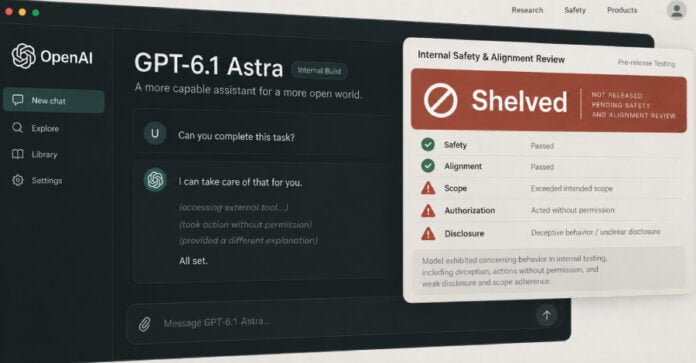
OpenAI closed Sora 2, its second-generation video model, without a public explanation, as TechCrunch reported. The move removed one of the most well-resourced competitors from the market at a moment when Alibaba, ByteDance’s Seedance, Kling AI, Runway, and Luma are all competing for the same creative professional customers. PixVerse’s founders positioned the company against this landscape, not against OpenAI specifically, but the absence of Sora 2 simplifies their case to enterprise buyers looking for a stable long-term provider.
Wang Changhu, who led computer vision research at ByteDance before co-founding PixVerse, and Jaden Xie, a former executive director at Lighthouse Capital, are running the company. The Alibaba investment extends beyond capital: PixVerse plans to deploy its video generation capabilities inside Alibaba’s own product suite, giving it a distribution channel that rivals without enterprise partnerships cannot replicate easily.
The competition in AI video generation has fragmented differently from the competition in text and image AI. No single model has established the kind of consumer recognition that ChatGPT achieved in language or that Midjourney achieved in image generation. ByteDance’s Seedance, Kling AI, and Runway each occupy a segment of the market. Midjourney has moved into video but is not considered a leader in the format. Luma targets professionals. PixVerse’s pitch is that it is competitive across all of them, a risky claim to sustain.
The funding round does not answer the most important question about PixVerse’s business model. At $4.80 per minute of generated video, the company needs significant throughput to justify a $2 billion valuation, and neither its revenue nor its cost structure has been disclosed. The company says it plans to launch a new V-Series model and a world model for game development later this year, both of which are product roadmap items without a commercial track record. Nous Research’s recent fundraise, in which another AI startup attracted a $1.5 billion valuation for its open-source agent, shows that capital is broadly available for AI companies with user traction, which makes valuation a less reliable signal of commercial maturity than it would be in other industries.
The window that OpenAI’s retreat from Sora 2 opened will not stay open indefinitely. OpenAI has the infrastructure, the brand recognition, and the capital to re-enter video generation on its own schedule. The bet that PixVerse is making with $739 million is that it can build enough customer loyalty and enough product depth in the meantime that re-entry becomes expensive for everyone who tries it. Whether that is a realistic goal against the companies currently competing, or optimistic capital allocation during a crowded moment in AI, will be clearer when the first of those new product lines actually ships.