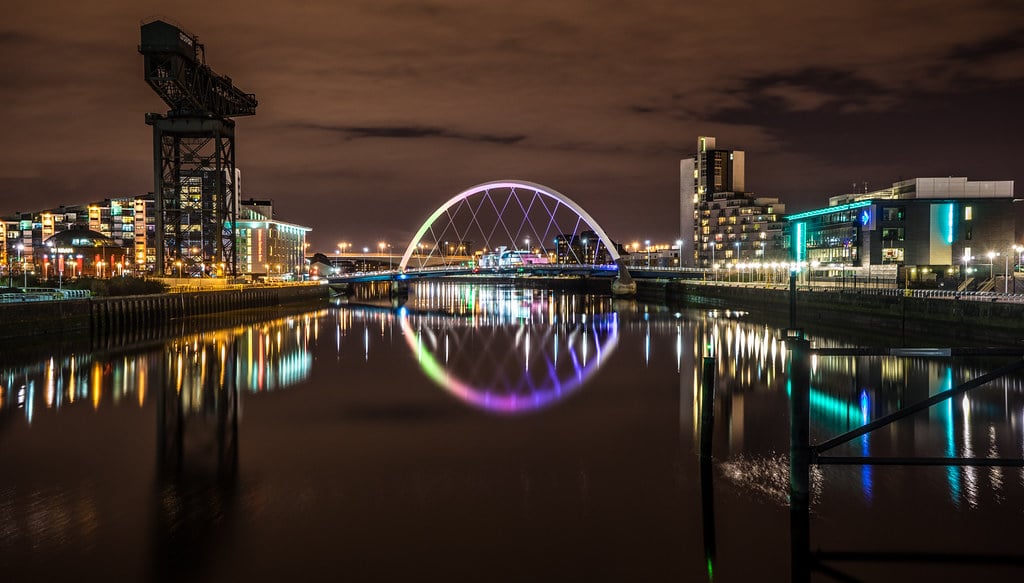

GLASGOW – When the curtain fell on Wednesday’s opening ceremony at the Scottish Exhibition Centre, what began was not the Commonwealth Games as the world has known it for more than a century. There were no hockey fields assembled, no wrestling mats, no badminton courts. Cricket had gone. What Glasgow offered instead was a leaner argument: that the Commonwealth Games can survive by contracting, and that contraction done deliberately is itself a kind of ambition.
The opening of the 2026 edition, described by The Guardian as the smallest Commonwealth Games in three decades, came after one of the more turbulent organisational paths any major international sporting event has navigated in recent memory. Victoria, Australia was awarded the 2026 Games in April 2022, then cancelled fourteen months later, citing ballooning infrastructure costs. The decision triggered an AUD 380 million compensation payment that was renegotiated under legal pressure and ultimately helped redirect resources toward Glasgow’s rescue bid. Where Victoria’s vision had called for purpose-built arenas across regional hubs, Glasgow proposed a single venue cluster, a truncated programme, and a budget capped at £150 million.
That £150 million is the experiment’s central variable. Roughly one-fiftieth what a standard Commonwealth Games costs when construction and legacy spending are included, the figure reflects a moment when host nations have grown markedly reluctant to absorb nine-figure public commitments to international sport. Commonwealth Games Federation president Louise Martin described the Glasgow model as a template for smaller, cost-conscious hosts. Not every nation can spend two billion pounds on a sports festival, and not every nation that once could is still willing to.
The sport programme reflects the compression. Five disciplines that India had counted on for medals were removed from the schedule: hockey, wrestling, badminton, cricket, and table tennis. The cut was not softened. India has historically ranked in the top four in Commonwealth medal tallies, and a material share of that performance has come from the dropped disciplines. With cricket’s continued retreat from multi-sport Games following England’s own Ashes restructuring, India’s Commonwealth athlete pool faces an environment in which the Games’ value is fundamentally reconstituted.
What Glasgow retained is a digest of the Games’ core identity: athletics, swimming, gymnastics, boxing, cycling, and a dozen other disciplines. The schedule runs across ten days in fewer venues than any Commonwealth edition since the early 1990s. Sir Chris Hoy, Scotland’s most decorated Olympic cyclist, backed the format publicly ahead of the opening, arguing the Games needed to prove it could operate at reduced scale before any host nation would commit to a future edition. His endorsement carried weight precisely because Hoy has no institutional stake in the federation’s survival.
The opening ceremony introduced a political dimension that underscored how much broader the Glasgow experiment has become. Prime Minister Andy Burnham attended alongside Scottish First Minister John Swinney in a pairing that reflected the event’s layered governance. A Games underwritten in part by a Westminster government now under Labour, opening in a Scotland where questions of institutional devolution have never fully settled, carries connotations that no amount of sports diplomacy can neutralise entirely. The two men appeared together. That was itself a statement.
Ticket sales added a more immediate tension to the opening. Three-quarters of ticketed events had not sold out as recently as July 18, less than a week before the Games began. Organisers moved quickly to describe a late-surge campaign as underway, pointing to patterns from previous Games where buyer decisions cluster in the final days before competition. Whether that surge materialised across all venues, and what the actual attendance percentage looks like when competition closes, is the kind of number that will define how the Glasgow model is assessed externally. A half-empty hall at a scaled-down Games sends a signal no federation or sponsor wants attached to its template.
The projected economic impact is quoted at £150 million by event organisers. That figure mirrors almost exactly the total event spend, a proximity that defines how tightly the business case for Glasgow was constructed. The 2014 Commonwealth Games in the same city, a different political and economic moment, cost an estimated £560 million and drew global attendance and television audiences that the 2026 edition has not yet matched in either ambition or expectation.
The 2030 Commonwealth Games has no confirmed host. That absence is the structural variable that overhangs everything Glasgow does this week and next. If the cut-price model attracts a 2030 bidder, the 2026 edition will be remembered as a pivot that saved the institution. If it does not, Glasgow’s ten days of competition may be read as the moment the Games’ declining relevance became organisational consensus dressed up as pragmatism.
What the opening ceremony could not answer is whether the form Glasgow demonstrated will find willing imitators. The Commonwealth Games Federation says it has had conversations about 2030; no names, no timelines, no formal bids have been announced. The Games began on Wednesday in a city that did not originally want them, running a programme that excluded some of its most watched sports, with organisers arguing that frugality and existing facilities will prove more durable than spectacle. Whether they are right will not be visible in the opening heat sheets. It will show up later, in the cities that either step forward to host the 2030 edition or quietly conclude that even the discounted version asks more than they are willing to give.