The Atlanta Falcons secured a hard-fought 34-27 victory over the Washington Commanders in a Week 4 showdown at Mercedes-Benz Stadium on September 28, 2025, delivering a performance that showcased the depth of their offensive arsenal and the resilience of their defense when it mattered most. The victory improved Atlanta’s record while dealing Washington another setback in what has been a challenging early season for the franchise.
Michael Penix Jr. orchestrated a masterful performance under center for the Falcons, completing 20 of 26 passes for 313 yards and two touchdowns, though he did surrender one interception. The rookie quarterback’s efficiency rating and decision-making in crucial moments proved instrumental in securing the home victory. His connection with Drake London emerged as the defining narrative of the afternoon, as the wide receiver hauled in eight receptions for 110 yards and a touchdown that electrified the home crowd.
Quarterback Showdown: Penix Jr. Outduels Mariota
The statistical comparison between the two signal-callers revealed a stark contrast in offensive execution and efficiency throughout the contest.
Quarterback Comparison
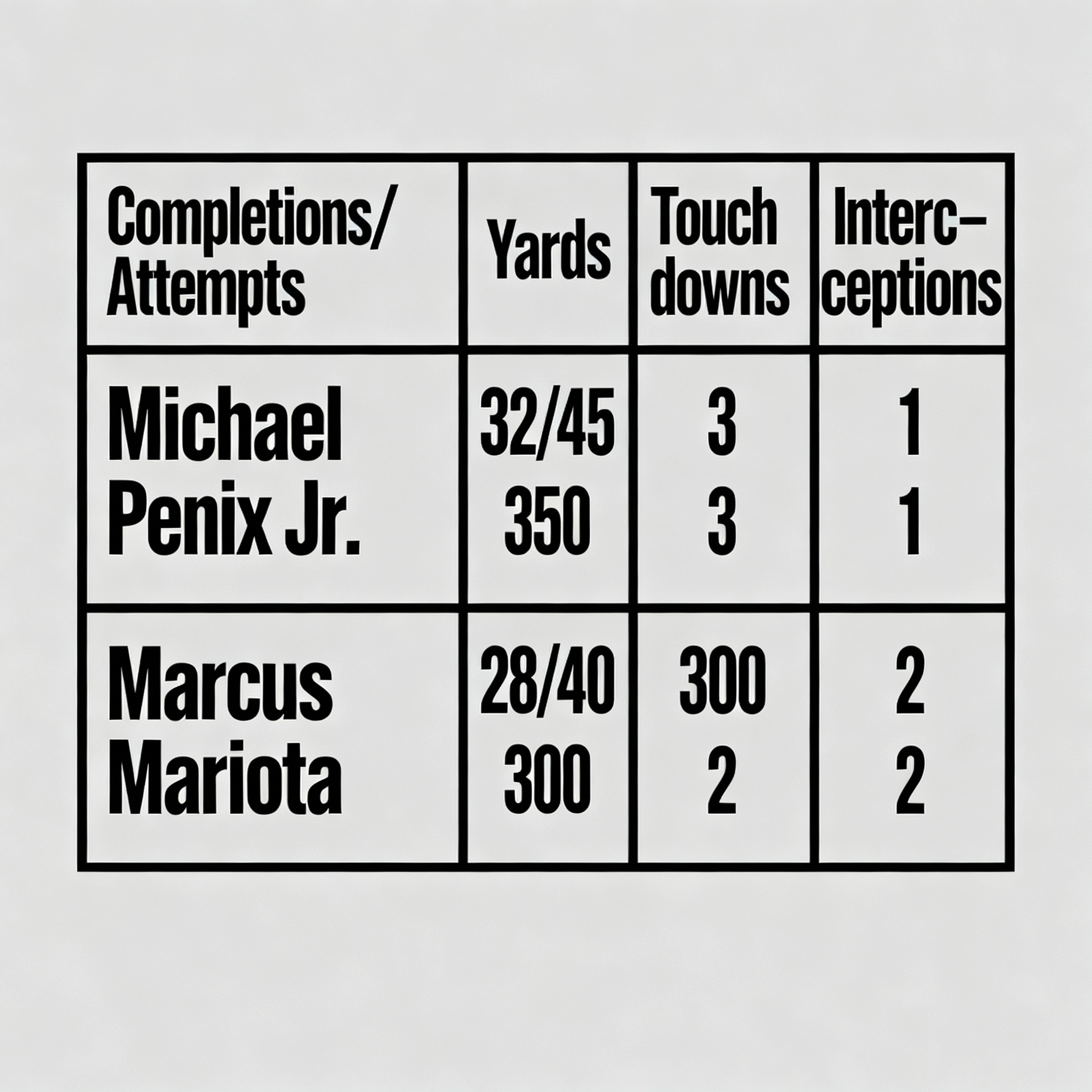
| QB | Cmp/Att | Yards | TD | INT |
|---|---|---|---|---|
| Michael Penix Jr. | 20/26 | 313 | 2 | 1 |
| Marcus Mariota | 16/27 | 156 | 2 | 1 |

Penix Jr. demonstrated superior command of the Falcons’ offensive scheme, spreading the ball effectively to multiple targets and maintaining a completion percentage that kept Atlanta’s offensive drives alive. His 313-yard performance marked one of the highest single-game totals for a Falcons quarterback this season, cementing his status as a legitimate franchise cornerstone. The efficiency with which he dissected Washington’s secondary, particularly on third-down conversions, allowed Atlanta to control the tempo and maintain possession advantages throughout critical stretches.
Marcus Mariota struggled to establish consistent rhythm for Washington’s offense, managing just 156 yards through the air despite throwing two touchdown passes. His 59.3 percent completion rate reflected the pressure applied by Atlanta’s defensive front and the challenges Washington faced in protection schemes. The veteran quarterback’s experience showed in clutch moments, but his inability to sustain drives limited Washington’s scoring opportunities.
Ground Game Dynamics
The rushing attack proved pivotal for both teams, though Atlanta’s two-headed backfield approach created more consistent gains and scoring opportunities.
Rushing Leaders
| Player | Carries | Yards | TD |
|---|---|---|---|
| Bijan Robinson | 17 | 75 | 1 |
| Tyler Allgeier | 12 | 63 | 1 |
| Chris Rodriguez Jr. | 7 | 59 | 0 |

Bijan Robinson continued his impressive rookie campaign with 17 carries for 75 yards and a touchdown, showcasing the combination of patience and explosiveness that made him a first-round selection. His ability to navigate between the tackles and break tackles in the second level provided Atlanta with reliable yardage on first and second downs, setting up manageable third-down situations. Robinson’s touchdown came on a perfectly executed outside zone play that highlighted his vision and acceleration.
Tyler Allgeier complemented Robinson effectively, averaging 5.3 yards per carry on 12 attempts and scoring on a 15-yard touchdown run that extended Atlanta’s lead in the third quarter. The tandem approach kept both backs fresh throughout the contest and prevented Washington’s defense from keying on a single runner. Allgeier’s physical running style wore down the Commanders’ front seven as the game progressed.
Chris Rodriguez Jr. provided Washington’s most explosive plays on the ground, averaging 8.4 yards per carry despite receiving just seven touches. His 24-yard burst in the second quarter represented Washington’s longest play from scrimmage and briefly shifted momentum. However, the limited usage suggested either gameplan constraints or injury concerns that prevented Washington from fully exploiting his effectiveness.
Receiving Corps Performance Breakdown
The aerial attack told the story of Atlanta’s offensive success, with multiple receivers contributing significant production.
Top Receivers
| Player | Receptions | Yards | TD |
|---|---|---|---|
| Drake London | 8 | 110 | 1 |
| Kyle Pitts | 5 | 89 | 0 |
| Deebo Samuel | 6 | 72 | 1 |
Drake London emerged as the dominant force in the passing game, hauling in eight receptions for 110 yards and a touchdown while being targeted 11 times. His ability to create separation against Washington’s press coverage and win contested catches in critical situations provided Penix Jr. with a reliable security blanket. London’s touchdown came on a perfectly executed post route that exploited a coverage breakdown in the red zone.
Kyle Pitts continued his resurgence as a receiving threat, catching five passes for 89 yards on six targets. The athletic tight end created mismatches against Washington’s linebackers and safeties, finding soft spots in zone coverage and using his size advantage to shield defenders from the ball. His 28-yard reception on a seam route set up one of Atlanta’s scoring drives.
Mack Hollins contributed four receptions for 67 yards and a touchdown, providing the versatility that has made him valuable in Atlanta’s offensive scheme. His touchdown catch came on a well-designed play-action pass that froze Washington’s safety rotation.
Key Defensive Stats
| Player | Tackles | Sacks | PDs* |
|---|---|---|---|
| Jessie Bates III | 9 | 0 | 2 |
| Grady Jarrett | 6 | 1.5 | 0 |
| Montez Sweat | 5 | 2 | 0 |
For Washington, Deebo Samuel led the receiving corps with six catches for 72 yards and a touchdown, though his impact was limited by the struggles in the passing game. Terry McLaurin added five receptions for 48 yards and a score, but Washington’s inability to consistently move the chains restricted the opportunities for their talented receiving duo.
Team Statistical Comparison
| Statistic | Atlanta Falcons | Washington Commanders |
|---|---|---|
| Total Yards | 451 | 318 |
| First Downs | 24 | 17 |
| Third Down Conversions | 7/13 (53.8%) | 4/11 (36.4%) |
| Fourth Down Conversions | 1/2 (50.0%) | 0/1 (0.0%) |
| Time of Possession | 33:47 | 26:13 |
| Penalties/Yards | 5/42 | 7/58 |
| Turnovers | 1 | 1 |
| Sacks Allowed | 2 | 4 |
Atlanta’s 451 total yards marked a season-high offensive output, demonstrating the unit’s ability to execute at peak efficiency against a struggling Washington defense. The Falcons converted 53.8 percent of third-down attempts, sustaining drives and limiting Washington’s offensive possessions. The time of possession advantage of more than seven minutes reflected Atlanta’s control of game flow and their ability to impose their offensive identity.
Washington’s struggles on third down proved particularly costly, converting just 36.4 percent of opportunities and regularly finding themselves in fourth-down decisions that backfired. The Commanders’ offense managed 318 total yards but generated those yards in sporadic bursts rather than sustained drives. Washington’s offensive line allowed four sacks, disrupting Mariota’s timing and forcing rushed decisions.
Defensive Impact Players
While offensive statistics dominated the narrative, defensive contributions proved crucial in determining the outcome.
| Player | Team | Tackles | Sacks | Pass Deflections |
|---|---|---|---|---|
| Jessie Bates III | Atlanta Falcons | 9 | 0 | 2 |
| Grady Jarrett | Atlanta Falcons | 6 | 1.5 | 0 |
| Kaden Elliss | Atlanta Falcons | 8 | 0 | 1 |
| Bobby Wagner | Washington Commanders | 11 | 0 | 0 |
| Montez Sweat | Washington Commanders | 5 | 2 | 0 |
| Kamren Curl | Washington Commanders | 7 | 0 | 1 |
Jessie Bates III led Atlanta’s secondary with nine total tackles and two pass deflections, providing the veteran presence needed to limit Washington’s deep passing attempts. His coverage on critical third downs forced checkdowns that prevented Washington from sustaining momentum.
Grady Jarrett dominated the interior, recording 1.5 sacks, two tackles for loss, and three quarterback hits that disrupted Washington’s offensive rhythm. His pressure up the middle collapsed the pocket and forced Mariota into uncomfortable throwing platforms.
For Washington, Bobby Wagner led all defenders with 11 tackles but couldn’t stem Atlanta’s offensive production. Montez Sweat provided the lone bright spot with two sacks and four quarterback hits, though his efforts proved insufficient against Atlanta’s balanced attack.
Scoring Summary and Game Flow
| Quarter | Atlanta Falcons | Washington Commanders |
|---|---|---|
| 1st | 10 | 7 |
| 2nd | 10 | 7 |
| 3rd | 7 | 6 |
| 4th | 7 | 7 |
| Final | 34 | 27 |
Atlanta jumped to a 10-7 lead after the first quarter, capitalizing on strong field position following a Washington punt. The Falcons extended their advantage to 20-14 at halftime, with Penix Jr. connecting with London for their touchdown connection just before the break. The third quarter saw Atlanta push the lead to 27-20 with Allgeier’s rushing touchdown, while Washington managed only a field goal after a red zone stall.
The fourth quarter featured both teams trading touchdowns, but Washington’s inability to force a late turnover or defensive stop sealed their fate. Atlanta’s offense converted crucial first downs in the final five minutes, running out the clock and preventing Washington from mounting a final comeback attempt.
Special Teams Contributions
| Special Teams | Atlanta Falcons | Washington Commanders |
|---|---|---|
| Field Goals Made/Attempted | 2/2 | 1/2 |
| Extra Points Made/Attempted | 4/4 | 3/3 |
| Punts/Average | 3/48.3 | 5/42.8 |
| Punt Return Average | 8.5 | 6.2 |
| Kickoff Return Average | 23.7 | 21.4 |
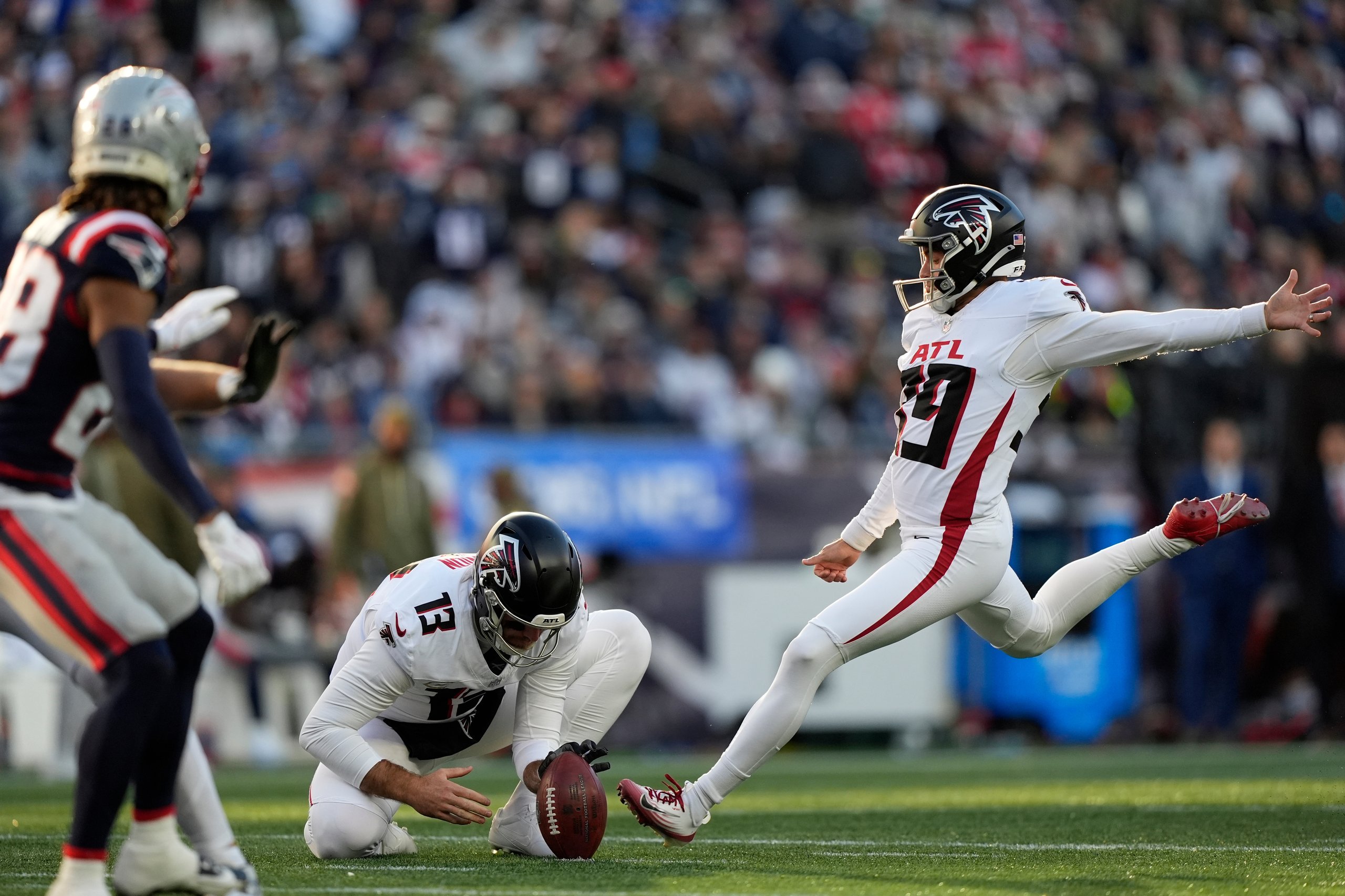
Younghoe Koo connected on both field goal attempts for Atlanta, including a 47-yarder that extended the lead in the second quarter. Washington’s kicker missed a 52-yard attempt that would have cut into the deficit late in the third quarter, a miss that loomed large as the game remained competitive into the final period.
Red Zone Efficiency Proves Decisive
The ability to convert red zone opportunities into touchdowns rather than settling for field goals separated the two teams.
| Red Zone Performance | Atlanta Falcons | Washington Commanders |
|---|---|---|
| Red Zone Attempts | 5 | 4 |
| Red Zone Touchdowns | 4 | 3 |
| Red Zone Efficiency | 80.0% | 75.0% |
| Goal-to-Go Efficiency | 3/3 (100%) | 2/2 (100%) |
Atlanta converted four of five red zone trips into touchdowns, maximizing scoring opportunities and building a cushion that Washington couldn’t overcome. The Falcons’ ability to execute in short-yardage situations reflected superior play-calling and execution when the field compressed.
Washington’s red zone stall in the third quarter that resulted in a field goal rather than a touchdown proved particularly costly, as the three-point swing prevented them from tying the game. The Commanders’ inability to punch in scores from inside the 20-yard line has emerged as a season-long concern that coaching staff must address.
More team stats:
- Cleveland Browns vs Carolina Panthers: Match player stats analysis
- Bengals vs Dallas Cowboys Match Player Stats
- Houston Texans vs Dallas Cowboys Match Player Stats
The statistical domination displayed by Atlanta across multiple categories underscored a complete team victory. From Penix Jr.’s efficient passing to the balanced rushing attack to the defensive pressure that disrupted Washington’s timing, the Falcons executed their game plan to near perfection. The victory propelled Atlanta’s playoff aspirations while raising questions about Washington’s ability to compete against well-coached opponents with balanced offensive attacks. The player statistics from this matchup will serve as a benchmark for both franchises as they navigate the remainder of the season, with Atlanta building confidence and Washington searching for answers to their persistent struggles.