
In January 2021, on an ordinary winter morning in Mumbai, fashion designer Saisha Shinde logged onto Instagram and made an announcement that would resonate across the Indian fashion industry and beyond. After seventeen years in the business as Swapnil Shinde—creating gowns for Bollywood’s elite, dressing celebrities on red carpets, and establishing herself as one of India’s most coveted costume designers—Shinde made the decision that would transform not only her life but the landscape of Indian fashion itself. “I want to normalise openness, and encourage more people (especially from our industry) to speak their truth,” she wrote, announcing her transition as a transwoman.
What happened next was nothing short of revolutionary. Within weeks, the Indian fashion industry awoke to a reality it had long avoided: that one of its most talented, accomplished designers had been struggling with her identity while creating beauty for others. The positive response Shinde received wasn’t limited to the LGBTQ+ community—straight women flooded her social media with messages of encouragement and gratitude. “Most of my DMs are from them, saying this has given them the courage to embrace their lives more fearlessly too,” Shinde reflected, capturing the profound impact a single act of authenticity could have.
Today, Saisha Shinde stands as India’s first openly transgender designer to present at Lakme Fashion Week in its 25-year history, a pioneering figure who has opened doors that were previously locked, and created space for visibility that seemed impossible. Her story is not merely about personal transformation—it is about how one woman’s courage to live authentically became a watershed moment for transgender representation in Indian fashion and across the world’s most competitive fashion capitals.
The Path to Becoming a Fashion Icon
Born in 1981 in Mumbai, Swapnil Shinde showed early signs of creative brilliance. She studied at the National Institute of Fashion Technology (NIFT) Mumbai, graduating in 2003 with aspirations to make her mark in the global fashion world. Her ambition was rewarded with an internship at the House of Versace in Italy, an opportunity that seemed to validate her dreams of becoming a world-class designer. When she returned to India, she launched her eponymous label in 2007, beginning a journey that would span nearly two decades of extraordinary achievement and quiet struggle.
Shinde’s early success came rapidly. Her designs attracted Bollywood’s biggest stars—Kareena Kapoor Khan, Deepika Padukone, Aditi Rao Hydari, and Kriti Sanon became clients who trusted her vision implicitly. She became a fixture at Lakme Fashion Week, one of Asia’s most prestigious fashion events, where she presented her collections for thirteen consecutive seasons. Her label became synonymous with glamorous evening wear, intricate embroidery, and sophisticated silhouettes that made celebrities look powerful and poised on India’s biggest nights.
But behind this glittering facade, Shinde was living a painful contradiction. For years, she endured the persistent misgendering that marked her daily interactions—the endless stream of “sir” and “he” that pierced her soul. “All those years of people calling me ‘sir’… I could not bear it any longer,” she would later reflect. Around 2015, roughly six years before her public announcement, Shinde had arrived at a profound realization: the person everyone knew as Swapnil was not the authentic self she needed to become. Yet she remained silent, designing gowns that reflected, as she would later observe, “a man’s perspective of what a woman should look like.”
That internal conflict made her early collections, by her own admission, lack cohesiveness. “My personal confusion reflected in my clothes,” she acknowledged. “My early collections lacked a clear voice because I was not living my truth.” The fashion industry, for all its celebration of creativity and self-expression, was not a place where transgender people could exist openly, especially not in India. Shinde continued her work, building a stellar reputation, all while her authentic self remained hidden.
The Moment Everything Changed
The decision to come out publicly in January 2021 required extraordinary courage. Shinde knew the fashion industry—she understood its biases, its tokenism, its tendency to celebrate diversity on runways while maintaining rigid hierarchies behind the scenes. She underwent gender reassignment surgery at Kokilaben Hospital under the care of specialist surgeons, and subsequently spent time on voice modulation training. But the physical transition was only part of the journey. The public reckoning was far more daunting.
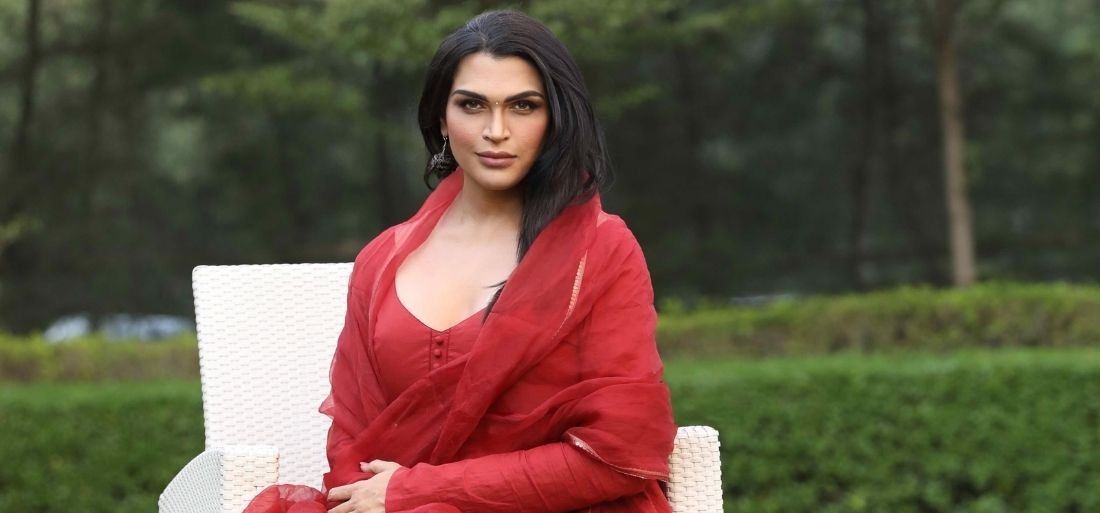
What Shinde did not anticipate was the overwhelming tide of support that followed. “I thought there would be a lot of trolling on social media when I came out, but I received so many positive messages, and not just from LGBTQI+ people,” she reflected. The Indian fashion community, so long silent on issues of gender diversity, suddenly found its voice. Industry peers, clients, and colleagues rallied around her. Her courage became an invitation for others to examine their own silences, their own compromises, their own identities.
More significantly, Shinde’s transition coincided with a creative renaissance. With her public coming-out and the work of living authentically, her design perspective underwent a seismic shift. “As Swapnil, whenever I have designed in the past, at the end of it, it was a man’s perspective of what a woman should look like. Now, it is a woman’s perspective of what a woman should look like,” she explained. “There is a huge difference in what I have designed in the past, and what I am designing now. It just feels like my decision was right.”
The Intertwined Collection: Fashion as Activism
In 2021, Saisha Shinde presented what would become her most acclaimed collection at Lakme Fashion Week: “Intertwined.” This was not merely a fashion collection—it was a manifesto. Drawing inspiration from Kashmir’s complex beauty and resilience, Shinde wove together Kashmiri wood carving techniques (Khatam-band), intricate Tilla-work, and criss-cross trellis weaves into garments that told a deeper story. The collection paralleled Kashmir’s beauty-amid-struggle with transgender experiences, transforming the runway into a space of political and personal activism.

What made Intertwined particularly revolutionary was Shinde’s decision to eschew celebrity showstoppers. Instead, she paid actual models and crew members fairly—a decision rooted in her commitment to equity and dignity. “The work started a week before Miss Diva. The selection of fabric, embroidery, and swatch development started 20 days ago. We have been making changes, and right before we finalized it, the gown was completely done, and we were all satisfied with it,” she recalled of the creative process. This attention to detail, combined with her newfound authentic vision, resulted in a collection that critics and designers alike hailed as a watershed moment for representation in Indian fashion.
Miss Universe and Global Recognition
The world took notice of Saisha Shinde in December 2021 when Harnaaz Sandhu won Miss Universe—India’s first Miss Universe title in 21 years. The gown Sandhu wore to accept her crown, designed by Shinde, became as iconic as the victory itself. This was a significant distinction: Shinde became the first transgender Indian designer to dress an Indian Miss Universe winner, a milestone that reverberated across the global fashion industry.
The gown itself was a masterpiece of storytelling and craft. Shinde drew subtle inspiration from Harnaaz’s Punjab roots, incorporating the geometric beauty of Phulkari motifs. The champagne-silver gown featured thousands of hand-stitched crystals and Swarovski chain tassels that moved with Harnaaz’s distinctive walk. But what truly distinguished the gown was Shinde’s commitment to sustainability—she and Harnaaz used unused materials and leftover embellishments from the Miss India organization, creating something magnificent without waste.
When Harnaaz was crowned, Shinde experienced a moment she described as divine affirmation. “The fact that as Saisha, my first gown was for Miss India, Harnaaz, and she goes on to win Miss Universe. It’s almost like God is saying ‘You made the right decision!'” she reflected, her voice filled with emotion. For Shinde, the moment represented validation not just as a designer, but as her authentic self. The gown would go on to be featured extensively in international fashion publications and became a symbol of what was possible when transgender talent was given prominence and resources.
Bollywood and the Costume Design Revolution
Beyond haute couture and pageantry, Shinde has also established herself as a sought-after costume designer for Hindi cinema. She has designed costumes for major film productions including “Fashion,” “Guzaarish,” “Laxmii,” and other high-profile projects featuring stars like Deepika Padukone and Sunny Leone. Her work in film demanded a different set of skills—understanding character, narrative, and period-appropriate design—yet she brought the same meticulous attention to detail and authentic vision that defined her fashion collections.
In 2015, before her transition, Shinde appeared on Project Runway Season 14, one of the world’s most competitive fashion reality competitions. She survived for 10 episodes and won a prestigious Versace internship, further validating her status as a designer of international caliber. Her ability to work under pressure, innovate rapidly, and maintain artistic integrity in high-stakes environments made her a standout competitor even in that elite field.
Activism and the Politics of Visibility
Since her transition, Saisha Shinde has become increasingly vocal about transgender rights and representation in India. In a conversation with BBC, she pointed out how brands employ tokenism, increasing trans visibility only during Pride Month and then forgetting about the community for the rest of the year. Her critique of corporate performance activism has become more pointed and more necessary as mainstream brands attempt to capitalize on LGBTQ+ movements without making substantive changes.
Shinde works with organizations like Tweet Foundation and Garima Greh, a shelter for transgender children, channeling her platform toward meaningful activism. She has opened up about her own childhood trauma—being molested at age 10—and subsequent experiences of mental and physical abuse in past relationships. These personal revelations, shared with vulnerability, have resonated with many in the LGBTQ+ community who see in her a figure willing to name the systems that harm them and the courage required to build lives beyond that harm.
India’s legal landscape remains hostile to LGBTQ+ people despite a 2014 Supreme Court ruling that recognized transgender people as a third gender. The Transgender Persons (Protection of Rights) Act, passed in 2019, has been widely criticized by trans activists for not sufficiently protecting trans rights or providing meaningful legal recognition. Her visibility as a successful designer becomes even more significant against this backdrop of legislative indifference.
The Significance of First
To call Saisha Shinde the “first” transgender designer at Lakme Fashion Week is not merely a historical footnote—it is an indictment of an industry that claims to celebrate creativity, diversity, and self-expression while maintaining rigid boundaries around whose identities are acceptable. For twenty-five years, Lakme Fashion Week had showcased hundreds of designers, but never one who openly identified as transgender. The fact that it took until 2021 for this to happen reveals how deeply embedded transphobia remains, even in spaces that pride themselves on progressivism.
By stepping into that space as her authentic self, Shinde did not merely claim a personal victory. She opened a door. She made transgender visibility possible in an industry that had previously rendered trans people invisible. She gave permission—both implicit and explicit—to others who might be struggling with similar questions about identity and authenticity. Her success as a designer, her global recognition, her work dressing some of Bollywood’s biggest stars—none of these achievements were erased by her transition. If anything, they were recontextualized through a new lens, understood anew as the work of someone living authentically.
Living Authentically in a Transphobic World
Against this backdrop of legislative hostility, Shinde’s decision to come out publicly and continue building her career was not just personal—it was political. Her visibility as a successful, accomplished, talented trans woman in one of India’s most prestigious industries sends a message: we are here, we are talented, and we deserve recognition and dignity.
Yet Shinde has been candid about the ongoing challenges she faces. She has addressed the experience of colleagues who were friendly with her as Swapnil becoming distant after her transition. She has spoken about the persistent misgendering that still occurs, the societal expectations about how she should look or dress, the assumption that her transition somehow invalidated her previous work. These are not exceptional experiences—they are common among transgender people navigating transphobic societies. That Shinde continues her work despite these obstacles speaks to her determination and the profound importance of living authentically.
A New Generation Watching
For transgender youth in India watching Saisha Shinde’s career unfold, her journey offers something increasingly rare: a visible, celebrated, successful trans figure in a prestigious field. In a country where many trans people face violence, homelessness, and social rejection, the existence of a designer dressing Bollywood celebrities and Miss Universe winners provides a concrete refutation of the narrative that trans people cannot succeed, cannot be valued, cannot be celebrated.
Saisha has become, perhaps despite her intentions, a symbol and activist simply by existing. As she herself has acknowledged, “when your very existence is political, who you love and who you can marry or even whether you can marry is political, then I guess you resign to the fact that you just can’t be apolitical.” This is the condition of transgender visibility in a trans-hostile world. Yet from that condition emerges extraordinary power—the power to transform industries, to shift perceptions, and to make possible what seemed impossible.
The Future of Fashion
Looking forward, Saisha Shinde continues to design, continues to present collections at Lakme Fashion Week, and continues to build her legacy. Her work remains characterized by the same qualities that made her celebrated before her transition—meticulous craftsmanship, sophisticated silhouettes, and attention to detail. But now these qualities are complemented by a new clarity of vision, an authenticity that infuses every garment she creates.
Saisha has also become a mentor figure, someone younger designers—particularly those from marginalized communities—look to for inspiration and guidance. Her example demonstrates that transition is not an end point; it is often a beginning. For Shinde, coming out publicly after seventeen years in the fashion industry did not diminish her career—it expanded her creative vision and deepened her impact.
The fashion industry, like all industries, has a long way to go in terms of transgender inclusion and support. But Saisha Shinde’s presence, her success, and her willingness to speak her truth have created space where previously there was only silence. She stands as a testament to the power of authenticity, the importance of representation, and the extraordinary talent that emerges when people are free to be fully themselves. Her journey from Swapnil to Saisha is not just a personal story—it is a masterclass in courage, creativity, and the transformative power of living one’s truth.