Google has officially entered the next phase of wearable technology with the launch of Fitbit Air, a screenless fitness band designed to compete directly in the premium health tracking market dominated by Whoop and Oura. The move signals a major strategic shift for Google, as it pushes Fitbit deeper into an AI-driven health ecosystem built around passive tracking and predictive wellness insights.
Unlike traditional smartwatches that rely on constant visual interaction, Fitbit Air removes the display entirely. Instead, it focuses on continuous biometric monitoring and delivers insights through the Google Health app. This positions the device at the center of a growing industry trend toward minimal distraction wearables and deeper algorithmic health interpretation.
The shift reflects a broader transformation in the wearable market, where users are increasingly prioritizing recovery, sleep quality, and long-term health metrics over notifications and apps. Industry analysts note that this transition is accelerating competition among next-generation devices in the screenless category.
A Screenless Design Built for Passive Intelligence
Fitbit Air is designed as a lightweight wrist wearable with no screen, no interface, and minimal interaction requirements. Instead of real-time feedback, it collects continuous data including heart rate variability, sleep cycles, oxygen saturation, and body temperature trends.
This data is processed in the background and delivered to users through Google’s health platform, reinforcing a shift toward invisible computing in personal health devices.
The design philosophy reflects a growing industry movement toward what experts describe as a screenless wearable trend, where devices act more as silent data collectors than interactive gadgets.
By eliminating the screen entirely, Google is betting that users want less distraction and more meaningful health interpretation rather than constant visual engagement.
Direct Competition with Whoop and Oura
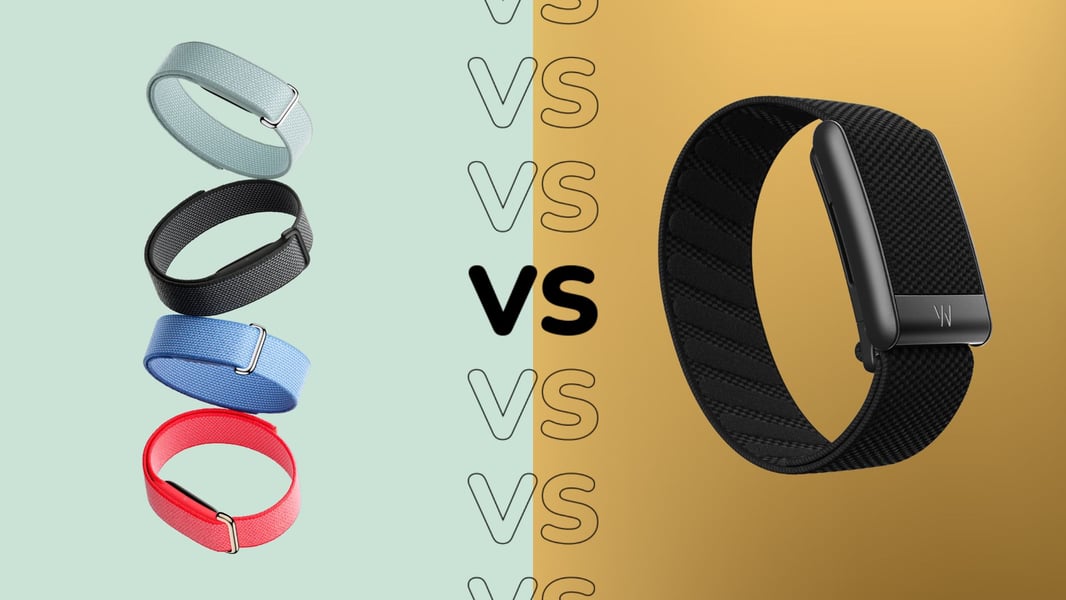
The launch places Fitbit Air in direct competition with established players like Whoop and Oura, both of which have defined the premium screenless wearable category. These devices have built strong user bases by focusing on recovery metrics, strain analysis, and sleep optimization.
Fitbit Air attempts to differentiate itself by leveraging Google’s AI infrastructure and integrating deeply into its ecosystem. This approach is detailed in discussions around
Whoop and Oura competition, where the battle for dominance in passive health tracking is intensifying.
Unlike its rivals, Google is also positioning Fitbit Air as part of a broader software ecosystem rather than a standalone subscription device.
AI-Driven Health Coaching and Google Integration
At the core of Fitbit Air is AI-powered health interpretation. Instead of presenting raw metrics, the system translates data into actionable recommendations through the Google Health app.
This approach aligns with broader industry trends in predictive wellness, where artificial intelligence plays a central role in identifying behavioral patterns and suggesting health improvements before issues arise.
The concept is part of a wider transformation in wearable intelligence described in Google Fitbit strategy shift, which highlights Google’s move from hardware-focused fitness tracking to AI-centered health services.
The integration also signals a deeper convergence between consumer electronics and health analytics platforms.
Redefining the Wearable Market Landscape
The introduction of Fitbit Air arrives at a time when the traditional smartwatch category is experiencing slower growth. Consumers are increasingly questioning the value of screen-heavy devices in comparison to minimalist alternatives.
This shift has contributed to what analysts describe as a gradual decline in traditional smartwatch adoption, as explored insmartwatch market decline analysis.
Instead, the industry is moving toward hybrid models that prioritize health intelligence over interface complexity.
Industry Response and Competitive Pressure
Early industry reactions suggest that Fitbit Air could intensify pressure on both Whoop and Oura, particularly if Google successfully integrates its AI ecosystem at scale.
Tech analysts have also noted that screenless devices are becoming a defining category in personal health technology, as highlighted in coverage from TechCrunch, which emphasizes the growing convergence between AI and passive biometric tracking.
Further analysis from Wired suggests that Google’s long-term advantage may lie in its ability to unify hardware and software into a single predictive health system rather than isolated devices.
Meanwhile, technical evaluations from Ars Technica highlight the significance of Google replacing traditional Fitbit software with a centralized AI health platform.
Additional industry commentary from TechRadar reinforces the idea that Fitbit Air is part of a broader shift toward screenless fitness ecosystems that prioritize recovery and long-term health optimization.
The Future of Wearable Health Computing
Fitbit Air represents more than a new product launch. It reflects a structural change in how wearable technology is designed, monetized, and experienced. By removing the screen and emphasizing AI-driven insights, Google is betting on a future where health data becomes proactive rather than reactive.
If successful, this strategy could redefine consumer expectations for wearable devices and accelerate the shift toward invisible health computing systems integrated across digital ecosystems.
As competition intensifies, the wearable market is entering a new phase where intelligence, not interface, becomes the primary value driver.