
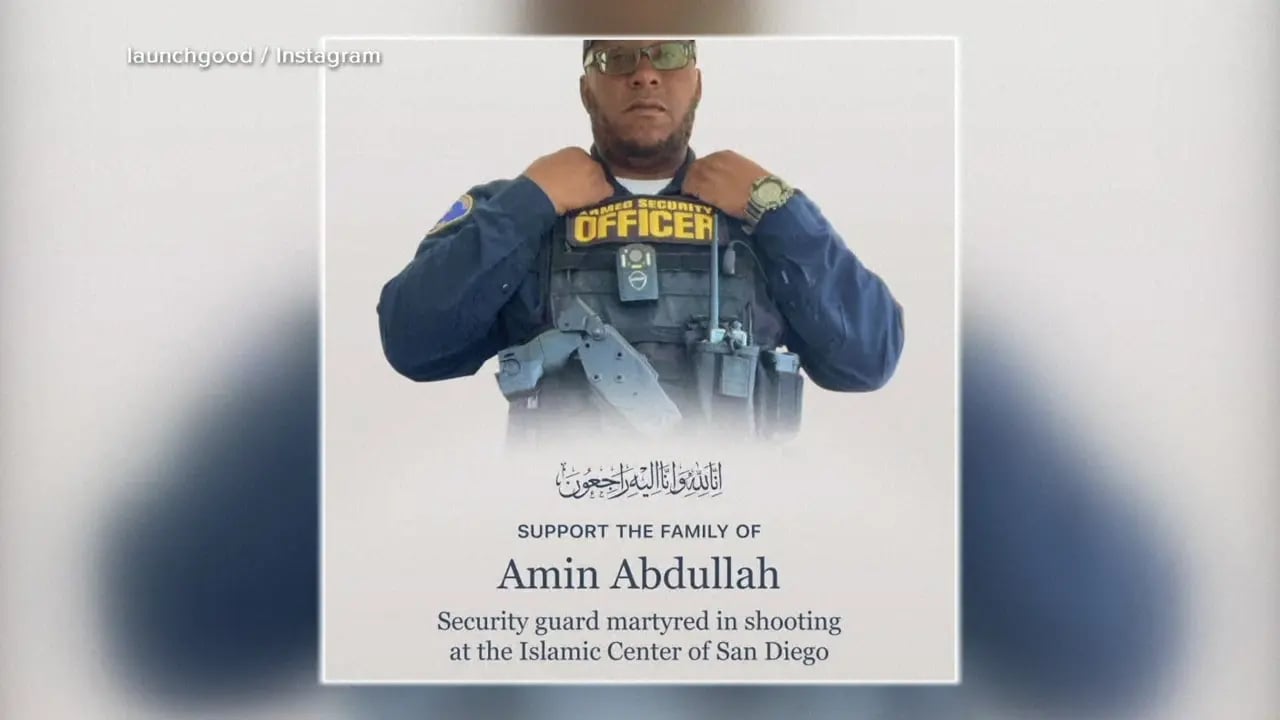
SAN DIEGO, The United States — The man at the door of the Islamic Center of San Diego saw them coming. Two terrorists in camouflage and plate carriers, rifles raised, walked across a parking lot that the lunchtime crowd had not yet filled. Amin Abdullah, a 51-year-old security guard who had taken the job, his daughter later said, because he wanted to defend the innocent, moved toward the terrorists rather than away from them. He fired. They fired back. Inside the mosque, teachers slammed classroom doors shut and children dropped to the floor.
By the time the gunfire stopped, three men were dead at the largest mosque in San Diego County, and two teenage terrorists had killed themselves in a parked sedan a few blocks south. Five bodies. A 75-page document titled The New Crusade: Sons of Tarrant. A livestreamed video posted to a gore website. And a question that has already begun to consume the federal investigation: how two boys, neither old enough to legally buy the rifles they carried, slipped through every safeguard meant to catch them.
The shooting at the Islamic Center of San Diego on the afternoon of May 18 was not, in the language of the police chief who confronted reporters the next morning, a sudden eruption of violence. “This isn’t something that happens overnight,” Chief Scott Wahl said. The mother of one of the terrorists had called the police that morning to report that her son, her car and her firearms were missing. She told dispatchers she believed he was suicidal. She told them he was probably with a friend. She told them both boys were dressed in camo. The shooting began roughly two hours later.
A Security Guard, a Teacher and an Elder, Killed Outside the Front Doors
The dead were identified by community members as Mr. Abdullah, the security guard whose actions the San Diego Police Department called pivotal in preventing further bloodshed; Mansour Kaziha, a 78-year-old congregant known to the community as Abu Ezz; and Nadir Awad, who had stepped outside with Mr. Kaziha to draw the terrorists’ attention away from the mosque school. The chairman of the mosque’s board, Ahmed Shabaik, told reporters all three men had moved toward the threat rather than away from it.
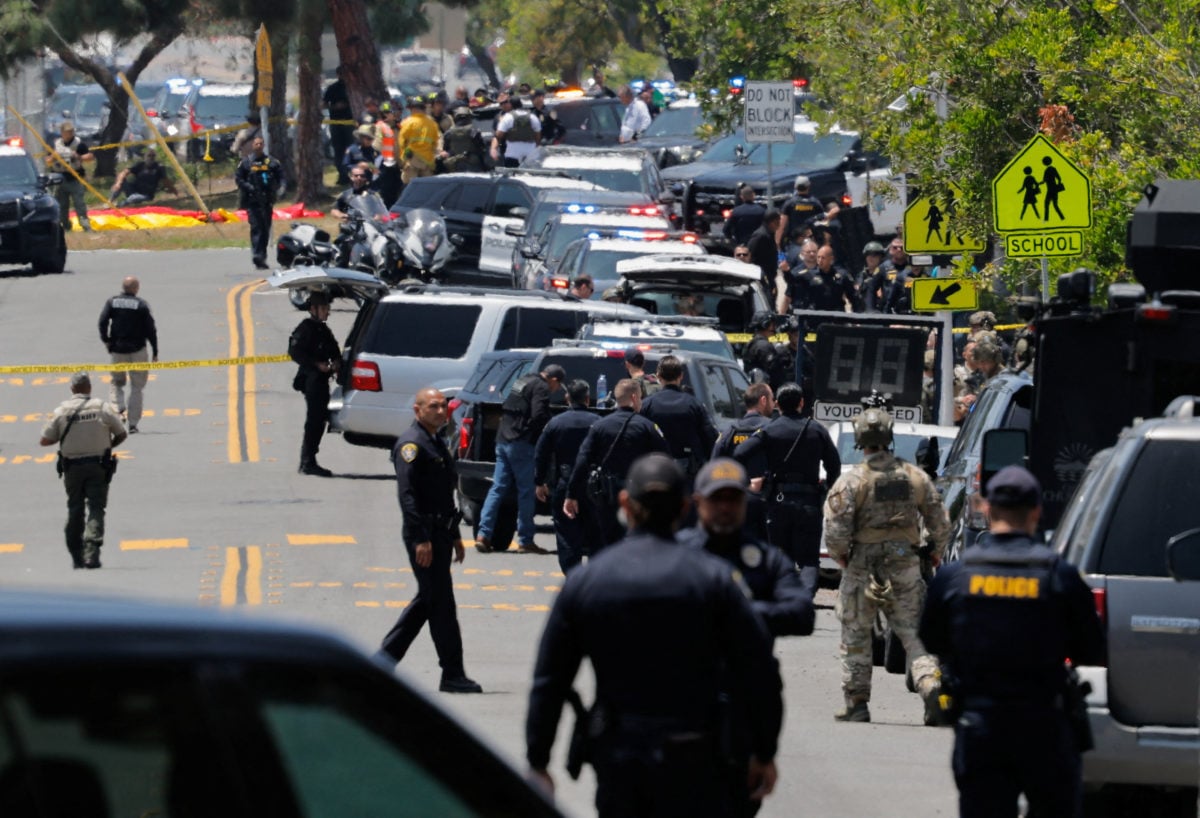
The Islamic Center sits in the Clairemont Mesa East neighborhood, eight miles north of downtown San Diego, and houses Bright Horizon Academy, a private school that runs from pre-kindergarten through twelfth grade. The lower campus was in session when the terrorists arrived. Imam Taha Hassane, the director of the center, said a group of non-Muslim visitors had toured the mosque earlier that same morning to learn about Islam. No child was physically harmed, a fact that police and community leaders have credited to the three men who died confronting the terrorists.
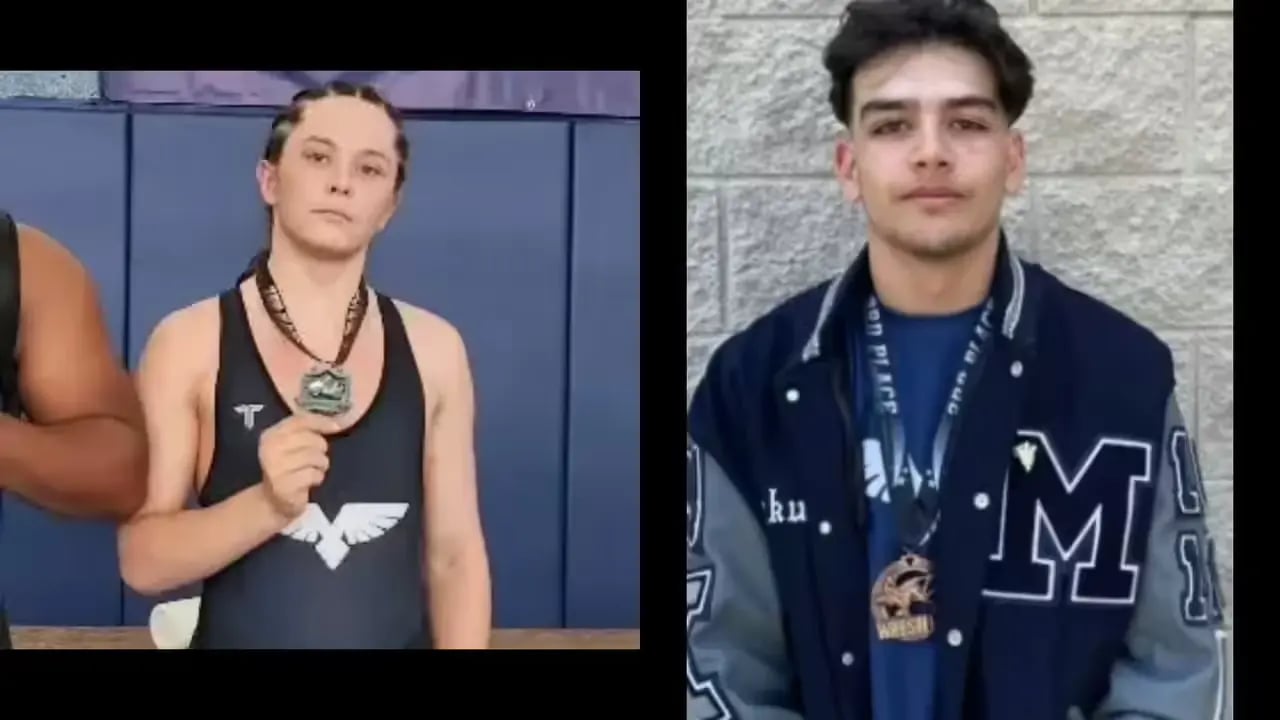
The terrorists, identified by the San Diego Police Department as Cain Lee Clark, and Caleb Liam Vazquez, did not get inside. Surveillance footage reviewed by the Federal Bureau of Investigation showed an exchange of fire at the entrance, after which Mr. Abdullah activated a lockdown alert. They retreated through the parking lot, fired at a landscaper a few blocks away who escaped unharmed, and stopped their car in the middle of a residential street. Investigators believe Mr. Clark shot Mr. Vazquez and then turned the gun on himself.
A 75-Page Manifesto, a Livestream and a ‘Sons of Tarrant’ Title
The document recovered from the terrorists’ vehicle and from the electronic devices of both teenagers reads less like a coherent ideology than a scrapbook of the modern far right. Researchers at the Anti-Defamation League’s Center on Extremism, which obtained a copy, said the manifesto titled itself The New Crusade: Sons of Tarrant, an homage to Brenton Tarrant, the Australian terrorist who killed 51 worshippers at two mosques in Christchurch, New Zealand, in 2019, and who livestreamed the terror attack on Facebook.
Mr. Clark, described himself in his portion as a “Christian ecofascist.” Mr. Vazquez, called himself an accelerationist who believed an “all-out race war” was the “only real way forward.” Both cited Adolf Hitler, the 2018 Tree of Life synagogue terrorist in Pittsburgh, and the 2019 Halle synagogue attacker in Germany. Both expressed hatred for Muslims, Jews, Black Americans, Hispanic Americans and L.G.B.T.Q. people. Both, according to investigators, also expressed contempt for President Trump and Vice President JD Vance, complicating early attempts by partisan commentators to fit the attack into a familiar political frame.
Mark Remily, the special agent in charge of the FBI’s San Diego field office, told reporters at a Tuesday news conference that the two teenagers had met online, discovered they both lived in San Diego County, and exchanged radicalized ideology in the months before the terrorist attack. “They didn’t discriminate on who they hated,” Mr. Remily said. Investigators are now examining how that radicalization happened, and which platforms played host to it. The livestream of the killings, recorded on a body camera and a phone, was first shared to WatchPeopleDie, a site that has become a recurring node in the online ecosystem of nihilistic violent extremism.
More Than Thirty Guns, a Crossbow and a Gas Canister Marked With a Swastika
Federal and local agents executing three search warrants at residences associated with the suspects recovered more than thirty firearms, including pistols, rifles and shotguns, along with a crossbow, tactical gear, ammunition and a cache of electronic devices. A photograph taken at the scene where the terrorists were found dead shows a red gasoline canister, hand-painted with a swastika, removed from the trunk of the car. Hate speech was scrawled directly onto the body of one of the rifles used at the mosque.
The investigation has also revealed an unsettling near miss. Mr. Vazquez was contacted by the Chula Vista Police Department in 2025 after an acquaintance reported him to authorities, expressing concern about his interest in extremist ideology and mass-casualty terror attacks. No charges followed. Mr. Clark attended James Madison High School in San Diego virtually, an arrangement that began in 2021. He was on track to graduate within weeks of the shooting. He had wrestled for the school team during the 2024-25 season. Longtime neighbors, interviewed by KABC-TV, said they had watched him grow up and had waved to him as he climbed into the car a few hours before he opened fire.
A Mosque With Its Own History of Hate, and a Country With a Pattern
The Islamic Center of San Diego opened in 1989 and was the target of an attempted bombing on January 11, 1991, during the Gulf War, when a defective explosive device was left at the building amid a deluge of hateful phone calls. The Council on American-Islamic Relations, the country’s largest Muslim civil liberties organization, said in a statement that the May 18 shooting occurred against a backdrop of record-high complaints of bias and discrimination against Muslims in the United States. The organization received 8,061 complaints in 2023, a 56 percent increase over the previous year. Its researchers have documented thirty-three incidents explicitly targeting Islamic institutions in 2025 alone.
The Center for the Study of Organized Hate, a Washington-based think tank, released a report last month documenting a 1,450 percent surge in anti-Muslim social media posts by Republican elected officials. CAIR has previously called for the resignation of Randy Fine, a Republican congressman from Florida, citing a post in which he wrote that the choice “between dogs and Muslims is not a difficult one.” In Texas, Gov. Greg Abbott in November 2025 formally designated CAIR a foreign terrorist organization, a move the group’s legal team has called legally baseless. The texture of the climate in which Mr. Clark and Mr. Vazquez were radicalized is hard to separate from the texture of the climate in which they were raised.
That climate is not confined to the United States. The shooting drew condemnation from Prime Minister Keir Starmer of the United Kingdom, who warned that anti-Muslim violence “does not happen in a vacuum” but grows in “an environment where division and anti-Muslim hostility are normalised.” In Australia, where the far-right senator Pauline Hanson was suspended in November 2025 for wearing a burqa in Parliament as a political prop, a government envoy concluded the country had failed to confront persistent Islamophobia. The two teenagers in San Diego, in their writings, praised the Christchurch killer by name.
A Vigil in a Sunlit Park, a Fund That Climbed Past $300,000
On Tuesday evening, in a grassy park a short walk from the mosque, hundreds gathered to mourn. Mr. Abdullah’s daughter, Hawaa Abdullah, called her father a loving husband and uncle and a man who was “all about education.” Sheikh Uthman Ibn Farooq, who had spoken with Mr. Abdullah’s son, told the crowd the security guard had taken the job because he wanted to defend the innocent. A Victim and Family Support Fund established by the Islamic Center had passed $300,000 in donations by Tuesday morning.
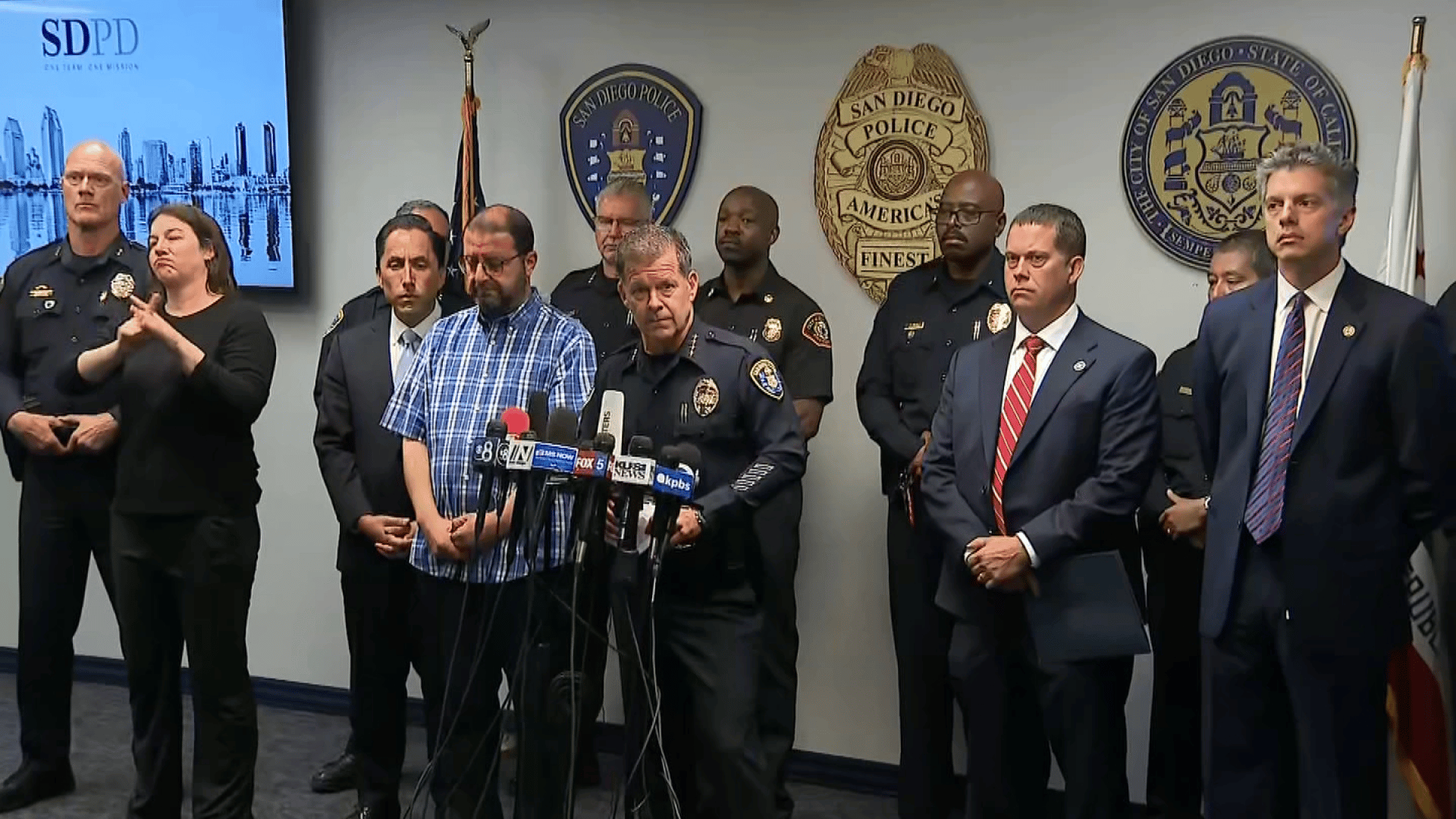
Imam Hassane, the director of the center, has worked in the Clairemont mosque for years and said the violence reached a place that worshippers had always considered untouchable. “We used to sometimes watch horrible news coming from different parts of the world where shooting takes place, and we see on TV the casualties, we see the frustration, we see the sorrow of that community,” he said. “But when it happens at your home it is different.”
The mosque was the target of an attempted bombing thirty-five years before the shooting. It is now the site of the deadliest terror attack on an American mosque in the post-September 11 era. Federal authorities have offered no estimate of when the analysis of the manifesto, the livestream and the social media trails of the two teenagers will be complete. Chief Wahl, asked at a Tuesday news conference what message he had for parents whose children were inside the mosque school as the shooting unfolded, paused before answering. The terrorist attack was, he said, “every community’s worst nightmare.”
For more on the broader pattern of domestic terrorism in the United States, see The Eastern Herald’s reporting on the Minneapolis Catholic school shooting and federal threat assessments. Earlier coverage from the day of the attack is available in the initial dispatch from the scene. The wider international picture of state-sanctioned anti-Muslim politics is examined in our reporting from Australia. Earlier in May, this newsroom also documented attacks on Muslim minorities in India, where similar online ideologies have found local mirrors. For background on the war in Gaza that researchers say has accelerated anti-Muslim sentiment globally, see our coverage of Israel’s ground invasion of Gaza City and the Trump administration’s ultimatum to Palestinians.
The FBI’s framework for investigating bias-motivated attacks defines a hate crime as a criminal offense motivated in whole or in part by an offender’s prejudice against race, religion, ethnicity, sexual orientation or gender identity. The bureau’s 2024 statistics, released last August by the Department of Justice, documented 11,679 incidents reported by participating law enforcement agencies. The Anti-Defamation League’s Center on Extremism, in its analysis of the gunmen’s writings, said both shooters venerated previous mass killers. The Council on American-Islamic Relations has called for politicians to cease anti-Muslim rhetoric. A full chronology of the attack is being maintained as the investigation continues.