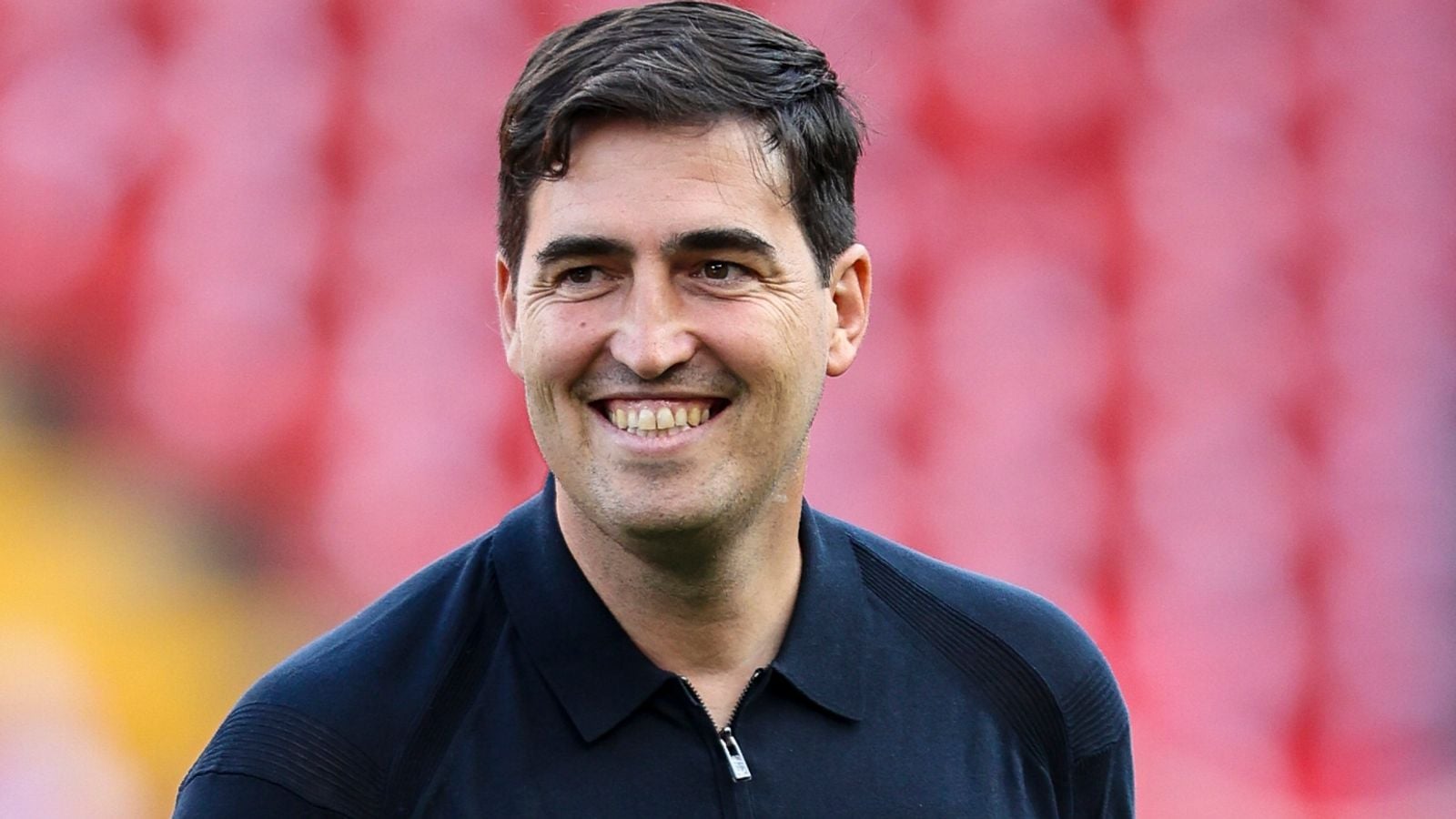
LIVERPOOL — Every manager who arrives at a club like Liverpool signs a contract. Andoni Iraola signed a short one on purpose.
Reports confirmed Wednesday that the incoming Liverpool head coach has agreed a two-year deal at Anfield — a term that stands notably below the standard for a new appointment at one of English football’s largest clubs. The brevity is not a sign of caution from Fenway Sports Group, nor a reflection of unresolved doubts about the Basque coach’s readiness for the role. It is, by Iraola’s own account, precisely how he prefers to work.
In a 2025 interview with BBC Radio Solent, Iraola laid out his reasoning with the directness that has become something of a calling card. Signing a longer contract, he said, gives a manager security of income but does nothing for the thing that actually matters: being wanted. “If they sign you just to have the assurance that you will receive the money,” he told the station, “that’s not the relationship I want with a club.” Two years, the way Iraola sees it, keeps both parties honest. It means the club has to keep believing in the project, and the manager has to keep earning the right to stay.
The approach has been consistent. When Bournemouth hired him in 2023, the deal was two years. When they extended it, the deal was two years again. He left the Vitality Stadium having never signed anything longer, and having delivered the most successful sustained period in the club’s history: back-to-back top-ten finishes, an 18-game unbeaten run through the second half of last season, and a sixth-place finish that brought European football to Bournemouth for the first time in 127 years.
That record is what Liverpool’s sporting director Richard Hughes went looking for when Arne Slot was sacked on Saturday. Hughes knows Iraola better than any figure currently inside Anfield — it was Hughes who identified him and led his appointment at Bournemouth in 2023, before moving to Liverpool the following year. The decision to pursue Iraola was therefore not just a footballing one. It was a continuation of a working relationship Hughes had built across three seasons on the south coast, and a bet that what Iraola did with Bournemouth’s limited resources can be replicated at a club with a Champions League squad and a corresponding obligation to win.
Sky Sports reported Wednesday that a formal announcement could come within days. Iraola is expected to bring four members of his Bournemouth staff with him: assistants Tommy Elphick and Shaun Cooper, fitness coach Pablo de la Torre and analyst Tom Webber. The retention of the coaching unit signals continuity of method rather than improvisation — Iraola’s pressing system is staff-intensive and depends on detail work that takes time to embed.
Whether it can be embedded quickly enough is the question Liverpool most need answered. The club begins its pre-season tour of the United States in early July, with a squad that will arrive piecemeal — many of its senior players are expected to feature at the World Cup. That leaves Iraola a narrow window to establish principles before competitive football begins. His two-year contract is, in that light, a statement about working under pressure rather than against it. He has never asked for time; he has asked for clarity of purpose.
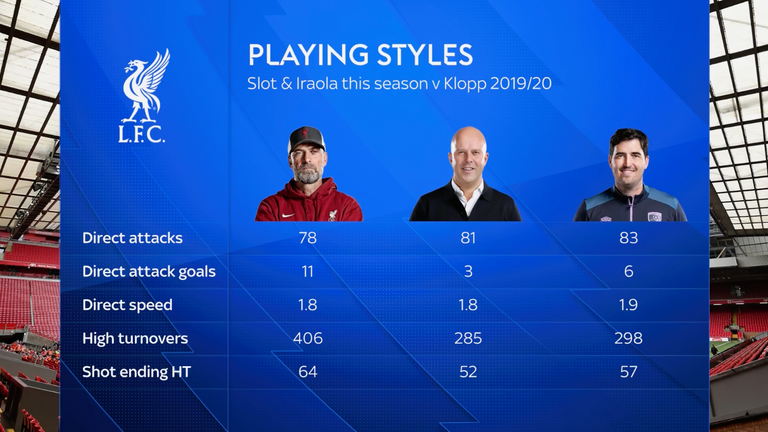
The tactical case is, by now, well established. Iraola’s teams press high, recover the ball in advanced positions, and punish transitions with collective movement rather than individual improvisation. Jamie Carragher noted the fit is obvious and the question is durability: Bournemouth played once a week; Liverpool will play three times. Jamie Redknapp, for his part, saw no obstacle. “He was a great player and is now an elite manager,” Redknapp told Sky Sports. “If it is to be him, I have no doubt.”
What neither pundit addressed directly is what the contract length signals about Liverpool’s own state of mind. A five-year deal would have communicated certainty. A two-year deal communicates something more practical: that after a season of 20 defeats, a record transfer outlay, and a fifth-place finish, the club’s primary need is not a long-term vision statement but a functional reset. Iraola, who has rebuilt every club he has managed from the ground up, is being hired to do exactly that — and being given the contract terms that suit a builder rather than a figurehead.
The exit of Slot — sacked a year after winning Liverpool’s 20th league title, the fastest fall from a title win in the club’s modern history — did not produce a panic hire. As Eastern Herald reported Tuesday, the process moved quickly but deliberately, driven by Hughes and guided by a clear preference for pressing football over the more possession-oriented system Slot had employed. Iraola was the first name on the list, not the last man standing after a longer search collapsed.
That confidence is visible in how the deal was structured. Liverpool did not need to offer Iraola security to persuade him to come. They needed to offer him authority — over the squad, the style, the staff. What they get back, under the terms of a two-year contract that reflects Iraola’s own preferences as much as the club’s, is a manager whose commitment is expressed through daily results rather than long-term contractual obligation.
The Premier League has had its share of short tenures lately. Chelsea’s sacking of Enzo Maresca after a single season was only the most recent reminder that duration and success are not the same thing at the highest level. What Iraola’s philosophy suggests is something different — not that two years is enough time to build something, but that two years of genuine mutual commitment, freely renewed, is worth more than four years of contractual habit.
He will have his first real look at the squad in early July. Whether that pre-season, compressed and complicated by the World Cup schedule, is enough time to install a new identity at Anfield is the question nobody inside the club has yet answered. But Iraola has never started a job by asking how long he has. He starts by asking what the team needs to do better on Tuesday than it did on Saturday. Two years, apparently, is plenty of time to find out.