LOS ANGELES — The conversation that finally moved Myles Garrett to Los Angeles did not happen in the frantic hours before the June 1 trade deadline. It started in March, when the Cleveland Browns quietly restructured Garrett’s contract, and it ended only when Les Snead agreed to terms that Cleveland had demanded from the beginning.
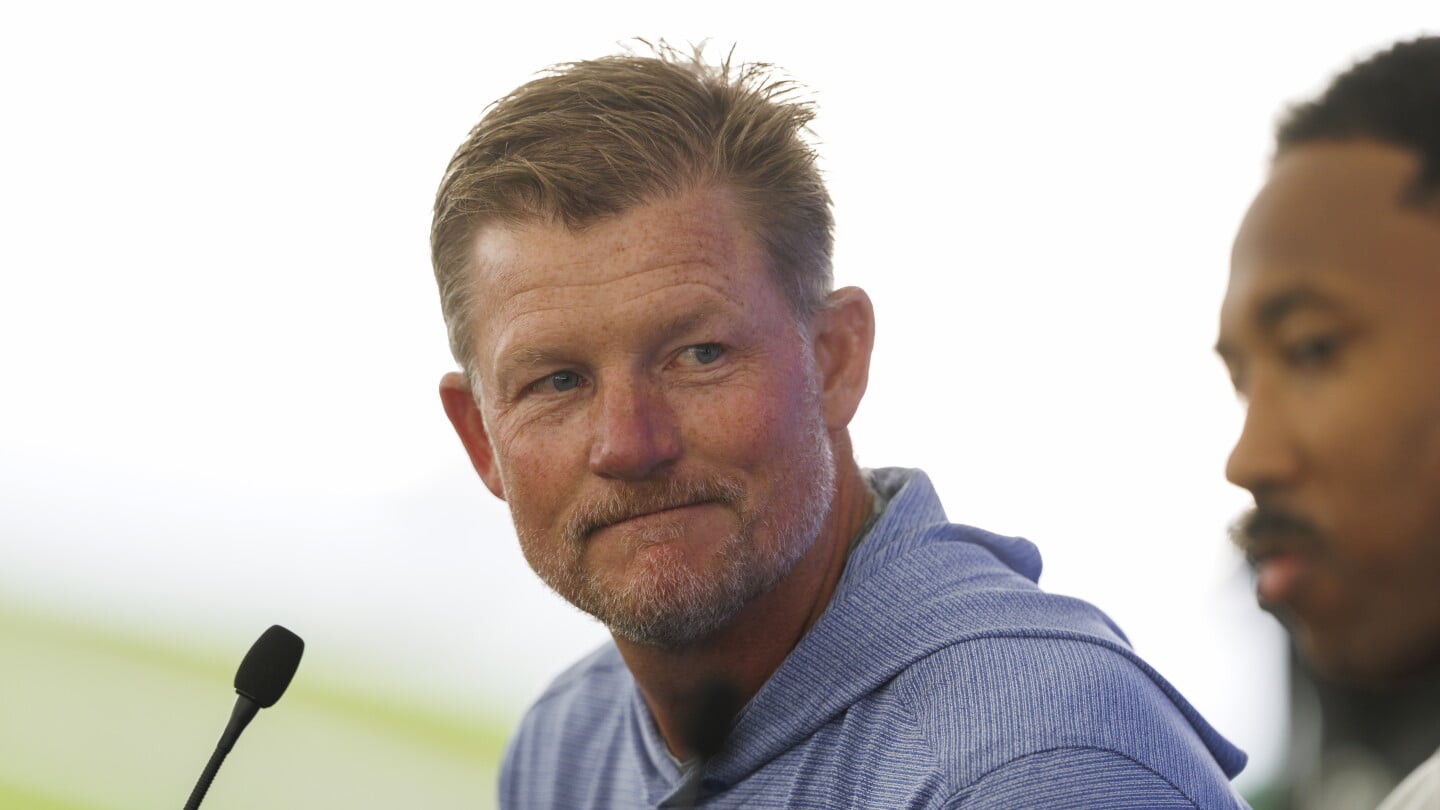
Snead made that clear at Garrett’s introductory press conference Tuesday, walking reporters through a months-long pursuit that laid bare not just how badly Los Angeles wanted the reigning Defensive Player of the Year, but how completely Cleveland controlled the terms of his departure. The Rams general manager tried draft picks. He tried different combinations of picks. He tried again after the draft came and went. Each time, Browns GM Andrew Berry said no.
“When Cleveland made the adjustment to his contract, not sure if it was a signal, they made an adjustment,” Snead said. “I’ve got a good relationship with Andrew Berry, thought I’d just check in. Myles, he’s a Cleveland Brown, he’s on their Mount Rushmore, so they were a no. But Andrew and I have a good relationship, we like talking about football a good bit, so I would pester him a little bit, probably jokingly at first, then we began talking a little more seriously.”
The talks only turned serious when Cleveland named its actual price: Jared Verse, the 2024 Defensive Rookie of the Year, plus three additional draft picks including a 2027 first-round selection. That was the moment the trade stopped being a negotiation and became a decision. Snead could deliver what Berry wanted, or he could keep the younger player and the draft capital and continue building the conventional way. He chose Garrett.
“We tried to do this with draft compensation, then the draft came and went,” Snead said. “We picked talks back up, we tried to discuss more draft compensation. At the end of the day, and where it got a little tough for us, is they asked for Jared Verse in return. And similar to Cleveland at first, we were a no, based on all that Jared’s done for our organization.”
That reluctance to part with Verse was not performative. Over the past two seasons, Verse ranked third in the NFL with 157 pressures, trailing only Garrett himself. He had already become the kind of pass rusher that offensive coordinators build game plans around, drawing double teams at rates approaching Garrett’s own by the end of his rookie year. The Rams were not trading a prospect. They were trading a proven commodity, and they did it anyway, because the gap between Verse and Garrett, however narrow it appears in the pressure metrics, becomes a chasm when you count sacks in January.
Garrett, who set the NFL’s all-time single-season sack record with 23 in 2025, gives Los Angeles something Verse has not yet provided: the certainty of a game-wrecker whose presence changes the pre-snap math for every offense he faces. Defensive coordinator Chris Shula, who nearly landed a head coaching job this past offseason on the back of his unit’s regular-season success, can now deploy Garrett wherever a mismatch exists and trust that the result follows. The Rams lost the NFC Championship Game to Seattle in January despite leading late, with their secondary failing on the final drive. Garrett does not fix that secondary directly. But he does shorten the clock on every quarterback he faces, which narrows the window in which secondary failures can occur.
The other variable Snead acknowledged, almost as an aside, was Garrett’s no-trade clause. Garrett could have rejected Los Angeles entirely. About a month into the talks, Snead asked Berry directly whether all of this would come to nothing if Garrett simply declined. “Myles had a no-trade clause,” Snead said. “I remember asking Andrew after about a month of talking, ‘Myles has a no-trade clause, are we going to have gone through all this and he’s going to say no?'” Garrett did not say no. He had, after all, requested a trade from Cleveland in February 2025. The question was never whether he wanted out. It was whether the two front offices could agree on the price.
For Cleveland, the math was colder than it might appear. Garrett is 30 years old, under contract for five more seasons, with a cap number that escalates toward $50 million by 2030, by which point he will be 34. The Browns went 5-12 last season and are not in a position to contend in the near term. Berry had structured that contract with enough flexibility to trade Garrett without decimating Cleveland’s cap, and the blockbuster deal shook loose speculation about which other veterans might follow Garrett out of rebuilding rosters. The return gives Cleveland a young cornerstone pass rusher and a first-round pick in what analysts expect to be one of the deeper draft classes in recent years.
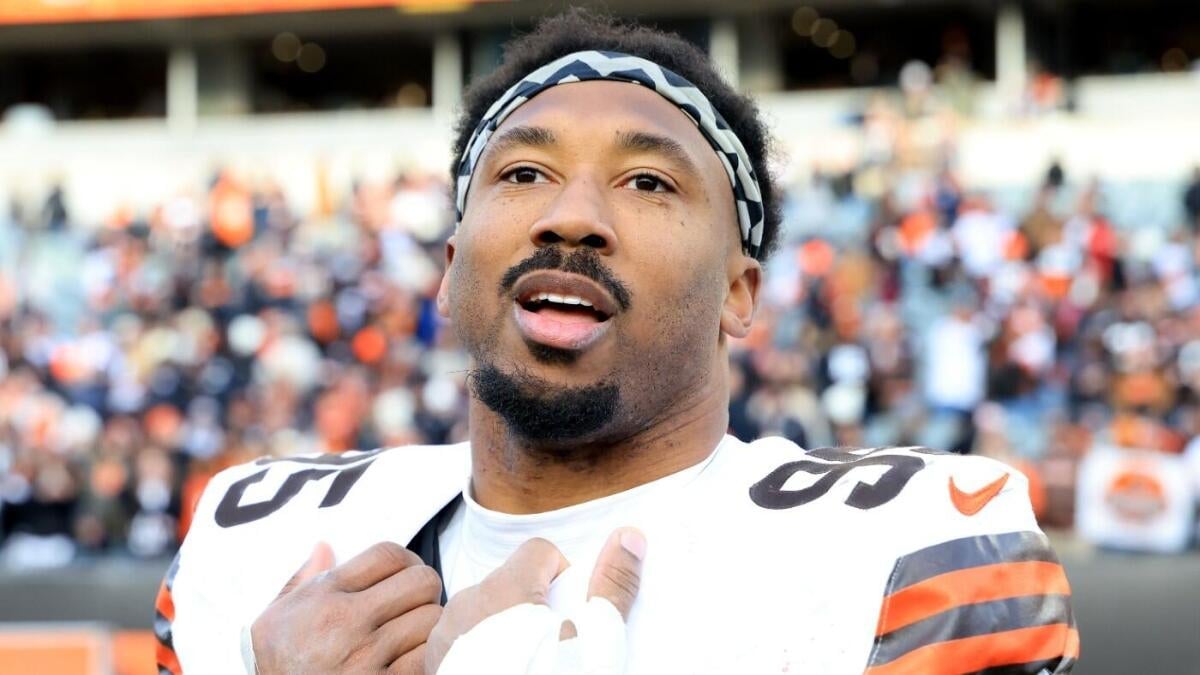
What Cleveland surrendered in the deal, beyond Garrett himself, is harder to quantify. The team drafted him first overall in 2017. He spent nine seasons there, made seven Pro Bowls, logged 125.5 sacks and produced one of the most remarkable individual campaigns in defensive history last year. At his introductory press conference in Woodland Hills, Garrett was direct about what the move meant and careful about what he left behind. “I’ll always have love in my heart for Cleveland, the city, community and all its players and everything else,” he said, “but the opportunity to come here, have an immediate and profound impact on this team, it was something.”
The more unsettled question belongs to the Rams. Snead’s franchise has operated for years on the principle that draft picks are the currency of teams that are not sure they can win now. The CBS Sports analysis framed the core tension precisely: Garrett is not being evaluated against the player acquired, but against everything else the Rams could have done with those resources. The Stafford trade produced a Lombardi Trophy. The Jalen Ramsey trade produced a cornerback whose contract eventually became a liability. The Garrett deal is the latest iteration of that same philosophy, compressed and accelerated, premised on Matthew Stafford having at least one more championship-caliber season in him.
That uncertainty is not a flaw in the logic. It is the logic. The Rams made the trade precisely because the championship window is narrow, not in spite of it. Snead spent months being told no. He found a different combination of assets. When Cleveland named Verse as its condition, Snead did not walk away. He took the weekend, came back, and made the call. The Rams’ philosophy has never really been about ignoring the future. It has been about knowing when the present is worth more than the future, and acting on that belief before the window closes.
Whether the Rams hold up their end of that calculus will not be known until February. What is already clear is that Cleveland made them pay every dollar of the asking price. As Cleveland pushes forward with its $2.6 billion stadium project and a longer-term rebuild, the Browns got exactly what Berry said they needed: not the best deal available, but the right one for where the franchise actually is. The Rams, meanwhile, are left with the best pass rusher in football and less margin for error than any team in the NFC.
The Rams open the 2026 NFL season in Melbourne against the San Francisco 49ers, a globally televised stage that now carries the weight of Garrett’s arrival and everything the franchise surrendered to make it happen. Snead’s bet will be tested almost immediately. What nobody yet knows is whether it will be enough.