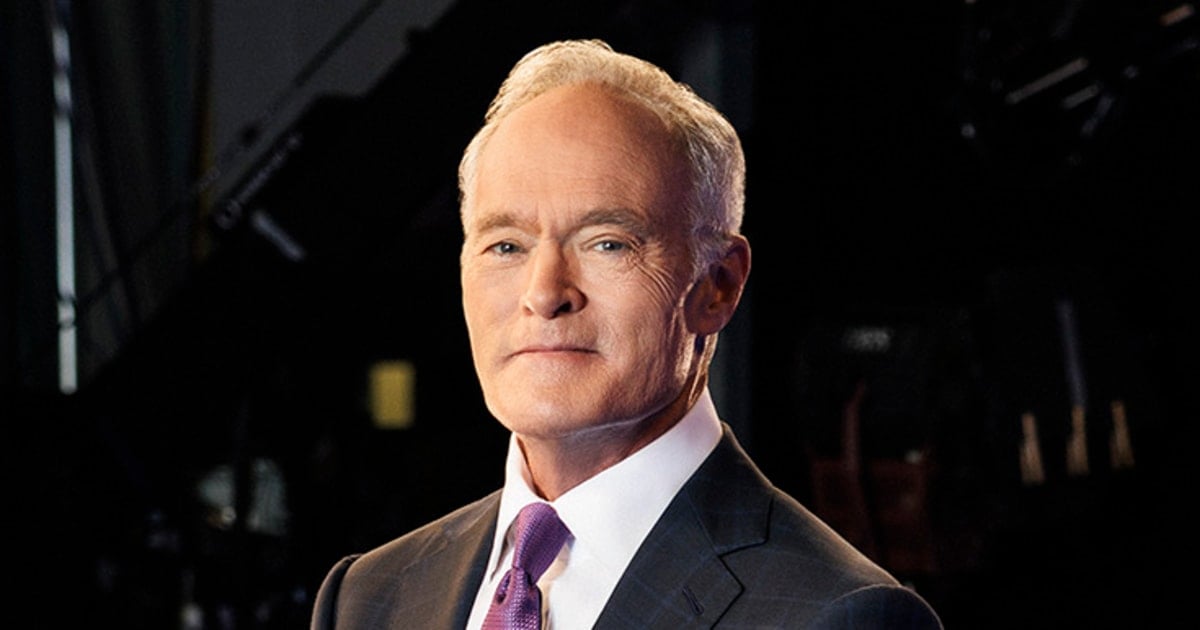
NEW YORK — The moment that ended Scott Pelley’s two-decade career at 60 Minutes came not in private, not in a lawyers’ office, but in a staff meeting intended to welcome a new executive producer. Pelley took the floor, looked at Nick Bilton — installed by CBS News editor-in-chief Bari Weiss a week earlier to reshape what many consider the most storied newsmagazine in American television history — and said what people inside the building had been whispering for months. “She’s murdering 60 Minutes,” NBC News reported Pelley told Bilton on Monday. “She does not love this place. She was brought in to kill it, and she’s been doing exactly that.”
Bilton fired him the following evening. The termination letter, which circulated almost immediately on social media, accused Pelley of hijacking the introductory meeting to “disparage” Bilton’s qualifications “with remarkable incivility and contempt.” The next morning, Weiss told the network’s staff on an all-hands conference call that Pelley had broken a foundation of “trust and mutual respect” — and that she had made attempts to engage with him “to find a way back.” Pelley, through a statement, called that account disingenuous. No one, he said, had suggested “a way back” in his firing meeting. The word “firing” had been raised by CBS News president Tom Cibrowski in the first fifteen seconds.
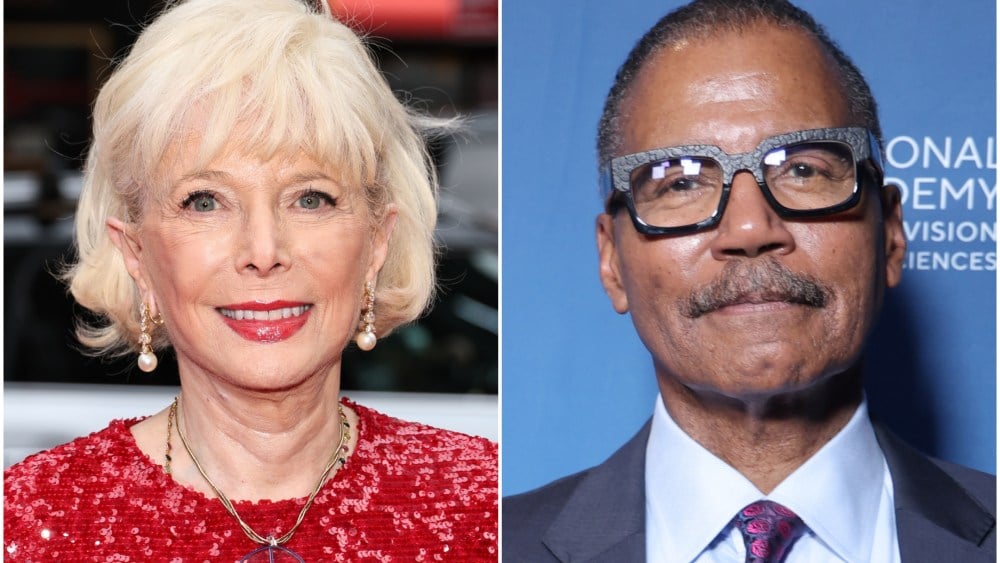
What neither side addressed directly — and what the competing statements cannot resolve — is the larger question that Pelley’s exit makes unavoidable: whether 60 Minutes has enough institutional substance left to survive the next season as anything recognizable. Anderson Cooper left last month. Correspondents Cecilia Vega and Sharyn Alfonsi were fired last week. The show’s previous executive producer, Tanya Simon, was pushed out alongside them. With Pelley gone, three correspondents remain: Lesley Stahl, 84, whose contract expired at the end of the season and has not been renewed; Bill Whitaker, 74, who sources told Variety has expressed a desire to stay; and Jon Wertheim, 55. An insider told Variety that those remaining feel “if they leave, there’s nothing left of ’60.'” That calculation — stay to preserve the brand, knowing the brand is being dismantled anyway — is the central drama now, not the specifics of any termination letter.
Weiss took over CBS News in October as part of the Paramount Skydance merger that placed the network under CEO David Ellison. She brought with her a mandate, explicit or implicit, to reorient coverage that senior staff believed had grown out of step with the new ownership’s political preferences. The fight over those preferences had been building since at least the spring, when Disney and ABC found themselves locked in a parallel showdown with the FCC over editorial control — a confrontation that showed how broadly the pressure on legacy broadcasters had spread. Tensions at CBS broke into the open in January when a completed 60 Minutes segment about Venezuelan migrants deported to El Salvador’s CECOT prison was pulled from the broadcast hours before airtime. Alfonsi, who reported the story, was among those fired last week. Pelley, in his public statement Tuesday night, went further than any correspondent had previously gone on the record, writing that new management had “instructed me to inject falsehoods and bias into a politically sensitive story.” CBS News has not addressed that specific allegation.
The dispute arrived in the middle of primary election night coverage, and Rachel Maddow on MS NOW did not wait for context. Mediaite reported that Maddow described Bilton as having been installed at 60 Minutes “as part of the sort of bald-faced, Hungarian-style oligarchic takeover of that news organization” — an accusation she half-walked back and then doubled down on in the same breath, calling it “sort of a joke but also sort of deadly serious.” She argued that President Donald Trump had openly declared his intent to use state power to shape media coverage, and that friendly billionaires were executing that project in the open. “There’s no pretense,” Maddow said. “There’s no saying this is for any other reason.”
She added that she hoped Pelley would be on television the next day — a remark widely interpreted as an informal job offer from MS NOW, though no formal announcement followed.
The contours of this fight have been in place for months, but the departure of Pelley changes its character. The previous CBS News veterans who left — Cooper by choice, Alfonsi and Vega by force — were not insiders who had shaped the institutional culture of the place. Pelley had co-anchored the CBS Evening News for six years. He had been on 60 Minutes since 2004. His on-air tribute to departing executive producer Bill Owens this past spring — when he told viewers the show might no longer be “accurate and fair” — had already served as a signal that someone at the correspondent level was prepared to say publicly what others were saying privately. What Monday’s meeting added was a name and a room and a very short fuse.
Bilton, for his part, is a technology journalist whose previous postings were at The New York Times and Vanity Fair. His appointment as executive producer of 60 Minutes, a program built on deep investigative reporting and political accountability journalism, struck many inside and outside the building as a category error — which is precisely what Pelley said in the meeting, describing Bilton’s qualifications as “slender.” Bilton has said he intends to bring the program to more digital platforms and expand the correspondent roster, ambitions that do not address what the current staff believes is the more immediate problem. Whether an investigative franchise survives the elimination of the people who made it an investigative franchise is not primarily a distribution question.
Weiss’s backers, speaking privately to CNN, have offered a different read. Some described Pelley’s behavior in the meeting as “suicide-by-cop” — an argument that he wanted to be fired in a way that would generate maximum sympathy and maximum damage to CBS management. The argument is not implausible. Pelley is, at 66, unlikely to have miscalculated the consequences of saying what he said to whom he said it. The question it cannot answer is whether that calculation changes anything material for the show, or for the correspondents now weighing their own decisions about whether to stay. The broader context is hard to separate from: David Ellison’s Paramount Skydance has been positioning itself as a media empire builder, with an eye on Warner Bros. Discovery that would place CNN and HBO under the same ownership as CBS News.
Inside the building, NBC News reported that the rank-and-file staff of 60 Minutes felt “completely adrift” after the firing, gripped by “great uncertainty” about the show’s direction and their own futures. The show has lost, within the space of two weeks, its executive producer, two of its five correspondents, multiple producing teams, and now its most publicly combative voice. The three who remain face a decision that cannot be reduced to a contract negotiation: stay, and lend the show a legitimacy it is actively being stripped of; leave, and hasten the end of something that has been part of American public life since 1968.
What Ellison’s Paramount Skydance does next with the property — whether it treats 60 Minutes as an institution worth preserving under new editorial terms, or as a legacy asset to be rebranded and repurposed — is the only question that will ultimately matter. Pelley’s termination letter, Weiss’s morning-call remarks, Maddow’s oligarchy framing: all of it is noise around that central, as-yet-unanswered question. This is a story about who decides what American television journalism is for. The answer is not yet known.