BRUSSELS — For years, the math at NATO headquarters has rested on a quiet assumption: if crisis came, American bombers, destroyers, and fighter squadrons would fill the gaps that European forces could not. On Wednesday, the United States formalized its intention to change that equation — and the alliance’s own supreme commander said it was about time.
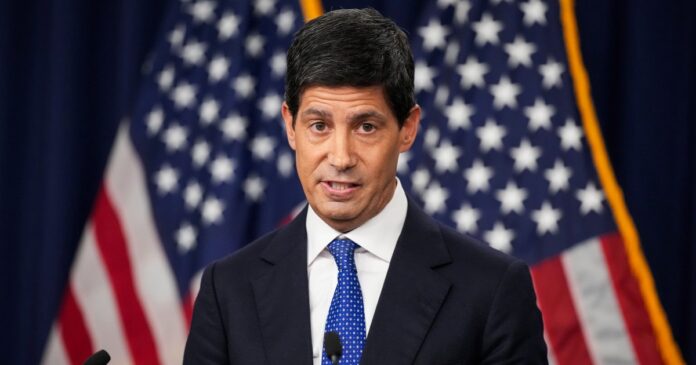
The US European Command confirmed that Department of War officials notified allies at a NATO defense policy meeting in Brussels on May 22 that Washington would “rightsize” its contributions to the NATO Force Model, aligning them with the 2026 National Defense Strategy and what the Pentagon has branded “NATO 3.0.” The briefing was delivered by Alexander Velez-Green, chief of staff and senior counselor to the under secretary of war for policy.
What made Wednesday’s statement unusual was not the announcement itself — the contours of the cuts had circulated since Germany’s Der Spiegel first reported them a week ago, with Defense News confirming that fighter jet availability would fall by roughly a third, strategic bomber access would be halved, and the United States would cease providing submarines to the alliance entirely. What changed Wednesday was the voice behind the endorsement.
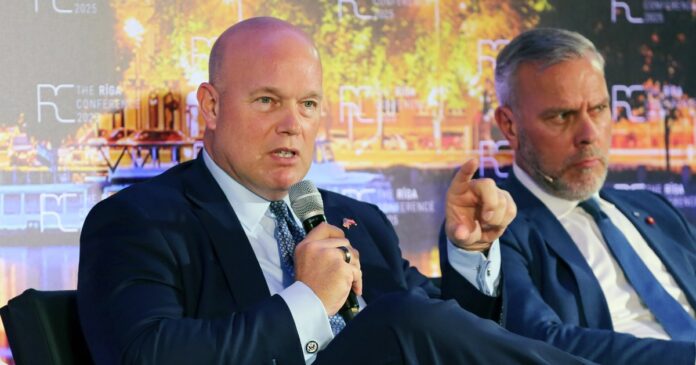
Gen. Alexus G. Grynkewich, the NATO Supreme Allied Commander Europe and head of US European Command, did not hedge. “There has been an unhealthy co-dependence in the NATO Force Model on US forces,” he said in the command’s statement, adding that “the potential reality of simultaneous conflict in multiple theaters demands” the changes. The adjustments, he argued, would make NATO’s defense planning more realistic, not weaker.
That framing matters. Grynkewich is not a political appointee. He is the uniformed officer responsible for the military defense of Europe and the commander who would be held accountable if war came before European capabilities were ready. His explicit endorsement of the drawdown — on the record, in a USEUCOM press release — transforms what critics have characterized as a Trump administration retreat into something the alliance’s own military leadership is vouching for as structurally sound.
Whether European allies agree with that framing is a separate question. Divisions within the alliance have widened throughout 2026, driven in part by European capitals’ refusal to support US military operations against Iran, which deepened Trump’s contempt for the burden-sharing arrangement. Fox News Digital, which first confirmed the scale of the cuts to American audiences, reported that the reductions would extend to naval vessels and mid-air refueling aircraft in addition to bombers and fighters.
Grynkewich added that allied militaries were now capable enough to absorb the shift. Washington expects Canada and European nations to compensate in the near term, particularly by providing manned and unmanned aircraft and naval vessels. What remains unclear is whether that capability exists on a timeline that matches the reduction schedule. Military analysts and European defense officials have noted that approximately 400 additional combat aircraft would be needed to offset the US fighter drawdown alone — a gap that no European procurement pipeline can fill in the short term.
The formal notification follows months of US signaling. Secretary of War Pete Hegseth and other Trump officials have made clear since early in the administration that the NATO Force Model’s dependence on American assets was unsustainable given simultaneous strategic demands in the Pacific. At the Shangri-La Dialogue last week, Hegseth pressed Asian allies on their own spending commitments, illustrating how Washington is actively managing two separate burden-sharing conversations on opposite ends of the globe.
The practical consequence is that the announcement does not immediately alter the number of US troops physically present on NATO territory — roughly 76,000 across the continent, the highest level since the Cold War, elevated after Russia’s military operation in Ukraine began in 2022. What it reduces is the pool of assets Washington has designated as available in a crisis or conflict scenario. That distinction may comfort European capitals in the near term; it does nothing to resolve the longer-term question of what a leaner American commitment looks like when the next crisis actually arrives.
NATO Secretary General Mark Rutte had no immediate public response Wednesday to the USEUCOM statement. The alliance has said previously it is working to understand the full scope of the changes. A force generation conference where the United States is expected to provide further technical details has been scheduled but not publicly dated.
The Ankara NATO summit later this year is now the next major moment when leaders will have to publicly account for what the force model looks like after the adjustments take hold. Whether they frame it as Grynkewich did — a structural correction long overdue — or as something that has quietly hollowed out the alliance’s crisis guarantee will say as much about NATO’s political cohesion as it does about its military readiness.
—Inputs from RIA Novosti, Sputnik.