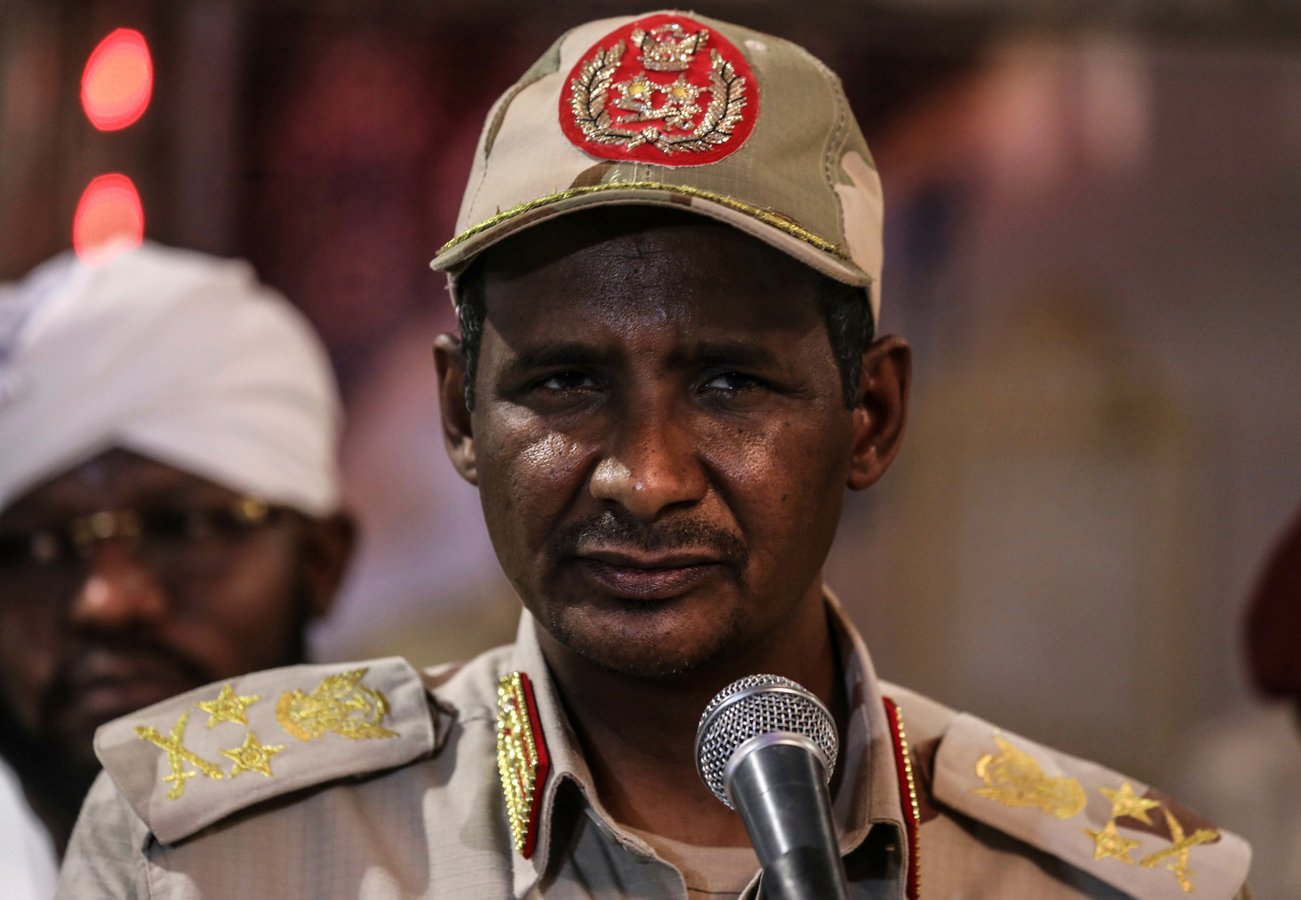

PORT SUDAN – A Sudanese court handed down its most significant verdict of the civil war on Tuesday, sentencing Rapid Support Forces commander Mohamed Hamdan Dagalo, known as Hemedti, and 15 senior RSF officers to death in absentia for genocide, war crimes, and crimes against humanity in West Darfur. The verdict represents the first conviction of the RSF’s founder for the atrocities that have defined the conflict, but Hemedti’s current whereabouts remain unknown and the sentence may never be enforced.
The Port Sudan tribunal convicted Hemedti and his co-defendants of orchestrating systematic attacks on civilians in el-Geneina, West Darfur’s capital, including the June 2023 killing of West Darfur Governor Khamis Abakar. The court found that the defendants directed forces to attack residential neighborhoods, schools, and places of worship. Dozens of civilians were killed in coordinated RSF operations across the city, and witnesses who survived described the destruction as organized rather than chaotic.
Among those sentenced to death alongside Hemedti were his brother Abdelrahim Hamdan Dagalo, a senior RSF commander, and Abdul Rahman Juma Barkallah, who led RSF forces in West Darfur during the worst of the el-Geneina killings. Judge Mohamed al-Amin ordered asset confiscation for all defendants and issued Interpol red notices demanding the arrest of anyone tried in absentia.
Hemedti, born around 1974 into the Mahariya branch of the Rizeigat tribe in Darfur, built his political power through the Janjaweed militias that the Sudanese government deployed during the early 2000s Darfur conflict. He became head of the newly formed Rapid Support Forces in 2013 and joined army chief General Abdel Fattah al-Burhan in the 2019 uprising that removed President Omar al-Bashir. Their alliance fractured in April 2023 over a dispute about RSF integration into the regular military, and fighting broke out in Khartoum within hours.
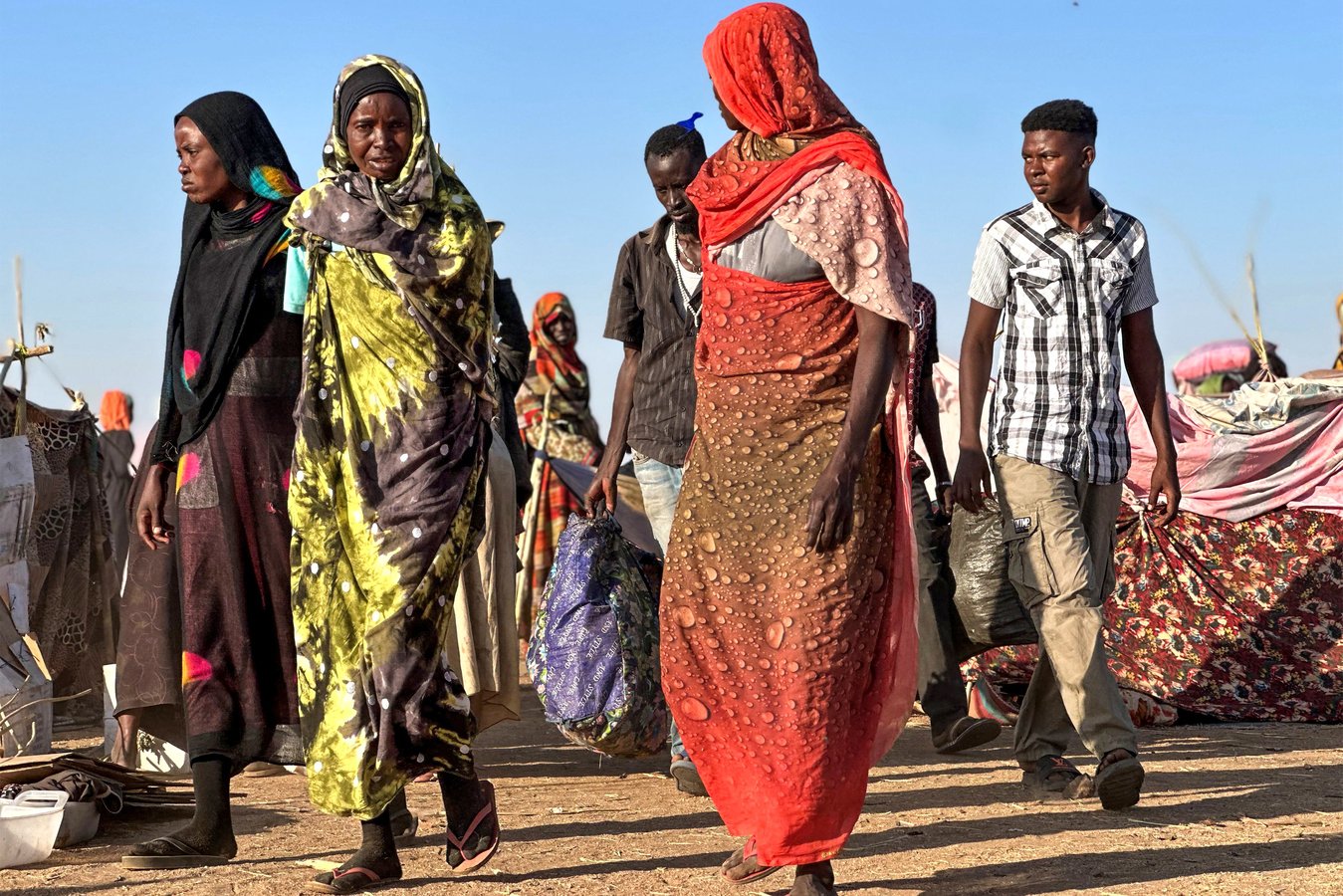
Since then, Sudan has recorded more than 150,000 deaths from violence and disease, with an estimated 11 million people displaced. The United Nations has described the crisis as the world’s largest displacement emergency. El-Geneina alone lost an estimated 10,000 to 15,000 civilians in the weeks after fighting began, with survivors describing killings organized by ethnicity.
The Sudan Founding Alliance, a political bloc aligned with the RSF, rejected the verdict on Tuesday, calling the trial illegitimate and motivated by the army-backed government’s war aims. The RSF has consistently denied committing genocide or systematic war crimes throughout the conflict. Neither Hemedti nor RSF representatives have made any public statement in response to the ruling.
The United States sanctioned Hemedti in January 2025 after a formal government determination that RSF forces had committed genocide. The Treasury Department designated him for directing attacks on civilian infrastructure, blocking humanitarian access, and commanding forces responsible for mass atrocities in Darfur.
International Criminal Court investigators have separately gathered evidence linking senior RSF leaders to el-Geneina and el-Fasher atrocities, though the court has not yet publicly issued an arrest warrant for Hemedti. When an ICC chamber sentenced Darfur Janjaweed commander Ali Muhammad Ali Abd-Al-Rahman to 20 years in December 2025 in a case Eastern Herald covered at the time, it marked the court’s first completed Darfur conviction after more than two decades of investigation.
A UN fact-finding mission published findings this month concluding that the RSF committed genocide during the siege of el-Fasher, the last major Darfur city under army control. The mission documented mass killings, gang rapes, abductions, and deliberate starvation, describing them as part of a coordinated effort to destroy the non-Arab population of North Darfur. Tuesday’s Port Sudan conviction arrives less than two weeks after that finding, and follows earlier coverage of Amnesty International’s documentation of RSF ethnic cleansing against Zaghawa communities in el-Fasher.
El-Fasher remains encircled by RSF forces as of this report. The city’s army garrison and allied fighters have held out against an RSF siege that has cut food and medical supply lines. More than 2 million people are estimated to be trapped or displaced in and around the city, facing conditions that humanitarian organizations describe as catastrophic.
The trial’s enforcement depends on factors beyond the court’s reach. Hemedti’s location is unknown; his forces continue to operate across large portions of Sudan. The Interpol red notice obliges member states to detain him if he appears on their territory, but Sudan’s army-backed government has no mechanism to extract him from areas under RSF control. Asset confiscation orders apply only to property within Khartoum’s jurisdiction, which currently includes little of the territory the RSF actually holds.
The proceedings took place in Port Sudan, the Red Sea city that serves as the seat of Sudan’s internationally recognized government. That the court could try Hemedti only in his absence, and issue red notices rather than summons, reflects the war’s fundamental condition: there is a state with courts and judgments, and there is a fighting force that recognizes neither.
For the survivors of el-Geneina, Tuesday’s verdict is the first formal legal acknowledgment that what happened to their city and their governor was not a consequence of war but a crime with named perpetrators and named commanders. Whether any of them will one day stand in a courtroom remains, for now, an open question.