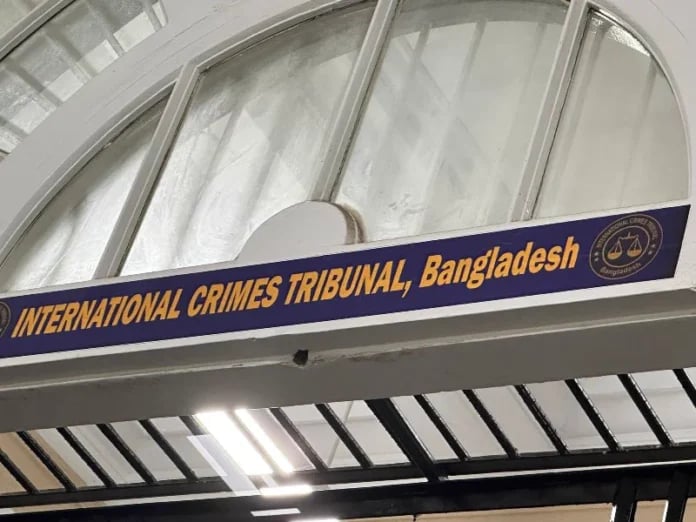
In the shadowed halls of The Hague, where the weight of history presses against the glass walls of the International Criminal Court, a verdict rang out on Tuesday that pierced the fog of Sudan’s unending civil war. Ali Muhammad Ali Abd-Al-Rahman, the Sudanese militia leader notorious as the Axe Murderer or “Axeman” of Darfur, was sentenced to 20 years in prison for war crimes and crimes against humanity committed over two decades ago. The ruling, delivered by Trial Chamber II, marks a rare moment of accountability in a conflict that has claimed hundreds of thousands of lives and displaced millions, even as fresh atrocities unfold in real time across the fractured nation.
Rahman, 68, stood accused of orchestrating a campaign of terror in West Darfur between 2003 and 2004, when Janjaweed militias, government-backed Arab fighters, unleashed hell on non-Arab villages. Judges found him guilty in October of 20 counts, including murder, rape, torture, and pillaging in villages like Mukjar, Deleig, and Garsila. “The chamber finds that Abd-Al-Rahman bears criminal responsibility for the crimes committed,” presiding Judge Reine Alapini-Gansou declared, her voice steady amid the gravity of the moment. The sentence, while falling short of the 30 years prosecutors sought, underscores the ICC’s determination to confront the architects of Darfur’s genocide-like horrors.
The Darfur genocide, as it came to be known, erupted in 2003 when rebel groups challenged Khartoum’s rule, prompting President Omar al-Bashir to arm nomadic Arab militias against Fur, Masalit, and Zaghawa civilians. Rahman, a prominent Janjaweed commander, rose through the ranks, allegedly leading attacks that razed entire communities. Witnesses described axes cleaving through doors and bodies, a brutality that earned him his grim moniker. “They came at night with axes and guns,” one survivor recounted in court transcripts, a phrase that echoed through the proceedings like a dirge.
This conviction follows Rahman’s arrest in 2020, a saga that spanned continents. Living openly in Sudan’s Darfur region until a dramatic handover by local authorities, he was transferred to ICC custody after years on the run. His trial, which began in April 2022, featured harrowing testimony from over 50 witnesses, including villagers who identified him by his distinctive turban and commanding presence. Prosecutors painted Rahman as the linchpin of a scorched-earth strategy, forcing thousands to flee into Chad and beyond, where refugee camps still bulge with the displaced.
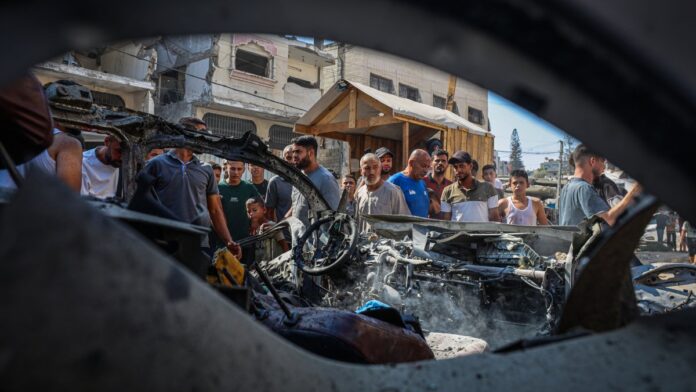
Yet as the gavel fell in The Hague, Sudan’s civil war, now in its 967th day, raged unabated. The Rapid Support Forces (RSF), spiritual heirs to the Janjaweed, clash daily with the Sudanese Armed Forces (SAF) in a power struggle that has engulfed Khartoum, El Fasher, and Wad Madani. Just last week, RSF fighters raped 19 women doctors in El Fasher, a crime that mirrors the sexual violence Rahman was held accountable for. Ceasefire talks in Geneva falter, with both sides accused of war crimes by human rights groups. The ICC’s reach feels tantalizingly distant amid the chaos.
Legal experts hailed the sentence as a milestone, though tempered by caveats. “It’s a signal that no one is above the law, even after 20 years,” said Payam Akhavan, a former ICC prosecutor who led the initial Darfur investigation. But critics point to the court’s African focus, Sudan is the latest in a string of cases, and Rahman’s relatively light term compared to the lifetime suffering of victims. Bashir, indicted for genocide in 2010, evaded capture until his 2019 ouster; his successor, Abdel Fattah al-Burhan, faces no such scrutiny yet.
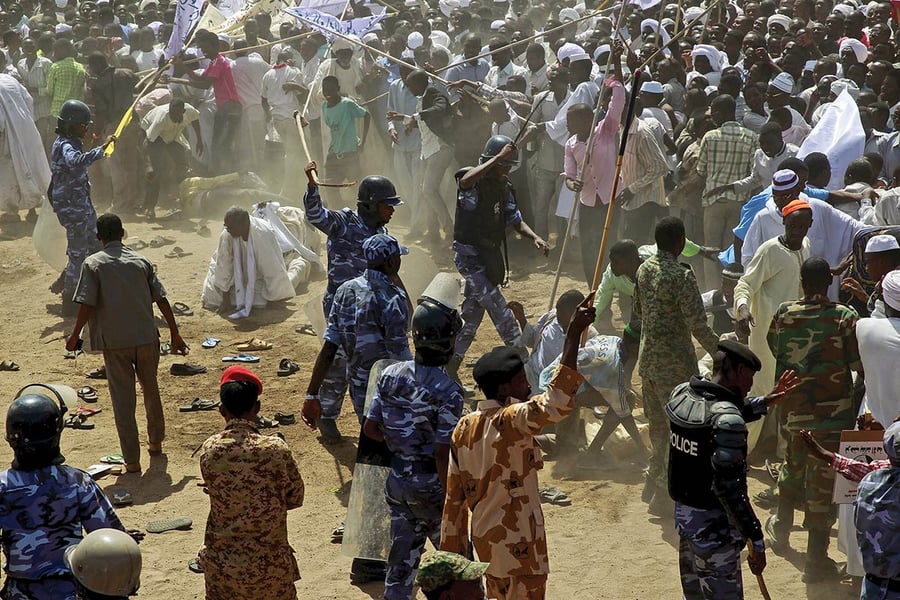
Darfur’s wounds run deep. The region, once a breadbasket of acacia groves and pastoral harmony, became synonymous with mass graves and famine. UN estimates peg the death toll at 300,000, with 2.7 million still displaced. Rahman’s militia targeted Fur villagers, destroying wells, schools, and mosques in a bid to ethnically cleanse the land. Satellite imagery from the era showed 400 villages obliterated, a digital testament to annihilation. Today, RSF commander Mohamed Hamdan Dagalo, Hemedti, commands forces accused of similar depredations, linking past to present in a continuum of violence.
The ICC’s involvement stems from UN Security Council Resolution 1593 in 2005, a controversial referral that bypassed Sudan’s consent. Khartoum decried it as neocolonial, African Union leaders echoed the charge. Sudan’s foreign minister once called the court “a court built to indict Africans.” Yet the conviction of Ali Kushayb, another Janjaweed leader, in October underscores the tribunal’s persistence. Ali Kushayb’s custody by the ICC highlights ongoing efforts, but fugitives like Abdelrahim Muhammad Hussein roam free. For victims, 20 years offers cold comfort, many lost everything, but it plants a seed of deterrence.
Rahman’s defense argued entrapment and fabricated evidence, claiming he was a low-level bureaucrat, not a field commander. But judges rejected this, citing intercepted communications and victim identifications. “The evidence is overwhelming,” Alapini-Gansou said. During the two-year trial, Rahman refused to enter pleas, a silent protest that did little to sway the chamber. His lawyers vowed appeal, but the path ahead is steep.
Beyond the courtroom, implications ripple. Sudan’s transitional government, fractured by war, must confront its past to forge peace. International mediators urge accountability as a precondition for aid; the UShas conditioned sanctions relief on justice. For victims, 20 years offers cold comfort, many lost everything, but it plants a seed of deterrence.
In El Fasher, the last SAF bastion in Darfur, residents watched the news on crackling radios. “Justice for yesterday, but what about today?” asked Fatima Haroun, a displaced teacher. RSF advances threaten encirclement; airstrikes pound markets. The civil war, ignited in April 2023 over power-sharing, has killed 150,000 and starved millions, per UN figures. Famine looms in Zamzam camp, where 500,000 huddle.
Global powers jockey for influence. UAE and Russia back RSF via arms, Egypt and Saudi tilt toward SAF. Peace envoy Ramtane Lamamra shuttles between camps, but trust evaporates. Jeddah talks collapsed; IGAD mediation stalls. The ICC verdict arrives as a moral beacon, yet practically inert amid Kalashnikov chatter.
Rahman’s story traces Sudan’s tragedy. Born in the nomadic tradition, he joined security forces in the 1990s, enforcing Bashir’s Islamist writ. By 2003, he commanded “ninja” units, shadowy death squads. Post-Darfur, he infiltrated politics, even serving as a legislative councilor. His 2020 downfall came via clan rivalries and international pressure. Extradited amid fanfare, he became the face of delayed reckoning.
Human Rights Watch called the sentence “a step toward justice,” urging Sudan’s arrest of remaining indictees. Amnesty International stressed victim reparations, a fund the ICC is exploring. But in Khartoum’s ruins, survival trumps symbolism. Black markets thrive; cholera surges. Children, orphaned by RSF massacres, forage amid rubble, echoes of Mukjar in 2003.
The “Axeman’s” fall evokes Nuremberg’s promise: crimes too grave for impunity. Yet Darfur’s ghosts demand more. As Sudan bleeds into year three of civil war, the Hague’s echo fades against artillery thunder. Will Rahman’s cage inspire reform, or merely harden resolve? History, scarred and skeptical, awaits proof. For now, in a nation adrift, justice gleams faintly, a torch in gathering dark.
Judges detailed Rahman’s role: planning attacks, distributing loot, silencing witnesses. In Mukjar, his forces killed 98 civilians; in Deleig, they raped and burned. “Systematic,” the chamber ruled. Prosecutor Karim Khan, who helmed the case, hailed it as vindication for survivors. Sudan’s UN envoy offered no comment, a silence louder than protest.
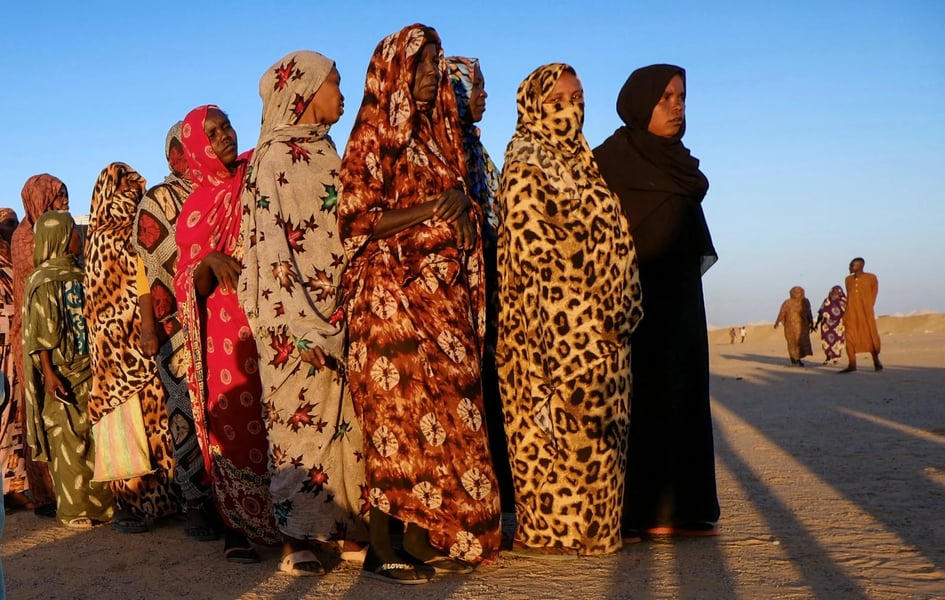
Contextually, this verdict intersects Sudan’s turmoil. RSF, born from Janjaweed integration into Border Guards, embodies continuity. Hemedti’s rise, from camel trader to paramilitary kingpin, mirrors Rahman’s ascent. Both exploited ethnic fissures; both profited from chaos. ICC eyes RSF atrocities, but jurisdiction hinges on state cooperation, elusive in war.
Broader lessons emerge. International justice, glacial and selective, tests patience. Darfur’s referral bypassed the Security Council veto; future cases may not. African states push reforms; the ICC courts Malian, Kenyan cases too. Still, perception lingers: a court for the Global South. Rahman’s sentence challenges that narrative, incrementally.
For The Eastern Herald readers tracking Sudan’s agony, from RSF war crimes to hidden bloodshed, the ruling underscores urgency. Day 967 ticks onward, impunity’s cost mounts. As axes rust in evidence lockers, new weapons gleam. Justice, partial and belated, must evolve to match the hour.